
Upload a Picture
About this Site | Links | Random Pic | Advanced Search
Home | Latest Additions | Contributors
| Visitors
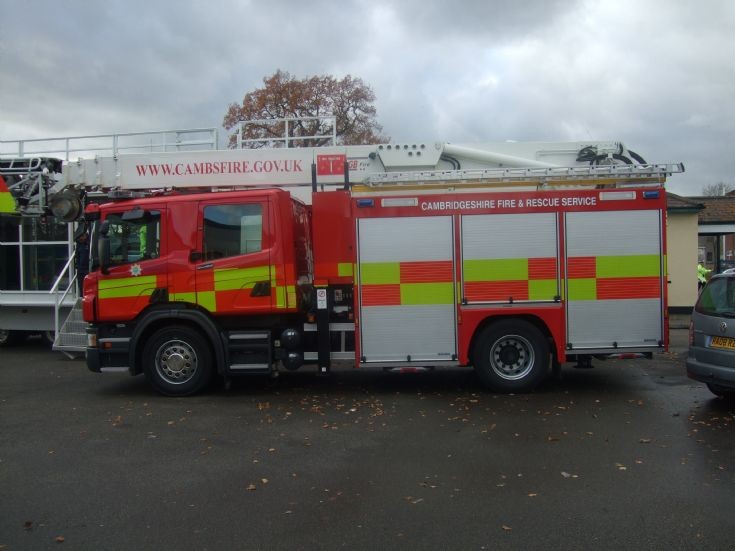
Fire Engine Photos
Cambridgeshire have got 2 so they must be brave. Suffolk's is still indeed in Germany, I personally don't think we will see the CARP back in Suffolk ever as they never paid for it.
Added by Richard Whiting on 08 December 2009.
Added by Richard Whiting on 08 December 2009.
Do all of the CARPS represent this appauling value of taxpayers money. Or is it one particular manufacturer?
What faults do these vehicles have for them to be away for 2 years?
That's not good advertising for any product, but that hasn't prevented brigade engineers still going ahead and purchasing these vehicles with the full knowledge of other brigades having major issues with the same product.
Added by Simon Gunning on 08 December 2009.
What faults do these vehicles have for them to be away for 2 years?
That's not good advertising for any product, but that hasn't prevented brigade engineers still going ahead and purchasing these vehicles with the full knowledge of other brigades having major issues with the same product.
Added by Simon Gunning on 08 December 2009.
In Suffolk the multistar could not take the weight of the equipment, I believe the only brigade in England to use there multistar is Dumfries & Galloway however I might be wrong, I personally would say the Magirus Multistars appear to be the worst, at least with the Vema/JDC models they are being used. Do believe Angloco/Bronto ARP's have been more successful.
Added by Richard Whiting on 09 December 2009.
Added by Richard Whiting on 09 December 2009.
Simon, there has been some heated discussion on this site over a while over the basic design of all makes and mixes. I feel, and this is a personal opinion, they are too top heavy and the chassis too narrow. Allied to the fact its the old chestnut of commercial chassis etc being asked to perform outside design parameters. Even the Dennis versions tried in the seventies died a death ( an expensive one!) Many brigades have used this design as an excuse to cut manning and rid the world of proper TLs siting these as a suitable replacement. Anybody with an ounce of sense knows when these are tied up as pumps on a job they need re deploying where there's a need for a TL. Sorry for pointing out the obvious, again, I think many brigades have watched this story with interest and hopefully will steer well clear of these contraptions.
Added by John Stott on 09 December 2009.
Added by John Stott on 09 December 2009.
John, I was serving with wiltshire, when they needed to purchase a replacement for the old Dodge TL. This ended up being a 28 ton 6x4 Scania with a boom made by a Itelmec. With a full size Scania crew cab it was designed as a Hydraulic Pump Platform (HPP) nothing short of what is called a CARP today, apart from it never carried the RTC kit.
But it never ever run as it was designed with a crew of 4/5, only ever the driver and oic.
it was a complete pile of crap for the first few years until they sorted all the faults out plus Itelmec went bust 12 months after it was purchased and no company would touch it until it was fit for purpose.
Later in it's useless life GB fire took over the maintenance and made a good working truck out of it, It was not unusual for it to be away 6,9,12,or even 15 months at a time. It would come back the guy's would carry out an exeptence test and guess what? failed, straight back to wherever it came from.
4 years later the brigade carried out exactly the same stupid mistakes they made with the Scania and purchased another unknown boom and planted it onto a ERF chassis, this had even worse problems than the Scania, it lived a very very short life in the brigade before being disposed of.
Added by Simon Gunning on 09 December 2009.
But it never ever run as it was designed with a crew of 4/5, only ever the driver and oic.
it was a complete pile of crap for the first few years until they sorted all the faults out plus Itelmec went bust 12 months after it was purchased and no company would touch it until it was fit for purpose.
Later in it's useless life GB fire took over the maintenance and made a good working truck out of it, It was not unusual for it to be away 6,9,12,or even 15 months at a time. It would come back the guy's would carry out an exeptence test and guess what? failed, straight back to wherever it came from.
4 years later the brigade carried out exactly the same stupid mistakes they made with the Scania and purchased another unknown boom and planted it onto a ERF chassis, this had even worse problems than the Scania, it lived a very very short life in the brigade before being disposed of.
Added by Simon Gunning on 09 December 2009.
Richard, may I just slightly correct you, no brigade in England has had a multistar on the run, however there has been one on the run in Scotland, indeed being in Dumfries and Galloway, with the other four in Scotland still not on the run after what will be for the two in Central Scotland are now pushing closer to 3 years and not yet on the run.
I believe that the actual aim by the manufacturer (or it should be) of the CARP is to be used to enhance aerial cover in places that lack it such as, take Central there is currently two ALP's on the run in Falkirk and Stirling, which would be a better option to be kept as they are, then in another station, there other larger ones mainly being either Alloa or Bo'ness, which are towns that can require an aerial at times but would not merit a dedicated aerial, this would be the niche that the CARP could fit into to provide the need for aerial cover should a minor incident occur.
One oversight perhaps if you notice with some CARP's is their boom reach is less than that of your average ALP, TL, HP; as if Strathclyde could be taken as an example, their ARP's have a maximum reach of 26m, whereas they could reach up to 32m with their fleet of ALP's, a possible previous incident to look at is the time when the lifts got stuck in the tower of the Glasgow Science Museum, and they were only just reaching with the normal aerial fleet.
Added by Ross MacTavish on 10 December 2009.
I believe that the actual aim by the manufacturer (or it should be) of the CARP is to be used to enhance aerial cover in places that lack it such as, take Central there is currently two ALP's on the run in Falkirk and Stirling, which would be a better option to be kept as they are, then in another station, there other larger ones mainly being either Alloa or Bo'ness, which are towns that can require an aerial at times but would not merit a dedicated aerial, this would be the niche that the CARP could fit into to provide the need for aerial cover should a minor incident occur.
One oversight perhaps if you notice with some CARP's is their boom reach is less than that of your average ALP, TL, HP; as if Strathclyde could be taken as an example, their ARP's have a maximum reach of 26m, whereas they could reach up to 32m with their fleet of ALP's, a possible previous incident to look at is the time when the lifts got stuck in the tower of the Glasgow Science Museum, and they were only just reaching with the normal aerial fleet.
Added by Ross MacTavish on 10 December 2009.
Comments, taken on board from what we have seen from them its definite that compared to a dedicated aerial appliance they are poor! The only reason the fire service want them is to cut jobs.
Added by Richard Whiting on 10 December 2009.
Added by Richard Whiting on 10 December 2009.
Thanks Simon. There's no better endorsement for me as people with direct experience. Yours is a pretty typical opinion.
Ross, the Scottish story seems to have no ending with these idiotic designs, rather than admit they are not fit for purpose they to and fro between the makers and brigades with no one accepting responsibility. I appreciate there's local need sometime for a tall boom and the only answer is a TL. I know of several council members who, following discussions on this site, blocked attempts by several English Brigades to acquire these types. Also the handling is unsafe, putting crew and public at risk.
Added by John Stott on 10 December 2009.
Ross, the Scottish story seems to have no ending with these idiotic designs, rather than admit they are not fit for purpose they to and fro between the makers and brigades with no one accepting responsibility. I appreciate there's local need sometime for a tall boom and the only answer is a TL. I know of several council members who, following discussions on this site, blocked attempts by several English Brigades to acquire these types. Also the handling is unsafe, putting crew and public at risk.
Added by John Stott on 10 December 2009.
Well I may add a piece. Hamilton rolled theirs at 33mph on a roundabout last year and it's still in Finland to my knowledge. Yes, look around Strathclyde and you'll see the effects of cost cutting. Parkhead, one CRAP appliance. CARP appliance turns out to a bin fire near Parkhead football ground and on London Road a persons reported in flats. Time wasted getting Polmadie to the scene. Appliance goes down, what do they do? Put another pump on the run and not an aerial and a pump. Horse, Bolting. Kent are getting two of these CARP appliances as I found out this year at Tunbridge Wells. Liverpool pioneered this concept in the last sixties early seventies and it didn't last long. They say history reciprocates, but why don't they ever learn from it? Lets get back to real fire fighting and get rid of the bean counters for goodness sake!
Added by Andy Middleton on 10 December 2009.
Added by Andy Middleton on 10 December 2009.
I wonder how many thousands or even millions of pounds worth of vehicles are sat idle in the corner of fire service drill yards around the country.
Dose anybody know why the South Yorks CARPS are not on the run yet?
What about Humbersides CARP?
Let's not forget all the Multistars.
It's not just CARPS. Humberside had a Scania sat around for 18 months,
Berkshire have a 57 Plate Daggar that's never seen the inside of a fire station (must be 2 years old now)
Has Avon's Scania on the run Yet?
Added by Simon Gunning on 10 December 2009.
Dose anybody know why the South Yorks CARPS are not on the run yet?
What about Humbersides CARP?
Let's not forget all the Multistars.
It's not just CARPS. Humberside had a Scania sat around for 18 months,
Berkshire have a 57 Plate Daggar that's never seen the inside of a fire station (must be 2 years old now)
Has Avon's Scania on the run Yet?
Added by Simon Gunning on 10 December 2009.
I think this is one of the redesigned multistars that has a smaller water tank(1000l instead of 1800l) and carries a CAFS syestem (800l), reducing the weight but not the amount of firefighting formula. That is the spec of Kents and they worked together with Cambrigdeshire. So this one may work.
Added by Lewis on 10 December 2009.
Added by Lewis on 10 December 2009.
Kent has CAFS, the two in Cambridgeshire dont have CAFS not sure on size of water tank though.
Added by Richard Whiting on 10 December 2009.
Added by Richard Whiting on 10 December 2009.
We have CARPs here in the US, only we call them Quints. And overall, they run pretty well. A lot run as stand alone companies, doing fire, co-responder, RTAs, etc. They are used by both wholetime, retained and volunteer fire comanies. On the forums over here, and talking to individual firefighters, I hear nowhere near the amount of problems that the CARPs have in the UK. And we have many more here in the US as compared to the UK. I have to wonder why the CARPs in the UK seem to have so many problems.
Added by David on 10 December 2009.
Added by David on 10 December 2009.
Strathclyde has the only type of arp that works, yes they're not perfect but they are still on the run.
Added by Steve Bonner on 11 December 2009.
Added by Steve Bonner on 11 December 2009.
South Yorks Carps are/were impounded by the recievers of TVAC and are sat in a compound out of the county I've seen them in that compound !
Humbersides CARP is being moved around a couple of stations so the people that matter don't see it but it will never go on the run in its designed role and is likely to become a dedicated ariel - the very thing it was supposed to replace no less ! - It has a CAFS system fitted as do at least 5 Humberside Scanias but the brigade has now stopped using CAFS allegedly on the advice of the enviroment agency ! - you could'nt make it up - the only winners are the salesmen and supplying companies who are laughing all the way to the bank !
Added by Rick Loudon on 11 December 2009.
Humbersides CARP is being moved around a couple of stations so the people that matter don't see it but it will never go on the run in its designed role and is likely to become a dedicated ariel - the very thing it was supposed to replace no less ! - It has a CAFS system fitted as do at least 5 Humberside Scanias but the brigade has now stopped using CAFS allegedly on the advice of the enviroment agency ! - you could'nt make it up - the only winners are the salesmen and supplying companies who are laughing all the way to the bank !
Added by Rick Loudon on 11 December 2009.
Rick, summed it up in one ( again!) Why hasnt anybody in the local authorities got the b...s to stand up to this total waste of money? As for CAFS, bring back an MFG 5 and a few drums, or are the drums too heavy to carry? This countries fire service is turning into one big Carry On film, jezz am I glad to be out of it.
Added by John Stott on 12 December 2009.
Added by John Stott on 12 December 2009.
Likewise John, - I loved the job and served wholetime for 32 years but I cringe when I see and hear whats going on - a mate of mine former rider station officer summed it up when he said 'I miss the job I joined but not the one I left !
Added by Rick Loudon on 12 December 2009.
Added by Rick Loudon on 12 December 2009.
David, as it is, our standard ALP is a rather big machine for the UK's narrow and tight roads and towns. They are slow, cumbersome machines that respond to incidents at a snail's pace, particularly the Scanias, which are inherently slower than a good old Dennis. They are also awkward to manoevre, to set-up and to operate.
So to combine an ALP with a pumping appliance AND a rescue tender is, in most people's minds utter madness. But sadly not the people who have a say in such matters!
So a combination of ancient towns and roads, bad design and engineering, a complete lack of common sense and logic amongst those in charge, the proliferation of inept civil servants, a crippling climate of cost-cutting and a ridiculous notion of one-upmanship is making our once fine Fire and Rescue Service a laughing stock...
ALL of our public services have been hijacked by politically correct bufoons and hand-wringing accountants. That is why you get a million pounds worth of white elephants sitting idle in a yard for years on end. But guess what? Nobody will ever admit to being part of this ridiculous scheme and nobody will ever be held responsible. They will probably get promoted and recieve a substantial bonus.
The US has wide-open urban sprawls with roads as wide as Kent. Your Fire Derpartments have substantially larger budgets than us, you possess a straightforward thinking towards most things, including firefighting, and you have a philosophy that doesn't involve modernising for the sake of modernising.
If it ain't broke, then don't fix it!
Added by Yelp Bullhorn on 12 December 2009.
So to combine an ALP with a pumping appliance AND a rescue tender is, in most people's minds utter madness. But sadly not the people who have a say in such matters!
So a combination of ancient towns and roads, bad design and engineering, a complete lack of common sense and logic amongst those in charge, the proliferation of inept civil servants, a crippling climate of cost-cutting and a ridiculous notion of one-upmanship is making our once fine Fire and Rescue Service a laughing stock...
ALL of our public services have been hijacked by politically correct bufoons and hand-wringing accountants. That is why you get a million pounds worth of white elephants sitting idle in a yard for years on end. But guess what? Nobody will ever admit to being part of this ridiculous scheme and nobody will ever be held responsible. They will probably get promoted and recieve a substantial bonus.
The US has wide-open urban sprawls with roads as wide as Kent. Your Fire Derpartments have substantially larger budgets than us, you possess a straightforward thinking towards most things, including firefighting, and you have a philosophy that doesn't involve modernising for the sake of modernising.
If it ain't broke, then don't fix it!
Added by Yelp Bullhorn on 12 December 2009.
CAFS works well but the Enviroment Agency have too much of a say now. Let Firecrews do a proper job like they always have.Too many pillocks and politicians have a say now without having a clue what the job entails.CARPs are crap,same as PHPs were in 1970s,top heavy,slow and a cheap compromise for "Bean Counters".
Added by Gary Simpson on 12 December 2009.
Added by Gary Simpson on 12 December 2009.
David: Yelp B. has laid it out pretty well.
In those ancient towns and villages; our North American rigs would get wedged in the first turn.
When your rig design chassis is limited to length and width; there is no way to go, but Up. Pile the equipment on, Centre of Gravity goes up, Axle-loading also and Crash - over she goes.
Simple Physics - but not to The Bean-Counters; who can only understand $$$ signs (I don't have Pounds Sterling symbols on my computer).
There are some great On-Scene Pics on this 'Site; where you can see the tight quarters that the Brits and Europeans have to wedge their apparatus into. And that also includes simply getting there, too.
Another crowd with the same problem are the Fire Brigades of Japan, also on this 'Site. They have kept their rigs small and simple - must have been able to keep their Bean-Counters in check, somehow.
Gotta appreciate our wide-open spaces....
Regards, from Canada,
Pat_R-B
Added by Pat Rivers-Bowerman on 12 December 2009.
In those ancient towns and villages; our North American rigs would get wedged in the first turn.
When your rig design chassis is limited to length and width; there is no way to go, but Up. Pile the equipment on, Centre of Gravity goes up, Axle-loading also and Crash - over she goes.
Simple Physics - but not to The Bean-Counters; who can only understand $$$ signs (I don't have Pounds Sterling symbols on my computer).
There are some great On-Scene Pics on this 'Site; where you can see the tight quarters that the Brits and Europeans have to wedge their apparatus into. And that also includes simply getting there, too.
Another crowd with the same problem are the Fire Brigades of Japan, also on this 'Site. They have kept their rigs small and simple - must have been able to keep their Bean-Counters in check, somehow.
Gotta appreciate our wide-open spaces....
Regards, from Canada,
Pat_R-B
Added by Pat Rivers-Bowerman on 12 December 2009.
Warwickshire have got 2 carp's on Scania. They have done driver training and changed the doors at Leamington spa so the thing will fit. It was I believe on the run but the other day it had gone and a normal PRL was in its place. Wonder what there going to do with the perfect ERF HP that they have?
Added by Tg on 13 December 2009.
Added by Tg on 13 December 2009.
Hey All, I realize that many of these comments regarding the whole CARP/ARP debate are several years old at least. Does anyone have any up to date info or opinions?
As a Fire Chief in Canada, I am constantly on the watch for new and insightful ideas.
To be honest I have long wondered WHY we here in North America have this desire to build/maintain and operate such idiotically HUGE Fire Apparatus. There is simply NO reason for it...and to be honest, for the most part...much of the "space" in these huge vehicles is wasted, compartments poorly laid out etc.
I would trade in my fleet of North American CRAP...for two of the VEMA CARPs a good WTR and a rescue....heck I even like the Scania crew cabs.....
Just my opinion of course....North America is FILLED with this CARP/ARP "concept"...here we more commonly refer to them as "Squirts"..I guess essentially a pumper with the addition of a 50 - 75 ft extendable boom/ladder. I'll try to track down a pic of the one that was at the Ontario Fire College...
Added by Jay on 08 July 2011.
As a Fire Chief in Canada, I am constantly on the watch for new and insightful ideas.
To be honest I have long wondered WHY we here in North America have this desire to build/maintain and operate such idiotically HUGE Fire Apparatus. There is simply NO reason for it...and to be honest, for the most part...much of the "space" in these huge vehicles is wasted, compartments poorly laid out etc.
I would trade in my fleet of North American CRAP...for two of the VEMA CARPs a good WTR and a rescue....heck I even like the Scania crew cabs.....
Just my opinion of course....North America is FILLED with this CARP/ARP "concept"...here we more commonly refer to them as "Squirts"..I guess essentially a pumper with the addition of a 50 - 75 ft extendable boom/ladder. I'll try to track down a pic of the one that was at the Ontario Fire College...
Added by Jay on 08 July 2011.
Jay,
Suffolk Fire and Rescue Service still await delivery of their CARP (3 years late and counting) which has been dogged by weight issues. It will now not be delivered as originally spec'ed i.e. it will now be an aerial appliance with a built in pump as opposed to being a frontline pumping appliance with a ALP on it. I am sure you will recognise this is a problem for the initial funding justification process and the fleet management issue that this appliance was supposed to be combating. (If we wanted a frontline pumping appliance with an ALP why do we now have something different?)
It seems in the UK that these vehicles have been beset by so many problems that investment in these as yet insufficiently tested vehicles would be unwise. I am unsure where these failings have come about and why fire services appear to be lumbered with these vehicles but it is unacceptable for these vehicles to be tested on-the-run as opposed to be in research and development.
I am keen to see the world of fire fighting constantly updating as any genuine advancement or refinement will benefit the public we serve but these CARP vehicles are not (at this time) of any use due to the number and frequency of problems they bring.
See Buckingshires Quint on this site, I understand they tried a large vehicle and have also seen problems, although I do not know how many or how big the problems were. It may just have been the seemingly standard inception problems that we encounter with any change or innovation, perhaps someone else can shed more light here.
I hope this has been of some use, I am afraid it is mostly opinion but the fire service is something I am passionate about and wish to see it serve the public in the best way possible, any hindrance to what we do, especially an avoidable one, converts my passion into frustration.
One final thing, with the economic downturn jobs in the UK have all but dried up, are there any opportunities for UK fire fighters in Canada?
Kind Regards.
Added by Monkey Boy The 3rd on 08 July 2011.
Suffolk Fire and Rescue Service still await delivery of their CARP (3 years late and counting) which has been dogged by weight issues. It will now not be delivered as originally spec'ed i.e. it will now be an aerial appliance with a built in pump as opposed to being a frontline pumping appliance with a ALP on it. I am sure you will recognise this is a problem for the initial funding justification process and the fleet management issue that this appliance was supposed to be combating. (If we wanted a frontline pumping appliance with an ALP why do we now have something different?)
It seems in the UK that these vehicles have been beset by so many problems that investment in these as yet insufficiently tested vehicles would be unwise. I am unsure where these failings have come about and why fire services appear to be lumbered with these vehicles but it is unacceptable for these vehicles to be tested on-the-run as opposed to be in research and development.
I am keen to see the world of fire fighting constantly updating as any genuine advancement or refinement will benefit the public we serve but these CARP vehicles are not (at this time) of any use due to the number and frequency of problems they bring.
See Buckingshires Quint on this site, I understand they tried a large vehicle and have also seen problems, although I do not know how many or how big the problems were. It may just have been the seemingly standard inception problems that we encounter with any change or innovation, perhaps someone else can shed more light here.
I hope this has been of some use, I am afraid it is mostly opinion but the fire service is something I am passionate about and wish to see it serve the public in the best way possible, any hindrance to what we do, especially an avoidable one, converts my passion into frustration.
One final thing, with the economic downturn jobs in the UK have all but dried up, are there any opportunities for UK fire fighters in Canada?
Kind Regards.
Added by Monkey Boy The 3rd on 08 July 2011.
Suffolks CARP is back has been for nearly a week now. Should soon start training.
Added by Richard Whiting on 08 July 2011.
Added by Richard Whiting on 08 July 2011.
Over 25 years ago I was stationed in Japan for 7 years. I was homeported in Yokosuka, south of Yokohama, on 2 different ships for 3.5 years, and had shore duty in Sasebo, north of Nagasaki for 3.5 years. While in Sasebo I trained with the US Navy fire department. When in port in Yokosuka, and in Sasebo, I rented a local apartment, both of which were in sight of the local fire stations. I "chased" fire calls in both cities. I didn't mention this before, because it seemed to me things were getting a little "heated" over the CARP issue. I didn't want to throw more fuel in the fire at the time.
The base fire departments in both Yokosuka and Sasebo ran American sized engines. Sasebo routinely ran off the base onto local streets with no problems, as some of the tenant commands and the housing area were located away from the main base. Never had a problem driving off base. Most of the main and secondary roads were drivable. It wasn't till you got to the smaller side streets, and "alleyways", that the American sized appliances had problems getting down them. But, even many of the city appliances had problems as well. While the majority of the wholetime appliances were smaller than an American appliance, there were many side roads even they couldn't drive down. So, every wholetime station would have 1 "mini-pumper". The style of an American Jeep, slightly longer to accomodate a pump, NO water tank, about 1200' of 2.5" hose, a folding ladder, 2X16' drafting hoses, 1XLPP, no BAs, no RTA gear, usually 4 men. For the Japanese, these, despite their small size, was considered a regular appliance. And they could go almost anywhere, even the small alleyways that were used as roads in the many neighborhoods.
The volunteers had similiar appliances. Most of the older city trucks at the time were slightly smaller than the current WrTs in the UK. And again with no onboard water tanks. As they were slowly modernizing their volunteer fleet, the new pumps were smaller, about the size of an large LFA, with a 6 man van front, pump body in the back. They had a multi-stage LP pump of unknown capacity, but would normally supply at least 1X2" or 1X2.5" attack line. What they carried as far as gear was the same as the wholetime pump I described.
Sasebo had a TL and an HP. Both were a little smaller than an American tandem axle ladder truck, but not much. One had tandem drive axles, and the other was a twin steer with a single drive axle. Both the TL and HP were 100'ers. Both had the pump, hose, and gear of a pump. Both had no problems driving around, except for the side streets previously mentioned. Then they would raise their ladder or boom if needed. The funny thing is, at almost all the shouts I followed them on, they functioned as a pump, not as a TL or HP. Both responded on all shouts, except co-responding.
Yokosuka operated almost the same. Some of their wholetime stations had a "regular" sized pump in place of a "mini-pump". Others had the mini-pump. Their volunteer stations would have the newer LFA sized pumps, and sometimes a 6 man cab over pickup style truck.
Speed in Japan, while nice, given traffic, road conditions and obstructions was not all that important. Most responses were only 30mph at best, and a steady pace was considered more important. But, to cover Sasebo, a 140 square mile city, the local fire department had 4 wholetime stations with a total of 7 pumps, and the TL and HP, that I knew of, and 23 volunteer stations of at least 1 pump each. That's less than 2 sq. miles per station. An interesting fact was that at the time only 4 pumps had onboard water tanks.
I look at the CARPs and I still see a good idea. I would have to say they do look overloaded. I would also have to say that after visiting various UK fire brigade websites, that it seems that individual stations cover large areas. Much larger than many American city departments do. Atlanta, Georgia runs about 4 sq. miles/station. Cobb County, an urban to suburban area, runs about 7-12 sq. miles depending on the station. London-6 to 12 sq. miles/station? Do I have that wrong? I have watched appliance responses on YouTube, where 12 minutes later the appliance is still responding, in the city. That's incredible. I live in Smyrna, outside of Atlanta, and the closest station is about 3 minutes away, the next closest 4-5 minutes away.
I can see a need and a use for CARPs in the UK, but not overloaded as they are. Instead of trying to make them funtion as a WTL/HP/WrT/ET, I could see them functioning as a 2nd away WrT/HP, or a LFA/HP (though large) in some situations. This is done in the US, and in some departments they are the first away appliance. As an added reason, I refer to the Highlands and Islands Fire Rescue site. They post their daily shouts, with a brief description of the incident. Not all of their incidents require the use of a pump, and not all of their fires require anything larger than a hose reel jet or two. I could see where a CARP equipped with an LP/HP pump, 1600l tank, 2Xhose reel jets, maybe 1-2Xmain jets, and supply hose could function as a WrT/HP, replacing a WrT in a 2 pump station. It would put another HP or TL in an area where the next responding HP or TL might be tens of minutes away, without sacrificing a needed pump.
That is, if they can get the appliances to work on a reliable schedule.
Added by David L on 08 July 2011.
The base fire departments in both Yokosuka and Sasebo ran American sized engines. Sasebo routinely ran off the base onto local streets with no problems, as some of the tenant commands and the housing area were located away from the main base. Never had a problem driving off base. Most of the main and secondary roads were drivable. It wasn't till you got to the smaller side streets, and "alleyways", that the American sized appliances had problems getting down them. But, even many of the city appliances had problems as well. While the majority of the wholetime appliances were smaller than an American appliance, there were many side roads even they couldn't drive down. So, every wholetime station would have 1 "mini-pumper". The style of an American Jeep, slightly longer to accomodate a pump, NO water tank, about 1200' of 2.5" hose, a folding ladder, 2X16' drafting hoses, 1XLPP, no BAs, no RTA gear, usually 4 men. For the Japanese, these, despite their small size, was considered a regular appliance. And they could go almost anywhere, even the small alleyways that were used as roads in the many neighborhoods.
The volunteers had similiar appliances. Most of the older city trucks at the time were slightly smaller than the current WrTs in the UK. And again with no onboard water tanks. As they were slowly modernizing their volunteer fleet, the new pumps were smaller, about the size of an large LFA, with a 6 man van front, pump body in the back. They had a multi-stage LP pump of unknown capacity, but would normally supply at least 1X2" or 1X2.5" attack line. What they carried as far as gear was the same as the wholetime pump I described.
Sasebo had a TL and an HP. Both were a little smaller than an American tandem axle ladder truck, but not much. One had tandem drive axles, and the other was a twin steer with a single drive axle. Both the TL and HP were 100'ers. Both had the pump, hose, and gear of a pump. Both had no problems driving around, except for the side streets previously mentioned. Then they would raise their ladder or boom if needed. The funny thing is, at almost all the shouts I followed them on, they functioned as a pump, not as a TL or HP. Both responded on all shouts, except co-responding.
Yokosuka operated almost the same. Some of their wholetime stations had a "regular" sized pump in place of a "mini-pump". Others had the mini-pump. Their volunteer stations would have the newer LFA sized pumps, and sometimes a 6 man cab over pickup style truck.
Speed in Japan, while nice, given traffic, road conditions and obstructions was not all that important. Most responses were only 30mph at best, and a steady pace was considered more important. But, to cover Sasebo, a 140 square mile city, the local fire department had 4 wholetime stations with a total of 7 pumps, and the TL and HP, that I knew of, and 23 volunteer stations of at least 1 pump each. That's less than 2 sq. miles per station. An interesting fact was that at the time only 4 pumps had onboard water tanks.
I look at the CARPs and I still see a good idea. I would have to say they do look overloaded. I would also have to say that after visiting various UK fire brigade websites, that it seems that individual stations cover large areas. Much larger than many American city departments do. Atlanta, Georgia runs about 4 sq. miles/station. Cobb County, an urban to suburban area, runs about 7-12 sq. miles depending on the station. London-6 to 12 sq. miles/station? Do I have that wrong? I have watched appliance responses on YouTube, where 12 minutes later the appliance is still responding, in the city. That's incredible. I live in Smyrna, outside of Atlanta, and the closest station is about 3 minutes away, the next closest 4-5 minutes away.
I can see a need and a use for CARPs in the UK, but not overloaded as they are. Instead of trying to make them funtion as a WTL/HP/WrT/ET, I could see them functioning as a 2nd away WrT/HP, or a LFA/HP (though large) in some situations. This is done in the US, and in some departments they are the first away appliance. As an added reason, I refer to the Highlands and Islands Fire Rescue site. They post their daily shouts, with a brief description of the incident. Not all of their incidents require the use of a pump, and not all of their fires require anything larger than a hose reel jet or two. I could see where a CARP equipped with an LP/HP pump, 1600l tank, 2Xhose reel jets, maybe 1-2Xmain jets, and supply hose could function as a WrT/HP, replacing a WrT in a 2 pump station. It would put another HP or TL in an area where the next responding HP or TL might be tens of minutes away, without sacrificing a needed pump.
That is, if they can get the appliances to work on a reliable schedule.
Added by David L on 08 July 2011.
Davis, I appreciate your comments and outlook on the CARP's ARP's...same to you Monkey Boy....as for "jobs" for UK firefighters in Canada...occasionally we get some lucky "crossover the pond" types..BUT like most places, Canada has THOUSANDS and Thousands of Young Canadians that are trying to get hired on.
Although here in Canada, our streets for the most part are substantially wider with much more clearances than in the UK ( I;ve visited much of the UK)...STILL on an Operational level getting the much larger Canadian ( North American) apparatus into locations is dreadful......we tend to run MANY, LARGE vehicles to accomplish little....My Department runs out of 2 stations...we have 15 appliances and cover about 860 sq. Miles.....In looking at the differences in the UK vs. North American Fire Services, I believe that the biggest issue that I can see with HOW these CARP's/ARP's are being EXPECTED to deploy...it seems like there is a MASSIVE level of redundancy in equipment "expected" to be included on the responding apparatus.....IF "operationally" it was looked at REASONABLY that although these vehicles can accomplish MUCH, and span a greater level of abilities....by carrying such an exhorbinate amount of equipment, much of which will also be on other arriving apparatus ( therefore redundant )...the "overweight" issues could be addressed.......
It seems to me like instead of "blaming" the vehicles, would it not be wiser to streamline the equipment load and weight?.....that is an organizational/operational issue. It is unfortunate in my perspective, that these vehicles are being slammed so much ...they seem capable, a good conceptual design.....perhaps they would function much more successfully else were in the world?.....removed from the extreame narrow roads, unrealistic weight limits and freed of much encumbering, by rarely used and repeated equipment ( why would a CARP carry ALL the same equipment as a WTP/WTR as well as a ALP?....would not there be numerous WTP or WTR at the "shout" as well?)......
Again perhaps I see this as a difference in Operations between UK and North America....here we will tend to flood an emergency scene with manpower and equipment...were as in the UK it seems like one or two appliances and 8 - 10 Firefighters are expected to do many of the "shouts"......
Cheers folks and stay safe........
Sorry if perhaps I see these vehicles as a great itroductory appliance.......I would LOVE to see some of them here in Canada....and see what we could get them to do!.......
Jay ( Fire Chief, Master Trainer-RIT/FF survival. self rescue, CEMC, BofB(Emerg. Management)
Added by Jay on 15 July 2011.
Although here in Canada, our streets for the most part are substantially wider with much more clearances than in the UK ( I;ve visited much of the UK)...STILL on an Operational level getting the much larger Canadian ( North American) apparatus into locations is dreadful......we tend to run MANY, LARGE vehicles to accomplish little....My Department runs out of 2 stations...we have 15 appliances and cover about 860 sq. Miles.....In looking at the differences in the UK vs. North American Fire Services, I believe that the biggest issue that I can see with HOW these CARP's/ARP's are being EXPECTED to deploy...it seems like there is a MASSIVE level of redundancy in equipment "expected" to be included on the responding apparatus.....IF "operationally" it was looked at REASONABLY that although these vehicles can accomplish MUCH, and span a greater level of abilities....by carrying such an exhorbinate amount of equipment, much of which will also be on other arriving apparatus ( therefore redundant )...the "overweight" issues could be addressed.......
It seems to me like instead of "blaming" the vehicles, would it not be wiser to streamline the equipment load and weight?.....that is an organizational/operational issue. It is unfortunate in my perspective, that these vehicles are being slammed so much ...they seem capable, a good conceptual design.....perhaps they would function much more successfully else were in the world?.....removed from the extreame narrow roads, unrealistic weight limits and freed of much encumbering, by rarely used and repeated equipment ( why would a CARP carry ALL the same equipment as a WTP/WTR as well as a ALP?....would not there be numerous WTP or WTR at the "shout" as well?)......
Again perhaps I see this as a difference in Operations between UK and North America....here we will tend to flood an emergency scene with manpower and equipment...were as in the UK it seems like one or two appliances and 8 - 10 Firefighters are expected to do many of the "shouts"......
Cheers folks and stay safe........
Sorry if perhaps I see these vehicles as a great itroductory appliance.......I would LOVE to see some of them here in Canada....and see what we could get them to do!.......
Jay ( Fire Chief, Master Trainer-RIT/FF survival. self rescue, CEMC, BofB(Emerg. Management)
Added by Jay on 15 July 2011.
The CARP is conceptually a fantastic idea but has again proven that, that which works in theory does not always work in practice.
UK fire appliances must carry a certain amount of water, crew and equipment to be considered a frontline (type B) pumping appliance. Streamlining equipment is a good idea but has serious limitations as the appliance must meet these standards.
Dare I say in theory, if you could load these appliances as you wish, avoiding the weight issues then these appliances could serve very well as a true combined appliance.
It appears to me that these appliances are receiving so much negativity because they were identified as being a combined type B appliance and an aerial appliance. To my knowledge successful delivery and introduction of one of these combined appliances has not happened. This is impacting upon the fire fighters ability to do their job and subsequently the service the public receive.
With further refinement, advancement and more realistic proven expectations of what manufacturers can offer I do not believe we will see an end to the combined appliance but what has been identified as a superb concept will, one day, make a useful well designed and fit-for-purpose machine. One day.
Jay's ideas on innovative appliances are very exciting to me, if Canada allows you sufficient freedom then I would love to see you cease buying vehicles because that is what is traditionally built and used but source apparatus that is what you want, to do the work you want and in the way you want. Another flawless concept.
Added by Monkey Boy The 3rd on 18 July 2011.
UK fire appliances must carry a certain amount of water, crew and equipment to be considered a frontline (type B) pumping appliance. Streamlining equipment is a good idea but has serious limitations as the appliance must meet these standards.
Dare I say in theory, if you could load these appliances as you wish, avoiding the weight issues then these appliances could serve very well as a true combined appliance.
It appears to me that these appliances are receiving so much negativity because they were identified as being a combined type B appliance and an aerial appliance. To my knowledge successful delivery and introduction of one of these combined appliances has not happened. This is impacting upon the fire fighters ability to do their job and subsequently the service the public receive.
With further refinement, advancement and more realistic proven expectations of what manufacturers can offer I do not believe we will see an end to the combined appliance but what has been identified as a superb concept will, one day, make a useful well designed and fit-for-purpose machine. One day.
Jay's ideas on innovative appliances are very exciting to me, if Canada allows you sufficient freedom then I would love to see you cease buying vehicles because that is what is traditionally built and used but source apparatus that is what you want, to do the work you want and in the way you want. Another flawless concept.
Added by Monkey Boy The 3rd on 18 July 2011.
The issue with CARPs seems pretty simple to me. Combine a narrow track with a very high center of mass due to the manner in which the aerial device is mounted and you have a non-functional appliance. While US departments use Quints, they tend to be designed first as aerial appliances first and have wider track. Additionally I don't see many being used a primary response units often if at all.
To Jay, as I said in another thread, with a little research you can find NA assembled appliances that will fit your preferences. Rosenbauer made a 55ft ladder that would be fine for the vast majority of non-urban departments. Tacoma, WA purchased such a unit from them.
One final point on CARPs. I noticed that while some have impressive vertical max's, their actual reach is marginal (re:poor). That would be a major limiting factor for most NA departments, who use their ladders for more than fire fighting. It also means that in pictures that I have seen, these appliances tend to be deployed very close to the fires that they are engaging.
Just my two cents.
Added by TBone on 19 July 2011.
To Jay, as I said in another thread, with a little research you can find NA assembled appliances that will fit your preferences. Rosenbauer made a 55ft ladder that would be fine for the vast majority of non-urban departments. Tacoma, WA purchased such a unit from them.
One final point on CARPs. I noticed that while some have impressive vertical max's, their actual reach is marginal (re:poor). That would be a major limiting factor for most NA departments, who use their ladders for more than fire fighting. It also means that in pictures that I have seen, these appliances tend to be deployed very close to the fires that they are engaging.
Just my two cents.
Added by TBone on 19 July 2011.
Hey Jay, if you could e-mail me, with your department's website address, I'd really like to look at your department and apparatus. This is how I get alot of my information. I would appreciate that.
In my earlier post, I referred to a "mimi-pumper" that the whole time firefighters would use in Sasebo, Japan, for the smaller streets. picture 5255 is such a pumper, and with the exception of a few missing pieces of equipmeent, is how the appliance would look like when active. No BAs, no RTA gear, just a pump and hose. These guys were truly "smoke eaters". The one piece of gear they did wear that impressed me, was their coats were made out of a shiny, aluminized looking material. Normal crew was four: officer, driver, 2-fire fighters, unless the ambulance was already on a run, then the crew was 3 on the pumper.
Added by David L on 19 July 2011.
In my earlier post, I referred to a "mimi-pumper" that the whole time firefighters would use in Sasebo, Japan, for the smaller streets. picture 5255 is such a pumper, and with the exception of a few missing pieces of equipmeent, is how the appliance would look like when active. No BAs, no RTA gear, just a pump and hose. These guys were truly "smoke eaters". The one piece of gear they did wear that impressed me, was their coats were made out of a shiny, aluminized looking material. Normal crew was four: officer, driver, 2-fire fighters, unless the ambulance was already on a run, then the crew was 3 on the pumper.
Added by David L on 19 July 2011.
Most of the quints I have seen, either reading about, or in my road trips in the US, are designed as engines first, with "elevated master streams". They can vary from having a hydraulic boom carrying only a master stream, normally about 1000gpm (3800lpm), to a RLP like a Bronto Skylift. I have mostly seen 75' to 100' booms and ladders, though both shorter, and longer, booms and ladders exist. I know of many departments that use such appliances as a first away unit. Sandy Springs, Georgia, has 4 that they use. Hilton Head, South Carloina, has 2, Richmond, Virginia, I believe most of their stations have 1 as well as a Rapid Response appliance. Both Hilton Head and Richmond engine/quints, cross staff with either an ambulance or the RRA. When co-responding, or running RTA shouts, they leave the quint behind. The quints are for primarily structural fires. St. Louis, Missouri at one time primarily used quints for every response, but due to some expensive accidents, has replaced some of their quints with engines.
I know of several more departments in the US that use a quint for a primary response unit. It is more common than it once was, but the engine is still more prevalent.
Added by David L on 19 July 2011.
I know of several more departments in the US that use a quint for a primary response unit. It is more common than it once was, but the engine is still more prevalent.
Added by David L on 19 July 2011.
David:
I think that this might be a regional issue. I live in California and have spent my entire life on the West Coast. The county that I live in is covered by 10 full-time departments and another 5-6 very small volunteer departments. Within the full time dept's there are 5 trucks of which two could be considered Quints. Neither of these will be a first in unit, though one dept did try it out for the first year that they had it. The other 3 are more dedicated ladder trucks (I think that they have a pump capacity) and will always be accompanied by an engine. Having been around for a while, I have never seen any dept. out here send a Quint on a call by itself.
Nearly all medium to large depts out here use tractor drawn trucks. SFFD very briefly experimented with other types of aerial appliances and discarded them all for one reason or another. Tractor drawn ladders have proven over time to be the best solution to San Francisco's narrow streets and tight overhead conditions (transit and electrical wires). Snorkels, Hydraulic Platforms, Squirts, weren't deemed suitable for one reason or another, though SFFD did operate some Squirts as "Water Tenders" for @10 years until that category was eliminated.
Added by TBone on 21 July 2011.
I think that this might be a regional issue. I live in California and have spent my entire life on the West Coast. The county that I live in is covered by 10 full-time departments and another 5-6 very small volunteer departments. Within the full time dept's there are 5 trucks of which two could be considered Quints. Neither of these will be a first in unit, though one dept did try it out for the first year that they had it. The other 3 are more dedicated ladder trucks (I think that they have a pump capacity) and will always be accompanied by an engine. Having been around for a while, I have never seen any dept. out here send a Quint on a call by itself.
Nearly all medium to large depts out here use tractor drawn trucks. SFFD very briefly experimented with other types of aerial appliances and discarded them all for one reason or another. Tractor drawn ladders have proven over time to be the best solution to San Francisco's narrow streets and tight overhead conditions (transit and electrical wires). Snorkels, Hydraulic Platforms, Squirts, weren't deemed suitable for one reason or another, though SFFD did operate some Squirts as "Water Tenders" for @10 years until that category was eliminated.
Added by TBone on 21 July 2011.
I know of fire departments, spread out around the country, that use quints in various forms, as front line appliances, up to the California line. It seems to stop there. :)
The Los Angeles County Fire Dept. Has tillered quints. 1500/350, with 100' sticks. I know don't know if they're used as first out units, but they have that capability.
Besides, FEPs, I find that Fire Appartus Journal Magazine is very informative. It is published once every 2 months.
Though I have been in San Francisco before, I never had time to visit one of their fire stations. I would have liked to have looked at one of their mini-pumpers. My favorite appliance.
Added by David L on 21 July 2011.
The Los Angeles County Fire Dept. Has tillered quints. 1500/350, with 100' sticks. I know don't know if they're used as first out units, but they have that capability.
Besides, FEPs, I find that Fire Appartus Journal Magazine is very informative. It is published once every 2 months.
Though I have been in San Francisco before, I never had time to visit one of their fire stations. I would have liked to have looked at one of their mini-pumpers. My favorite appliance.
Added by David L on 21 July 2011.
Thanks for the comments guys,
David, For sure the use of "quints" is becoming common place in many Canadian and US cities, however, they very much are a "regional" thing.....the sizes, styles etc. are very much "user Local" based.....The East Coast of the USA...(FDNY and much of the surrounding area tend to use straight ladders...with NO pumps etc...and run specialized Truck Companies)...
The term Quint can be missleading here too....some "quints" are really full sized Aerial Platforms, with complete NFPA ground ladders, a full sized pump and hose bed...often these bigger trucks are pushing in at over 40 feet long...so they are often NOT run for much outside of structure fires, or alarm calls....
On the other end of the North American "quints" there essentially Pumpers that have simply had am Aerial added to them.....these tend to be smaller, 2 axle appliances....the ladders ( predominately), are smaller too...seldom being much more the 75 feet in length at the most...many are of the Telesquirt style..with a non articulated extending boom, preplumbed waterway and essentially an aluminium ladder mounted to the top of the boom....not the most stable or convenient..But they do enable smaller Dept's to get some form of aerial......
As for North American Aerials...THE Smallest, by far is the Rosenbauer ( north America) Raptor...essentially they took a smaller North American chassis (2 axle) and mounted a METZ turntable 100'Rescue Platform ladder on it.......it's slowly catching on.......
What facinates me, is the proliferance of articulated platorms in the UK.....the benifits of these appliances is SOOOO obvious to me, ( over the standard straight ladders) that I wonder WHY the hesitation here for them to become more widely accepted....especially in the shorter lengths...such as the 50 to 75 foot sizes ( CARP/ARP's)
TBONE, I believe that you are corrwect in stateing that VERY rarely do Ladders or Quints respond to a call on their own.....in fact I think that it can be fairly safely said that MOST situations...save a small medical assist call, that it is rare to have even just one or two apparatus respond to ANY CALL......even for a RTA, it seems common operating Proceedure to have at least a pump, a heavy rescue, and perhaps even several other pumps respond....as I previously said, the North American practice seems to be to flood a call with equipment and manpower...example, My Department will respond with ALL 15 appliances...so, 4 pumpers, 3 Tankers, two rescues, two equipment trucks, a light rescue, 2 command units and Rehab unit...if needed we will call in for additional tankers from surrounding Departments or even extra manpower....I have seen a call that had over sixty apparatus at it, and 7 seperate Departments operating with hundreds of FF's...common NO, but it does happen......more in the big cities like Toronto or New York etc....they will just keep ringing in alarms till they get what they feel they need on scene....
Overkill on most......Yep......but it;s the way it's done......right or wrong...lol..
Anyway, thanks for the info guys.....I;m very interested in looking at operational differences and equipment ideas....I think it;s time to see the somewhat outdated North American "Tactics" go by the wayside...( Oh GOD, did a North American FF just say that?...Oh the shame.......lol) Some Euro ways might work....some might not..just due to the size of areas and structures, building materials and types etc......
Regardless, I still find the concept and design of the CARP's to be superior to what we have here.....I like the small stature, multipurpose concept.....for sure it sounds like some revisions might need to be made...however...I really do feel that this COULD be a huge step forward...I find it interesting that in the UK, there are very stringent "Lists" that govern what equipment NEEDS to be on appliances for them to be a "Class B"....it seems to me like this is a rendundant exersise and makes for VERY heavy "overkill" on rarely used equipment....In North America, we generally follow the NFPA specs for appliance equipment...BUT there is flexability allowed...No One is MANDATED to carry all equipment....why carry some items IF you are in an area that doesn;t "fit" the need for them?...again, by perhaps reducing the amount of equipment that the CARP's are expected to carry.....and lowering the loadout ....it could prove to be a HIGHLY effective piece of equipment...
Cheers and stay Safe,
Jay
Added by Jay on 21 July 2011.
David, For sure the use of "quints" is becoming common place in many Canadian and US cities, however, they very much are a "regional" thing.....the sizes, styles etc. are very much "user Local" based.....The East Coast of the USA...(FDNY and much of the surrounding area tend to use straight ladders...with NO pumps etc...and run specialized Truck Companies)...
The term Quint can be missleading here too....some "quints" are really full sized Aerial Platforms, with complete NFPA ground ladders, a full sized pump and hose bed...often these bigger trucks are pushing in at over 40 feet long...so they are often NOT run for much outside of structure fires, or alarm calls....
On the other end of the North American "quints" there essentially Pumpers that have simply had am Aerial added to them.....these tend to be smaller, 2 axle appliances....the ladders ( predominately), are smaller too...seldom being much more the 75 feet in length at the most...many are of the Telesquirt style..with a non articulated extending boom, preplumbed waterway and essentially an aluminium ladder mounted to the top of the boom....not the most stable or convenient..But they do enable smaller Dept's to get some form of aerial......
As for North American Aerials...THE Smallest, by far is the Rosenbauer ( north America) Raptor...essentially they took a smaller North American chassis (2 axle) and mounted a METZ turntable 100'Rescue Platform ladder on it.......it's slowly catching on.......
What facinates me, is the proliferance of articulated platorms in the UK.....the benifits of these appliances is SOOOO obvious to me, ( over the standard straight ladders) that I wonder WHY the hesitation here for them to become more widely accepted....especially in the shorter lengths...such as the 50 to 75 foot sizes ( CARP/ARP's)
TBONE, I believe that you are corrwect in stateing that VERY rarely do Ladders or Quints respond to a call on their own.....in fact I think that it can be fairly safely said that MOST situations...save a small medical assist call, that it is rare to have even just one or two apparatus respond to ANY CALL......even for a RTA, it seems common operating Proceedure to have at least a pump, a heavy rescue, and perhaps even several other pumps respond....as I previously said, the North American practice seems to be to flood a call with equipment and manpower...example, My Department will respond with ALL 15 appliances...so, 4 pumpers, 3 Tankers, two rescues, two equipment trucks, a light rescue, 2 command units and Rehab unit...if needed we will call in for additional tankers from surrounding Departments or even extra manpower....I have seen a call that had over sixty apparatus at it, and 7 seperate Departments operating with hundreds of FF's...common NO, but it does happen......more in the big cities like Toronto or New York etc....they will just keep ringing in alarms till they get what they feel they need on scene....
Overkill on most......Yep......but it;s the way it's done......right or wrong...lol..
Anyway, thanks for the info guys.....I;m very interested in looking at operational differences and equipment ideas....I think it;s time to see the somewhat outdated North American "Tactics" go by the wayside...( Oh GOD, did a North American FF just say that?...Oh the shame.......lol) Some Euro ways might work....some might not..just due to the size of areas and structures, building materials and types etc......
Regardless, I still find the concept and design of the CARP's to be superior to what we have here.....I like the small stature, multipurpose concept.....for sure it sounds like some revisions might need to be made...however...I really do feel that this COULD be a huge step forward...I find it interesting that in the UK, there are very stringent "Lists" that govern what equipment NEEDS to be on appliances for them to be a "Class B"....it seems to me like this is a rendundant exersise and makes for VERY heavy "overkill" on rarely used equipment....In North America, we generally follow the NFPA specs for appliance equipment...BUT there is flexability allowed...No One is MANDATED to carry all equipment....why carry some items IF you are in an area that doesn;t "fit" the need for them?...again, by perhaps reducing the amount of equipment that the CARP's are expected to carry.....and lowering the loadout ....it could prove to be a HIGHLY effective piece of equipment...
Cheers and stay Safe,
Jay
Added by Jay on 21 July 2011.
This truely is a great site.....not only great pics of interesting international appliances and apparatus....but the info and comments are top notch and from what I've seen narry an arguement or usual "internet bickering" to be found....
Cheers Again,
Jay
Added by Jay on 21 July 2011.
Cheers Again,
Jay
Added by Jay on 21 July 2011.
Quint is indeed a deceptive term. I really don't know where it came from. I just saw our local one driving through town, accompanied as always by an engine. Effectively its a truck (ladder co.). My local firefighters have said that they never run it by itself (department policy).
Regarding CARPs, based on everything that has been said on this site, they simply don't work well. Its a simple matter of physics, narrow track, short wheelbase, high center of mass. No amount of technology or German tinkering can fix something that is inherently unstable (poor?) by design.
Jay in terms of structure fire call here, there is some variation based on location. Anything in the suburbs gets lots of equipment, but not enough personnel as departments generally run engines with 3 on board. Some do 4, but one even runs with 2. Yes they've been sued by their firefighters' union.
A standard 1st alarm in San Francisco is 3 engines, 2 trucks and a heavy rescue, all with 4-5 on board. Yes that's a lot, but remember that its congested city made largely of wood. They also used to roll a hose tender but those were eliminated at some point.
Jay I do have to ask, how many departments really need a 100ft ladder? Most suburban depts could use 50-55ft one in all instances. I certainly wouldn't to put a 100ft ladder on a 2-axle chassis. It would likely have many of the stability problems that the CARPs have.
Last point, there have been many pictures posted of French appliances lately. They really seem to have been thoughtful about their needs. All of their aerial trucks are purely and simply that from what I've observed.
Added by TBone on 23 July 2011.
Regarding CARPs, based on everything that has been said on this site, they simply don't work well. Its a simple matter of physics, narrow track, short wheelbase, high center of mass. No amount of technology or German tinkering can fix something that is inherently unstable (poor?) by design.
Jay in terms of structure fire call here, there is some variation based on location. Anything in the suburbs gets lots of equipment, but not enough personnel as departments generally run engines with 3 on board. Some do 4, but one even runs with 2. Yes they've been sued by their firefighters' union.
A standard 1st alarm in San Francisco is 3 engines, 2 trucks and a heavy rescue, all with 4-5 on board. Yes that's a lot, but remember that its congested city made largely of wood. They also used to roll a hose tender but those were eliminated at some point.
Jay I do have to ask, how many departments really need a 100ft ladder? Most suburban depts could use 50-55ft one in all instances. I certainly wouldn't to put a 100ft ladder on a 2-axle chassis. It would likely have many of the stability problems that the CARPs have.
Last point, there have been many pictures posted of French appliances lately. They really seem to have been thoughtful about their needs. All of their aerial trucks are purely and simply that from what I've observed.
Added by TBone on 23 July 2011.
My hometown is 3 miles square, and has 2 engines and a service truck. A structural response is all 3 vehicles, and anywhere from 5 to 40 volunteers depending on the time of day. The townships adjacent to them were either divided up into seperate fire districts, or just 1 fire district covering the township, but having several stations. Depending on whether it is a commercial or residential structure, determined the size of the response. The larger township would run 3 districts for a commercial shout, the individuals for a residential. The small townships would run all stations. So response numbers varied on the local fire authority. Sasebo, Japa would respond with all 23 volunteer stations, and the 4 wholetime stations, for all structurals. It didn't matter if it was a detached building or a 10 story building. The funny thing was, the wholetime firefighters, who sometimes doubled as dispatchers, would complain about all the volunteer units responding at the same time, even though that was "their" procedure.
Tbone, I know of many fire departments that operate Quints as stand alone units. It is not a regional issue, but spread across the entire country. They are not as numerous as engines, but they have their place. If the call volume is low, and an elevated master stream is required, it makes sense from an ISO point of view to place a quint in an area, instead of an engine and a ladder.
For a ladder/elevated master stream, 75' is commom and needed for many suburban departments. Even though my hometown had only 2 story homes, whenever we had to call for mutual aid, we had to have a 100' ladder respond. Due to some homes being setback from the road, a 75' ladder didn't have sufficient reach. Having a 100' reach also guarrantees full ISO credit, even if it rarely used.
Added by David L on 23 July 2011.
Tbone, I know of many fire departments that operate Quints as stand alone units. It is not a regional issue, but spread across the entire country. They are not as numerous as engines, but they have their place. If the call volume is low, and an elevated master stream is required, it makes sense from an ISO point of view to place a quint in an area, instead of an engine and a ladder.
For a ladder/elevated master stream, 75' is commom and needed for many suburban departments. Even though my hometown had only 2 story homes, whenever we had to call for mutual aid, we had to have a 100' ladder respond. Due to some homes being setback from the road, a 75' ladder didn't have sufficient reach. Having a 100' reach also guarrantees full ISO credit, even if it rarely used.
Added by David L on 23 July 2011.
Had to "consult" Wikipedia for a reminder. The term "Quint" refers to the 5 functions. Pump, water tank, fire hose, aerial, and ladder. Just as engines were sometimes referred to as dual or triple combination units, ie: pump and hose; pump, hose, water. Quads were: pump, hose, water, ladders. The word Quint describes the five functions of the pumper.
Tbone, I agree with your comments about the current design of the CARPs, but I also agree with
Jay's comments about the potential of CARPs. The UK fire service would have to redefine their role, and standards as far as pump, water, hose, and miscellaneous equipment. The redesigned CARPS might have a same sized pump as a WTr, or smaller, and most likely a smaller water tank, and might be either a HP or TL. From what I've read of fire responses in the UK, I can see a place for them.
Added by David L on 23 July 2011.
Tbone, I agree with your comments about the current design of the CARPs, but I also agree with
Jay's comments about the potential of CARPs. The UK fire service would have to redefine their role, and standards as far as pump, water, hose, and miscellaneous equipment. The redesigned CARPS might have a same sized pump as a WTr, or smaller, and most likely a smaller water tank, and might be either a HP or TL. From what I've read of fire responses in the UK, I can see a place for them.
Added by David L on 23 July 2011.
It does appear that the comparative failure of CARP appliances in the UK is down to specification shortcomings , surrounding mainly weight distribution and vehicle handling issues . Clearly not all of these machines have turned out to be defective, you do not of course hear of the units which are still doing the job to day with any major concerns.David L has a point in that the water carrying capacity may be an important factor here as I can see sending out a 26 tonne CARP to a bin alight is not the most effective use of this type of unit.
Each county is different and has a different geography and risk , I may be wrong but reports suggest that Avon's version of this type of appliance has performed well over the last year or so , it points to some one getting the weight/chassis/configuration right achieving the correct balance between designed expectation (in service use) and reality
Added by Gary Bolton on 23 July 2011.
Each county is different and has a different geography and risk , I may be wrong but reports suggest that Avon's version of this type of appliance has performed well over the last year or so , it points to some one getting the weight/chassis/configuration right achieving the correct balance between designed expectation (in service use) and reality
Added by Gary Bolton on 23 July 2011.
In Suffolk, UK, the CARP was intended to be the first away for its station, really focusing on the combined part of the name. It would have been sent to AFA's, bin fires, multi-pump fires (as a pumping appliance), RTC's and everything else a UK pump attends, as well as being tipped out as a designated aerial.
This would mean that the appliance must carry ladders 3 of, 1800 litres of water, 100 litres of foam compound, HRE, 4 BA sets, 1st aid including o2, hard suction, LPP, and all the usual hand tools and breaking in gear, oh yeah and over 465 meters of hose.
It was intended to match the inventory of every other front line pumping appliance in SF&RS and also carry a 30m ALP, and do so on a chassis small enough to cope with the ancient, tight inner town roads and country roads.
And some people think that the expectations were too high?
Some people say its manufacturer should have known better and said it can't be done, get real, and we'll agree to build you something more realistic.
It's up to you who you think is at fault here, but it is a bit of a mute point as it is the public who ultimately suffer.
Added by Monkey Boy The 3rd on 23 July 2011.
This would mean that the appliance must carry ladders 3 of, 1800 litres of water, 100 litres of foam compound, HRE, 4 BA sets, 1st aid including o2, hard suction, LPP, and all the usual hand tools and breaking in gear, oh yeah and over 465 meters of hose.
It was intended to match the inventory of every other front line pumping appliance in SF&RS and also carry a 30m ALP, and do so on a chassis small enough to cope with the ancient, tight inner town roads and country roads.
And some people think that the expectations were too high?
Some people say its manufacturer should have known better and said it can't be done, get real, and we'll agree to build you something more realistic.
It's up to you who you think is at fault here, but it is a bit of a mute point as it is the public who ultimately suffer.
Added by Monkey Boy The 3rd on 23 July 2011.
Obviously until some one can say for certain (evidence ) that a member of the public has suffered as a result of the 'CARP' policy that could also be a mute point , what is known is that a number of CARP's have not performed to the standards that they were intended to meet.However that is not to say that all of the CARP's currently in service are failing because clearly this is not the case.
Reading between the lines it does appear that a modified version of the Suffolk CARP does appear to be acceptable . In the guise I have seen the the unit carries a 28 meter platform and sits on a slightly upgraded chassis to the ones that have experienced problems , for example engine output is 340 bhp as opposed to 310 bhp also meaning that brakes, suspension and steering have been set up for this higher spec type of unit .
Unfortunately some senior heads have rolled as a result of the CARP policy , some will say they should do, however the knowledge gained from past failure's is already been put to good use and the second generation CARP's now emerging do appear to be a better machine than the first attempts albeit modified and upgraded as mentioned .
At the root of this debate is the ever present need to save money from a service that can ill afford to cut too deeply , the cost both to those involved in first implementing the CARP's and the county's caught up in these expensive failures has been considerable coming at a time when authorities are having to implement difficult cut backs across the board. In this regards the public have been impacted .
It would be better of course if things were got right first time , however love them or loathe them in some form I reckon that they are here to stay the cost savings they appear to offer are just to attractive for a number of hard pressed Brigades to ignore . Time will tell as it always does but with the knowledge gained and technological advances now starting to bear fruit best not write the concept off just yet .
Added by Gary Bolton on 24 July 2011.
Reading between the lines it does appear that a modified version of the Suffolk CARP does appear to be acceptable . In the guise I have seen the the unit carries a 28 meter platform and sits on a slightly upgraded chassis to the ones that have experienced problems , for example engine output is 340 bhp as opposed to 310 bhp also meaning that brakes, suspension and steering have been set up for this higher spec type of unit .
Unfortunately some senior heads have rolled as a result of the CARP policy , some will say they should do, however the knowledge gained from past failure's is already been put to good use and the second generation CARP's now emerging do appear to be a better machine than the first attempts albeit modified and upgraded as mentioned .
At the root of this debate is the ever present need to save money from a service that can ill afford to cut too deeply , the cost both to those involved in first implementing the CARP's and the county's caught up in these expensive failures has been considerable coming at a time when authorities are having to implement difficult cut backs across the board. In this regards the public have been impacted .
It would be better of course if things were got right first time , however love them or loathe them in some form I reckon that they are here to stay the cost savings they appear to offer are just to attractive for a number of hard pressed Brigades to ignore . Time will tell as it always does but with the knowledge gained and technological advances now starting to bear fruit best not write the concept off just yet .
Added by Gary Bolton on 24 July 2011.
I'm aware of two large US cities -- St. Louis, Missouri, and Richmond, Virginia -- that have been all-quint for perhaps 15 years now. I think Richmond has 20, and St. Louis has 20-some. St. Louis is apparently starting to go back to the more common US separate engine/truck scheme.
Added by Mike Feldman on 25 July 2011.
Added by Mike Feldman on 25 July 2011.
It was in the local press at the time. St Michaels church in Ipswich Suffolk was badly damaged by fire earlier this year. The best tactics were identified to be an aerial attack. Both Suffolks aging TL's were broken down at the time of the fire. The CARP should have been on the run two years earlier. It took 40 and 55 minutes for the two ALP's from Essex to arrive. The church may have been saved if Suffolk had a CARP delivered on time. The unreliable TL's were still on the run and let the church community down.
I can imagine the embarrassment on the fire fighters faces as they stood and watched the church burn, helpless to mount an aerial attack.
As for the "unfortunate" rolling of heads. The managers are paid to shoulder the burden of high pressure projects such as buying appliances. I have been thinking to my self what would happen if other professions failed so spectacularly, perhaps if a doctor misdiagnosed someone, or a school teacher failed to protect the children in their charge, not only would sacking be acceptable but I think a lot of people would be demanding it. If I failed to do my job and cause problems to the extent that the CARP's have then I would feel extremely guilty and ashamed if I kept my job.
When we are talking about life and death situations is it acceptable for one CARP to have failed so badly?
I am in favour of the CARP's as I can see real benefits to fire fighting activities, even though that's not the motivation for the managers, however, these appliances should be tested through R&D and not be put on the run into fleets and onto to stations where there ability to perform as designed really matters.
Mike, an area covered by all quints sounds quite incredible, do you know why they are now moving away from that style of fleet? I would love to see a shout where numerous quints are at work, it must be an awesome sight.
Added by Monkey Boy The 3rd on 25 July 2011.
I can imagine the embarrassment on the fire fighters faces as they stood and watched the church burn, helpless to mount an aerial attack.
As for the "unfortunate" rolling of heads. The managers are paid to shoulder the burden of high pressure projects such as buying appliances. I have been thinking to my self what would happen if other professions failed so spectacularly, perhaps if a doctor misdiagnosed someone, or a school teacher failed to protect the children in their charge, not only would sacking be acceptable but I think a lot of people would be demanding it. If I failed to do my job and cause problems to the extent that the CARP's have then I would feel extremely guilty and ashamed if I kept my job.
When we are talking about life and death situations is it acceptable for one CARP to have failed so badly?
I am in favour of the CARP's as I can see real benefits to fire fighting activities, even though that's not the motivation for the managers, however, these appliances should be tested through R&D and not be put on the run into fleets and onto to stations where there ability to perform as designed really matters.
Mike, an area covered by all quints sounds quite incredible, do you know why they are now moving away from that style of fleet? I would love to see a shout where numerous quints are at work, it must be an awesome sight.
Added by Monkey Boy The 3rd on 25 July 2011.
Unfortunately the instance of on site development of new products is all to common these days , Fire appliances are not imune to this aspect nor will they be in the future . As mentioned certainly the first generation of CARP's were a failure , the second wave do appear to have been improved in light of lessons learnt . I accept the point that heads have to roll , but people learn from mistakes and move on , inovation and development are some times painful and disjointed but new ideas and concepts will continue to be tried and tested , you certainly would feel short changed if you bought a lap top or moblie phone which was based on ten year old technolgy , progress sometimes is painful. You can argue till the cows come home about how managers should have seen the error coming but most people do not set out deliberately to make mistakes their general intention is to make things better , sometimes this does not happen , but most people resolve to make it right second time around . I wish we did but we do not live in a perfect world
Certainly a CARP or TL would have helped the Church incident , but having been in a number of very close calls myself I have over time become a little more circumspect about judgement calls and tend to think a bit more along the lines of there for the grace of god go I
In a strange twist a friend of mine in the US knows a FF who works in St Loius FD and he said that he did not really know why STLFD were scaling back on the Quints , he did say that the units had stood up well to the use in the city and that the crews liked them , he has also seen one of the new pumpers and was impressed with that unit as well , he went on to express that in his opinion the change over was not related to cost savings as the Qunits had been reliable and as far as he could say had performed well , maybe a new chief thing or change in dept tatics perhaps, he did not really know to that degree ,
One thing he did hope would remain the same is that the quints run with 2000 gall ( usa ) per min pumps , even bigger on the Hook & ladders !!!which got me to thinking that this amount of water would require an amazing hydrant system , ( or maybe they draught from the river ) quite extrordinary when you think our hydrants are all out at well under half that figure
Added by Gary Bolton on 26 July 2011.
Certainly a CARP or TL would have helped the Church incident , but having been in a number of very close calls myself I have over time become a little more circumspect about judgement calls and tend to think a bit more along the lines of there for the grace of god go I
In a strange twist a friend of mine in the US knows a FF who works in St Loius FD and he said that he did not really know why STLFD were scaling back on the Quints , he did say that the units had stood up well to the use in the city and that the crews liked them , he has also seen one of the new pumpers and was impressed with that unit as well , he went on to express that in his opinion the change over was not related to cost savings as the Qunits had been reliable and as far as he could say had performed well , maybe a new chief thing or change in dept tatics perhaps, he did not really know to that degree ,
One thing he did hope would remain the same is that the quints run with 2000 gall ( usa ) per min pumps , even bigger on the Hook & ladders !!!which got me to thinking that this amount of water would require an amazing hydrant system , ( or maybe they draught from the river ) quite extrordinary when you think our hydrants are all out at well under half that figure
Added by Gary Bolton on 26 July 2011.
It was reported over a year and a half ago in one of my "off-line" magazines that St. Louis was reducing its number of engines equipped as Quints. It increased its 4 "Hook and Ladder" companies to 6, by placing 2 Quints with 2250gpm pumps, 300gal water tanks, 125' ladders, into service. 1 engine equipped as a Quint was "totaled" in an accident, and was replaced by another companies' Quint. Which type of appliance replaced that companies' unit was not mentioned.
Just as Quints have a place, so do engines. From both a tactical and economic standpoint. While St Louis has benefited from having all engines and ladders being Quints, Quints are more expensive than engines to buy and maintain. St. Louis has experienced budget problems in the last few years, and it appears to me that the decision to replace some Quints with engines, was an economic one. The magazine article reported that St Louis would keep the majority of their appliances Quints.
I have seen water systems able to supply capacities up to 5000gpm. The St Louis appliances were equipped with 4" diameter supply hose, and many cities have hydrants spaced 250' to 500' apart. If one hydrant can't supply enough water, another hydrant can be connected to.
Added by David L on 27 July 2011.
Just as Quints have a place, so do engines. From both a tactical and economic standpoint. While St Louis has benefited from having all engines and ladders being Quints, Quints are more expensive than engines to buy and maintain. St. Louis has experienced budget problems in the last few years, and it appears to me that the decision to replace some Quints with engines, was an economic one. The magazine article reported that St Louis would keep the majority of their appliances Quints.
I have seen water systems able to supply capacities up to 5000gpm. The St Louis appliances were equipped with 4" diameter supply hose, and many cities have hydrants spaced 250' to 500' apart. If one hydrant can't supply enough water, another hydrant can be connected to.
Added by David L on 27 July 2011.
David you mention off line magazine what one would that be .I understand that a number of US city's used to maintain High pressure hydrants systems as well in the down town areas , My friend in up state NY says that Syracuse still has a high capacity Hydrant system that can deliver the volumes you have mentioned, and that pumpers have to carry gated valves in order to reduce the pressure from Hydrants when operating in that area .
Added by Gary Bolton on 27 July 2011.
Added by Gary Bolton on 27 July 2011.
Actually thats kind of a catch 22......ALL Pumpers using hydrants in North America use a Gated Valve on the hydrant....reason....IF the hydrant malfunctions ( it happens) and it cant be shut off...you couldn;t disconect the hi-vol hydrant line from the hydrant...trying to hose clamp a direct hydrant feed line is just about impossible....at least with a gate you can shut off the water flow and disconect.......
However it is pretty common here for MOST urban water mains to be big enough for the hydrants to flow enough water to feed a 1500 - 2000 gal pump...That said generally hydrants are also colour coded to let the crews know what the water main/flow is on that hydrant.
How do the UK pumps hook to hydrants?.....pics I've seen have the hydrants under a plate cover under the road....is that common?.....how old are the average mains?......flow volumes?.....just curious......
Another difference that I;ve noticed is that the UK/Euro Fire Departments seem to use their high pressure, small diameter hose reels an aweful lot....here, hose reals are essentially a thing of the past.....even high pressure or dual pressure pumps are very rare.....here it is all about volume....being the Gallons per minute VS. the Heat of the Fire in BTU's....drown and cool the fire fast with massive water....
Cheers,
Jay
Added by Jay on 28 July 2011.
However it is pretty common here for MOST urban water mains to be big enough for the hydrants to flow enough water to feed a 1500 - 2000 gal pump...That said generally hydrants are also colour coded to let the crews know what the water main/flow is on that hydrant.
How do the UK pumps hook to hydrants?.....pics I've seen have the hydrants under a plate cover under the road....is that common?.....how old are the average mains?......flow volumes?.....just curious......
Another difference that I;ve noticed is that the UK/Euro Fire Departments seem to use their high pressure, small diameter hose reels an aweful lot....here, hose reals are essentially a thing of the past.....even high pressure or dual pressure pumps are very rare.....here it is all about volume....being the Gallons per minute VS. the Heat of the Fire in BTU's....drown and cool the fire fast with massive water....
Cheers,
Jay
Added by Jay on 28 July 2011.
Lothian and Borders FRS withdrew both their Scania / Multistar ARP`s last year. Only one ever was operational for about a month before it was withdrawn due to safety fears. Tests showed that the rear wheels were lifting off the ground by as much as a foot when the vehicle was cornering at 19 mph. The CFO decided that there was an unacceptable risk to FF`s and the public if they were used operationally. The one that went on the run went to Sighthill in the west of Edinburgh, and this resulted in the removal of a Volvo /Metz TL from Sighthill reducing it to a 2 pump station. The TL returned to the station and is now operational again following the withdrawal of the ARP. The 2 ARP`s are now having their booms removed and are to be used as driver training vehicles.
Added by D. Cruickshank on 30 July 2011.
Added by D. Cruickshank on 30 July 2011.
Having followed this saga from the start, one thing tends to puzzle me, Acceptance Tests used to be the order of the day!
Controlled tilt and roadworthiness tests were carried out before signing off the vehicle and associated apparatus from the manafacturer.
Surely this would have shown these vehicles were not "Fit for Purpose" as shown in the remarks by D.Cruikshank. Any comments!
Alan Jones
Added by Alan Jones ex Berkshire on 30 July 2011.
Controlled tilt and roadworthiness tests were carried out before signing off the vehicle and associated apparatus from the manafacturer.
Surely this would have shown these vehicles were not "Fit for Purpose" as shown in the remarks by D.Cruikshank. Any comments!
Alan Jones
Added by Alan Jones ex Berkshire on 30 July 2011.
Alan you would have thought so would'nt you... but some road conditions are very difficult to replicate on test , even with test's designed to have a fair degree of over sight , as we know on occasions 'normal'versions of height appliances have also fallen over.... way before CARP's were a twinkle in an HyP's eye .
There does appear to be a type that is emerging that is not affected with the curse of the CARP which is giving good service , as mentioned you do not tend to hear of these units as much for obvious reasons , but lesson's have and are being learnt... well lets face it they simply have to be , but your right this has been a very fraught and costly process.
Added by Gary Bolton on 31 July 2011.
There does appear to be a type that is emerging that is not affected with the curse of the CARP which is giving good service , as mentioned you do not tend to hear of these units as much for obvious reasons , but lesson's have and are being learnt... well lets face it they simply have to be , but your right this has been a very fraught and costly process.
Added by Gary Bolton on 31 July 2011.
This CARP discussion is really fascinating! As I look at these CARP's in light of the relative success of quints in N. America, I'm struck by several issues.
(1) The quint is a relatively proven design over here -- St. Louis became all-quint starting in the mid 90s -- but the CARP is a new idea over there. The CARPs seem to be one-off designs for individual brigades, so each one must be separately "debugged".
(2) I'm not quite sure how the quint design evolved here, but the current vehicle appears to be an aerial truck with a pump and tank added. Most are heavy 3-axle trucks, and look like regular ladders until you look closely. OTOH, the CARP seems to be a pumper to which an aerial device is added. It doesn't surprise me that such a vehicle will have weight-distribution problems.
(3) Like most European apparatus, the CARP is built up on a commercial truck chassis (Mercedes, Scania, Iveco, Volvo, MAN, etc.) whereas the N. American quint is almost always on a "custom" (purpose-built as fire truck) chassis (Spartan, E-One, Seagrave, Pierce, ALF, etc.). These firetruck specialists have built enough of them over the years that they know how to do them. The makers' websites all show catalogs and also photo galleries of new deliveries. De facto, these things have become sort-of standardized.
I don't know, really -- these are just observations from an enthusiast...
Added by Mike Feldman on 31 July 2011.
(1) The quint is a relatively proven design over here -- St. Louis became all-quint starting in the mid 90s -- but the CARP is a new idea over there. The CARPs seem to be one-off designs for individual brigades, so each one must be separately "debugged".
(2) I'm not quite sure how the quint design evolved here, but the current vehicle appears to be an aerial truck with a pump and tank added. Most are heavy 3-axle trucks, and look like regular ladders until you look closely. OTOH, the CARP seems to be a pumper to which an aerial device is added. It doesn't surprise me that such a vehicle will have weight-distribution problems.
(3) Like most European apparatus, the CARP is built up on a commercial truck chassis (Mercedes, Scania, Iveco, Volvo, MAN, etc.) whereas the N. American quint is almost always on a "custom" (purpose-built as fire truck) chassis (Spartan, E-One, Seagrave, Pierce, ALF, etc.). These firetruck specialists have built enough of them over the years that they know how to do them. The makers' websites all show catalogs and also photo galleries of new deliveries. De facto, these things have become sort-of standardized.
I don't know, really -- these are just observations from an enthusiast...
Added by Mike Feldman on 31 July 2011.
Mike since the demise of purpose built fire trucks in the UK , Dennis , ERF, S&D to name a few, we have had to rely on commercial over the road chassis's to be adapted for Fire service use . Unfortunately this is not the best starting point and has no doubt played a significant part in the issues we have faced with these set ups in the UK , although now improving this design limitation will continue to have an impact on the set up of these types of vehicles.
The fire appliance industry in the UK is very small compared to the US, as a result we do not enjoy the economies of scale that you have in the US fire truck market, this has lead to the unfortunate pairing of inappropriate chassis's being mated with large platform devices and water tanks/rescue equipment leading to the stability issues amongst others as seen on this thread.
If you are designing a piece of equipment from the wheels up then obviously you can design out problems at an early stage and indeed even prevent them in the first place.
The CARP as a concept will continue to evolve and improve , second generation machines coming into service now have been improved and the lessons learnt incorporated into their design , the service's using these newer machines seem pleased with the performance so far.
However some Fire Services having been scorched by the first batch will not of course touch them again until the concept can fully prove itself , this will take time , but costs and cut backs will reduce the demand even further as FS's face spending reductions on vehicle budgets , so you will not in fact see large numbers of CARP's coming into service in any event .
Added by Gary Bolton on 01 August 2011.
The fire appliance industry in the UK is very small compared to the US, as a result we do not enjoy the economies of scale that you have in the US fire truck market, this has lead to the unfortunate pairing of inappropriate chassis's being mated with large platform devices and water tanks/rescue equipment leading to the stability issues amongst others as seen on this thread.
If you are designing a piece of equipment from the wheels up then obviously you can design out problems at an early stage and indeed even prevent them in the first place.
The CARP as a concept will continue to evolve and improve , second generation machines coming into service now have been improved and the lessons learnt incorporated into their design , the service's using these newer machines seem pleased with the performance so far.
However some Fire Services having been scorched by the first batch will not of course touch them again until the concept can fully prove itself , this will take time , but costs and cut backs will reduce the demand even further as FS's face spending reductions on vehicle budgets , so you will not in fact see large numbers of CARP's coming into service in any event .
Added by Gary Bolton on 01 August 2011.
I have lived in both the UK and US, and I am familiar with both countries' approach to the design and use of fire trucks. Conditions are very different, and the US quint is simply too long and too wide to work well in most European streets -even "triples" are often bigger than most European 100' ladders! The problem - in full-time departments everywhere - is manpower, and how to combine as much functionality in to one vehicle as possible, so that four firefighters are equipped to handle just about anything. UK firefighters are trained to use the 45 foot ground ladder, which is carried on most pumpers, so aerials are used much less frequently than here. For example, London reports having 28, compared to FDNY operating 170.
The US quint has emerged as many departments consolidated engine and truck companies, and realized that an aerial without a pump, tank and hose was no use if it ended uo as the first responder to a working fire. In Europe, ladder trucks carry very limited equipment aside from the aerial itself, and are staffed by only two - or even one crew. So, they are not a first response resource, except as second or third due.
Added by Rob Johnson on 01 August 2011.
The US quint has emerged as many departments consolidated engine and truck companies, and realized that an aerial without a pump, tank and hose was no use if it ended uo as the first responder to a working fire. In Europe, ladder trucks carry very limited equipment aside from the aerial itself, and are staffed by only two - or even one crew. So, they are not a first response resource, except as second or third due.
Added by Rob Johnson on 01 August 2011.
This has of course been going on for years. The pre war Barking TL is equipped with a pump, tank and hosereel, then there was the PHP. Many brigades had one batch few had a second. Blackpool FBs last aerial was a HP85 with a pump, tank and hosereel c1973. In Lancs days it ran as a straight HP. That said Blackpool used to run a P/ET/ST. The more things change the more the stay the same.
One thing I have never understood with American aerials is how Europe especially Germany can build a 100-150ft TL on a normal long wheelbase chassis, when in the USA they need a rear wheel steer artic. for often only 85ft.
Added by Neal Glover on 02 August 2011.
One thing I have never understood with American aerials is how Europe especially Germany can build a 100-150ft TL on a normal long wheelbase chassis, when in the USA they need a rear wheel steer artic. for often only 85ft.
Added by Neal Glover on 02 August 2011.
The US aerials also carry a full complement of numerous ground ladders, up to 50' extension, behind the full crew cab - hence a rear body which is at least 20' long, and a total venicle length which is often 35 to 40 feet long. The tractor-trailer aerials are an effort to improve manuverability, believe it or not!
Added by Rob Johnson on 03 August 2011.
Added by Rob Johnson on 03 August 2011.
Neal G. I've been a fire enthusiast for over 40 years, and even way back then, I knew many a department in the US with 100' aerials on a straight chassis. In my section of northen New Jersey, straight chassis was the norm. Most had tandem axles, some single axles. Most were rear mounts. Tillered (articulated) aerials existed, but were not often seen.
Even today, I live in the metro Atlanta area, Georgia, USA, 100' aerials are mostly mounted on straight chassis. Atlanta has a mix of tillered and straight chassis aerials, with smaller cities such as East Point having their only aerial a tiller.
Now, while they exist, 125', 135', aerials, they are not the norm. Fire insurance requirements here only require a maximum of 100' to receive full credit, even if the buildings covered are higher.
Where I live, straight chassis work just fine. But I have seen many parts of Atlanta where a tillered aerials makes perfect sense. Still, I'd say most 100' and higher aerials are mounted on straight chassis, not articulated.
Added by David L on 03 August 2011.
Even today, I live in the metro Atlanta area, Georgia, USA, 100' aerials are mostly mounted on straight chassis. Atlanta has a mix of tillered and straight chassis aerials, with smaller cities such as East Point having their only aerial a tiller.
Now, while they exist, 125', 135', aerials, they are not the norm. Fire insurance requirements here only require a maximum of 100' to receive full credit, even if the buildings covered are higher.
Where I live, straight chassis work just fine. But I have seen many parts of Atlanta where a tillered aerials makes perfect sense. Still, I'd say most 100' and higher aerials are mounted on straight chassis, not articulated.
Added by David L on 03 August 2011.
Its been awhile since I was on here to read up on the comments...but I have and as a result I had some other comments too add...
As Rob stated, there are definitive differences in the "terrain" as it where...namely being that in the UK the roads are narrow, buildings are ancient when compared with North American ones, totally constructed differently and built right "on top" of each other...with little to no room between them and on average taller than ours...except in the more recent builds were the structures are quickly becoming similar to those here in Canada and the US. hence the need for a different approach to apparatus, understandably. The DESIGN of all UK/Euro apparatus is way different than North American ones to start with..here hose loads are carried FLAT flaked in a hose bed atop the box...Euro style is to carry cumbersome and heavy automatic hose "reels", these add unneeded weight and bulk, requiring a higher box height to carry them...as I see it.....TACTICS between North America and European is totally different...here the favoured tactics are to gain rapid entry, FLOOD the fire seat with VOLUME of extinguishing agent..( water / foam etc)than attack the extensions...UK seems to want to follow the "Compartmentalize", fog and snuff routine with high PRESSURE attacks...and that's fine, especially in the older style construction of heavy brick and stone...with newer US style housing being developed in the UK, I BELIEVE that these common tactics will need to be revisited, they don;t work well here due to lighter weight construction and inability to compartmentalize every room...
That said, our apparatus here has been "developed" to carry BIG water or to flow big water...Quints and apparatus in the "Cities" were very good hydrant systems exist carry substantially smaller amounts of water, bigger supply hoses and generally have massive high volume pumps ( 2000 GPM or larger). I don;t understand for the life of me, after all my years of experience in the Fire Service, why ANY Country tries to follow a FLAT standard for apparatus classifications......Do all UK apparatus NEED to carry the amount of water for OPERATIONAL reasons OR because some piece of paper says it needs too?......example...LONDON I am sure or Manchester or any other CITY that has hydrant systems, do their Class "B" water tenders NEED to carry the same amount of water as say a water tender in a rural setting?..answer NO..not there, not here, not anywhere.really.....having a GENERAL list of equipment is OK...but to blindly follow a "standard" that isn;t reasonable for each individual geographical area is simply foolish....in a very RURAL setting in the UK, is the NEED to carry the same equipment as what London Apparatus needs?.....NO.......I believe that a level of flexibility for location specific load outs needs to be developed....
In North America, there are definately MORE Fire Services in rural areas, smaller communities than in the big city centers....numbers wise the cities win, calls, residents, apparatus etc.....BUT, for smaller rural or smaller community Departments in almost EVERY case, there is no operational NEED for a 100' aerial monster.....a smaller easier to manoeuvre, set and operate 50 ft or even a 75'.....and that is why many more "telesquirt" types run in these areas.....because the make sense....the NFPA "standards" are simply guidelines and Departments CAN if they choose vary from them for locational / operational reasons.....Insurance credits is a STUPID reason to buy apparatus, BUT it happens.......
I will remain that with variation on WHAT needs to be carried for OPERATIONAL necessity instead of a piece of paper, the entire CARP/ARP concept is great......I truly wish that here in North America that as a "culture" we'd embrace the Articulated Aerials more...they are far safer, more operational flexible and allow for much smaller overall apparatus size....IF the CARP's were Spec'd realistically by the Fire Services, they'd work fine.....aesthetically, UK appliances tend to either look like a TL...very low, very flat decks with not much storage or the EXACT opposite......very tall apparatus ( WT's) with tons of locker space with equipment stacked to ridiculous heights......REDESIGN the SPECS to what THAT SPECIFIC Fire Service NEEDS as opposed to what some "Standard" requires ( I understand that these Country wide Spec's came from the "National Fire Service" concept?...the need for ANY Fire Service to respond to and meld into any other fire service seamlessly in times of mass incidents etc?.....sort of a mass Mutual Aid?......IT WILL NEVER WORK....why, because regardless of what an appliance carries, there is always the issues of training, manpower experience and levels geographical differences etc......so why follow such a redundant "standard" blindly?.......
As a Fire Chief, I don;t expect MY firefighters to be masters of skills better suited to big city operations when we deal with and protect smaller towns and rural areas.....likewise a big city firefighter isn;t trained to establish tanker shuttles and probably isn;t as experienced in drafting etc......so why should a rural areas appliances be the same as a big cities?...we'd be hard pressed to supply water to a pump over 200 GPM's so why spec appliances with one that big?....we have lots of space on our roads for big "Custom" chassis Fire Apparatus...BUT we choose to build /spec most of ours on commercial chassis.why....COST, size, availability of repair facilities AND they tend to handle better than some truck designed in Florida or Lousiana for summer heat and dry conditions.....HERE we have VERY cold temps and tons of snow and ice......
Personally, as I;ve stated from a purely operational perspective...I LOVE the CARP concept, I like the UK style WT design to..( although with some remodelling to make it user freindly here...ditch the reels, go with a hose bed instead, lower the lockers a bit put the NFPA style ladders into ladder tunnels with the pike poles etc......load it out for what OUR area would require and I believe that it;d be an awesome piece of kit.....
I truly dislike North American apparatus, they are simply too big ( NO NEED) and require HUGE Fire Stations to house them.....put MORE , smaller capable apparatus into each Station...and in my way of seeing the issue..the CARP concept would fit right into that idea...
Cheers all,
Stay safe,
Jay
Added by Jay on 06 November 2011.
As Rob stated, there are definitive differences in the "terrain" as it where...namely being that in the UK the roads are narrow, buildings are ancient when compared with North American ones, totally constructed differently and built right "on top" of each other...with little to no room between them and on average taller than ours...except in the more recent builds were the structures are quickly becoming similar to those here in Canada and the US. hence the need for a different approach to apparatus, understandably. The DESIGN of all UK/Euro apparatus is way different than North American ones to start with..here hose loads are carried FLAT flaked in a hose bed atop the box...Euro style is to carry cumbersome and heavy automatic hose "reels", these add unneeded weight and bulk, requiring a higher box height to carry them...as I see it.....TACTICS between North America and European is totally different...here the favoured tactics are to gain rapid entry, FLOOD the fire seat with VOLUME of extinguishing agent..( water / foam etc)than attack the extensions...UK seems to want to follow the "Compartmentalize", fog and snuff routine with high PRESSURE attacks...and that's fine, especially in the older style construction of heavy brick and stone...with newer US style housing being developed in the UK, I BELIEVE that these common tactics will need to be revisited, they don;t work well here due to lighter weight construction and inability to compartmentalize every room...
That said, our apparatus here has been "developed" to carry BIG water or to flow big water...Quints and apparatus in the "Cities" were very good hydrant systems exist carry substantially smaller amounts of water, bigger supply hoses and generally have massive high volume pumps ( 2000 GPM or larger). I don;t understand for the life of me, after all my years of experience in the Fire Service, why ANY Country tries to follow a FLAT standard for apparatus classifications......Do all UK apparatus NEED to carry the amount of water for OPERATIONAL reasons OR because some piece of paper says it needs too?......example...LONDON I am sure or Manchester or any other CITY that has hydrant systems, do their Class "B" water tenders NEED to carry the same amount of water as say a water tender in a rural setting?..answer NO..not there, not here, not anywhere.really.....having a GENERAL list of equipment is OK...but to blindly follow a "standard" that isn;t reasonable for each individual geographical area is simply foolish....in a very RURAL setting in the UK, is the NEED to carry the same equipment as what London Apparatus needs?.....NO.......I believe that a level of flexibility for location specific load outs needs to be developed....
In North America, there are definately MORE Fire Services in rural areas, smaller communities than in the big city centers....numbers wise the cities win, calls, residents, apparatus etc.....BUT, for smaller rural or smaller community Departments in almost EVERY case, there is no operational NEED for a 100' aerial monster.....a smaller easier to manoeuvre, set and operate 50 ft or even a 75'.....and that is why many more "telesquirt" types run in these areas.....because the make sense....the NFPA "standards" are simply guidelines and Departments CAN if they choose vary from them for locational / operational reasons.....Insurance credits is a STUPID reason to buy apparatus, BUT it happens.......
I will remain that with variation on WHAT needs to be carried for OPERATIONAL necessity instead of a piece of paper, the entire CARP/ARP concept is great......I truly wish that here in North America that as a "culture" we'd embrace the Articulated Aerials more...they are far safer, more operational flexible and allow for much smaller overall apparatus size....IF the CARP's were Spec'd realistically by the Fire Services, they'd work fine.....aesthetically, UK appliances tend to either look like a TL...very low, very flat decks with not much storage or the EXACT opposite......very tall apparatus ( WT's) with tons of locker space with equipment stacked to ridiculous heights......REDESIGN the SPECS to what THAT SPECIFIC Fire Service NEEDS as opposed to what some "Standard" requires ( I understand that these Country wide Spec's came from the "National Fire Service" concept?...the need for ANY Fire Service to respond to and meld into any other fire service seamlessly in times of mass incidents etc?.....sort of a mass Mutual Aid?......IT WILL NEVER WORK....why, because regardless of what an appliance carries, there is always the issues of training, manpower experience and levels geographical differences etc......so why follow such a redundant "standard" blindly?.......
As a Fire Chief, I don;t expect MY firefighters to be masters of skills better suited to big city operations when we deal with and protect smaller towns and rural areas.....likewise a big city firefighter isn;t trained to establish tanker shuttles and probably isn;t as experienced in drafting etc......so why should a rural areas appliances be the same as a big cities?...we'd be hard pressed to supply water to a pump over 200 GPM's so why spec appliances with one that big?....we have lots of space on our roads for big "Custom" chassis Fire Apparatus...BUT we choose to build /spec most of ours on commercial chassis.why....COST, size, availability of repair facilities AND they tend to handle better than some truck designed in Florida or Lousiana for summer heat and dry conditions.....HERE we have VERY cold temps and tons of snow and ice......
Personally, as I;ve stated from a purely operational perspective...I LOVE the CARP concept, I like the UK style WT design to..( although with some remodelling to make it user freindly here...ditch the reels, go with a hose bed instead, lower the lockers a bit put the NFPA style ladders into ladder tunnels with the pike poles etc......load it out for what OUR area would require and I believe that it;d be an awesome piece of kit.....
I truly dislike North American apparatus, they are simply too big ( NO NEED) and require HUGE Fire Stations to house them.....put MORE , smaller capable apparatus into each Station...and in my way of seeing the issue..the CARP concept would fit right into that idea...
Cheers all,
Stay safe,
Jay
Added by Jay on 06 November 2011.
I'd have to disagree with the statements made by Jay concerning "insurance credits" and size of fire appliances in North America.
I am a fire enthusiast with an interest in appliances and how they can affect insurance premiums in a fire district. I have seen many fire departments buy an appliance solely to lower the insurance premiums the owners/renters pay in that district. I'm not trying to be condescending here, but fire departments are organized to: protect property, save lives, and LOWER fire insurance premiums.
The city of Smyrna, Georgia, USA, did just that 2 years ago, by buying a 2nd quint. Franklin, North Carolina, bought a used snorkel, just for that reason, to lower premiums. My hometown in northern New Jersey, went to larger pump capacities and larger appliances when they replaced their older trucks. Insurance premiums were lowered anywhere from $100 to $500/year or more, depending on the property, whether it was residential or commercial/industrial.
The NFPA sets the minimum standards for fire appliances, among other things. But it doesn't rate fire departments as to their capability to fight fires. An organization named the Insurance Service Office (ISO) does that, and it has it own set of both required and optional standards that often exceed NFPA standards. The ISO inspects fire departments in the US as to their capability to fight fires, and then awards them a Class. From 1 (the best) to 10 (the worst or non-extistent). Insurance companies rely on these Classes to determine fire insurance premiums. Appliances are just one area they inspect. They also look at how alarms are received, manpower, station placement, water flow requirements and supply, training, etc. as well as the district's fire load. For this post, we will just discuss appliances.
One properly equipped appliance can affect a district's rating. Not having the correctly spec'd appliance can raise premiums as well. I know of too many departments that by not having a large enough bulk water carrier (tanker), they are near the bottom of the ratings, a Class 9. A Class 9 is essentially a brush truck. 50gpm/150psi with a 300gal tank. A Class 8b appliance can pump 200gpm for 20 minutes uninterrupted. A Class 8 appliance can pump 250gpm for 2 hours uninterrupted. To get a Class 8 and 8b, all your appliance has to have is a permanently mounted 250gpm/150psi pump, 300gal tank, the required hose, and a water supply that will sustain those flows. To get a Class 1, 3 appliances with a combined pump capacity of 3500gpm may be required. The fire load of a district determines the gpm required, 3500gpm being the maximum for insurance credit purposes. I know of career and volunteer fire departments that have 2000gpm appliances, but don't carry the 4000gal needed to achieve a Class 8b. Or don't avail themselves by their own choice, to use water sources to achieve a Class 8 or better. Consequently the property owners in those districts pay almost top dollar for insurance.
Because of ISO standards, appliances in the US are bigger because they carry more equipment than their European counterparts, especially if they are combined appliances. For example, rescue pumpers, pumper tankers, quints, pump ladders, etc. An appliance can get full credit as an engine, and half credit as a service (rescue) or ladder, by carrying all of the required and optional equipment of an engine, and half the equipment of a service or ladder unit. These credits count towards improving ratings, and lowering insurance premiums.
Buying an appliance for insurance credits is not stupid, if the appliance is spec'd for it.
As for the size of North American fire appliances being too big. Most are big due to operational/insurance credit necessities. Not all appliances need to be though, some fire departments have spec'd their engines, rescues, and ladders to be the size of UK WTLs/WTRs, while retaining the capacity for full insurance credits as engines. Smaller sized appliances do have their place in many fire departments, though most prefer the larger sizes.
For more information on the ISO and PPC ratings, Google ISOslayer, and Isomitigation.
Added by David L on 22 November 2011.
I am a fire enthusiast with an interest in appliances and how they can affect insurance premiums in a fire district. I have seen many fire departments buy an appliance solely to lower the insurance premiums the owners/renters pay in that district. I'm not trying to be condescending here, but fire departments are organized to: protect property, save lives, and LOWER fire insurance premiums.
The city of Smyrna, Georgia, USA, did just that 2 years ago, by buying a 2nd quint. Franklin, North Carolina, bought a used snorkel, just for that reason, to lower premiums. My hometown in northern New Jersey, went to larger pump capacities and larger appliances when they replaced their older trucks. Insurance premiums were lowered anywhere from $100 to $500/year or more, depending on the property, whether it was residential or commercial/industrial.
The NFPA sets the minimum standards for fire appliances, among other things. But it doesn't rate fire departments as to their capability to fight fires. An organization named the Insurance Service Office (ISO) does that, and it has it own set of both required and optional standards that often exceed NFPA standards. The ISO inspects fire departments in the US as to their capability to fight fires, and then awards them a Class. From 1 (the best) to 10 (the worst or non-extistent). Insurance companies rely on these Classes to determine fire insurance premiums. Appliances are just one area they inspect. They also look at how alarms are received, manpower, station placement, water flow requirements and supply, training, etc. as well as the district's fire load. For this post, we will just discuss appliances.
One properly equipped appliance can affect a district's rating. Not having the correctly spec'd appliance can raise premiums as well. I know of too many departments that by not having a large enough bulk water carrier (tanker), they are near the bottom of the ratings, a Class 9. A Class 9 is essentially a brush truck. 50gpm/150psi with a 300gal tank. A Class 8b appliance can pump 200gpm for 20 minutes uninterrupted. A Class 8 appliance can pump 250gpm for 2 hours uninterrupted. To get a Class 8 and 8b, all your appliance has to have is a permanently mounted 250gpm/150psi pump, 300gal tank, the required hose, and a water supply that will sustain those flows. To get a Class 1, 3 appliances with a combined pump capacity of 3500gpm may be required. The fire load of a district determines the gpm required, 3500gpm being the maximum for insurance credit purposes. I know of career and volunteer fire departments that have 2000gpm appliances, but don't carry the 4000gal needed to achieve a Class 8b. Or don't avail themselves by their own choice, to use water sources to achieve a Class 8 or better. Consequently the property owners in those districts pay almost top dollar for insurance.
Because of ISO standards, appliances in the US are bigger because they carry more equipment than their European counterparts, especially if they are combined appliances. For example, rescue pumpers, pumper tankers, quints, pump ladders, etc. An appliance can get full credit as an engine, and half credit as a service (rescue) or ladder, by carrying all of the required and optional equipment of an engine, and half the equipment of a service or ladder unit. These credits count towards improving ratings, and lowering insurance premiums.
Buying an appliance for insurance credits is not stupid, if the appliance is spec'd for it.
As for the size of North American fire appliances being too big. Most are big due to operational/insurance credit necessities. Not all appliances need to be though, some fire departments have spec'd their engines, rescues, and ladders to be the size of UK WTLs/WTRs, while retaining the capacity for full insurance credits as engines. Smaller sized appliances do have their place in many fire departments, though most prefer the larger sizes.
For more information on the ISO and PPC ratings, Google ISOslayer, and Isomitigation.
Added by David L on 22 November 2011.
David,
after near 20 yrs as a career Firefighter and chief fire officer I DO agree with some of what your saying...however...as a fire service...a service organized and equipped to SAVE LIVES and PROPERTY...it is WRONG that we are allowing an insurance underwriter ( ISO) to dictate what needs to be and where...THEY are NOT involved in the operations aspect of things right!?...so does the butcher tell the farmer how to raise his cows?.....ISO is NOT a friend to the Fire Service...in reality it is a form of an enemy...by mandating what, when and how many they are killing many Departments by spec'ing them to death....
No matter where you are...reality is simple...EACH individual community or area is UNIQUE...they may be similar, but each has it;s own needs and abilities....the Fire Service that protects that area needs to be able to serve them to the best of their ability with skills, training and equipment geared towards their immediate needs.......
In fact If one was to look very carefully at what the equipment loads are for each apparatus...I believe that you;d find the UK appliances actually carry the same if not more equipment than North American apparatus do....in less space ...
NO ONE can realistically tell me or show me, be it in FDNY or LA or any little town that the apparatus either carry exactly the same equipment OR that they are even remotely "full".....I;ve seen lots of FDNY trucks...they probably carry more and do more than anyone else....and they still don't fill their trucks with tons of equipment they don;t or wouldn;t need........still room....FDNY is SMART...they spec trucks strictly for THEIR needs...not to meet NFPA or anyone else criteria...each apparatus is assigned a specific role...and carry role specific equipment with some crossover.....
As I said...I am in a smaller rural area with towns of 6 to 8, 000 residents and a total population of around 63, 000......light industry, farms, shops etc.......we don;'t need a BIG CITY truck.....that is my point.....gear the size of apparatus based realistically on projected need, maintenance availability , weather etc......not on what some yahoo sitting behind a desk in some other city or country "figures" that the apparatus should carry, be, size etc.....
Thats a realistic outlook.....can every community afford to dump over a million on a monster of an aerial apparatus?.hell no......reality is nowadays that communities, cities etc are looking to CUT services, staffing, apparatus......reality is that the Fire Service has historically built themselves bigger and bigger, more and more expensive yet NOT better and better or smarter and smarter.....and that's sad.......I;ve seen and heard of dozens of pumps that have had electronical issues and wouldn;t pump when needed....aerials that wouldn't stabilize correctly etc......why, because they are too complicated..spec'd wrong and didn;t even have mechanical backups spec'd.....TONS of Firefighters the world over will tell ya that the OLDER apparatus was better, more reliable etc....everytime.....
what I;m saying is we need to stop "wasting"..we don;t need such big trucks...we don;t NEED to carry as much stuff as we do.....20 years at this and I;ve never, NEVER used or even seen used at an actual call a water curtain..but trucks still carry the dumb things..why?......see my point?.....
The CARP's could be an absolutely awesome piece of kit IF someone would look at what is NEEDED, what it CAN DO.....and spec it and it;s equipment load out realistically...not to meet some paper standard written by a paper pushing office type....and certainly having a national wide MUST MEET standard is foolish and costs far more per appliance than it should.......square pegs to the square holes and round to the round......
There is realistically NO operational need for North American trucks to be as big as they are...period....I';ve served in city departments in my career.....I;ve served in smaller departments too.......they are not the same...the needs are not the same, the service levels are not the same........why try to justify making every truck carry the same equipment?....and your last line hits it right on the head.......
Most Departments in North America PREFER the larger sizes......it';s become and asthetical issue..keeping up with the Joneses.......not actual service needs ......
I guarantee that I could take a Department of UK styled /sized appliances and convert the pumps...and do as good if not better than another department with a fleet of huge monster machines...taking up space, slow to go and heavy as all hell......\
just a Firefighters view points from a practical experienced based angle....
Cheers, Jay
Added by Jay on 23 November 2011.
after near 20 yrs as a career Firefighter and chief fire officer I DO agree with some of what your saying...however...as a fire service...a service organized and equipped to SAVE LIVES and PROPERTY...it is WRONG that we are allowing an insurance underwriter ( ISO) to dictate what needs to be and where...THEY are NOT involved in the operations aspect of things right!?...so does the butcher tell the farmer how to raise his cows?.....ISO is NOT a friend to the Fire Service...in reality it is a form of an enemy...by mandating what, when and how many they are killing many Departments by spec'ing them to death....
No matter where you are...reality is simple...EACH individual community or area is UNIQUE...they may be similar, but each has it;s own needs and abilities....the Fire Service that protects that area needs to be able to serve them to the best of their ability with skills, training and equipment geared towards their immediate needs.......
In fact If one was to look very carefully at what the equipment loads are for each apparatus...I believe that you;d find the UK appliances actually carry the same if not more equipment than North American apparatus do....in less space ...
NO ONE can realistically tell me or show me, be it in FDNY or LA or any little town that the apparatus either carry exactly the same equipment OR that they are even remotely "full".....I;ve seen lots of FDNY trucks...they probably carry more and do more than anyone else....and they still don't fill their trucks with tons of equipment they don;t or wouldn;t need........still room....FDNY is SMART...they spec trucks strictly for THEIR needs...not to meet NFPA or anyone else criteria...each apparatus is assigned a specific role...and carry role specific equipment with some crossover.....
As I said...I am in a smaller rural area with towns of 6 to 8, 000 residents and a total population of around 63, 000......light industry, farms, shops etc.......we don;'t need a BIG CITY truck.....that is my point.....gear the size of apparatus based realistically on projected need, maintenance availability , weather etc......not on what some yahoo sitting behind a desk in some other city or country "figures" that the apparatus should carry, be, size etc.....
Thats a realistic outlook.....can every community afford to dump over a million on a monster of an aerial apparatus?.hell no......reality is nowadays that communities, cities etc are looking to CUT services, staffing, apparatus......reality is that the Fire Service has historically built themselves bigger and bigger, more and more expensive yet NOT better and better or smarter and smarter.....and that's sad.......I;ve seen and heard of dozens of pumps that have had electronical issues and wouldn;t pump when needed....aerials that wouldn't stabilize correctly etc......why, because they are too complicated..spec'd wrong and didn;t even have mechanical backups spec'd.....TONS of Firefighters the world over will tell ya that the OLDER apparatus was better, more reliable etc....everytime.....
what I;m saying is we need to stop "wasting"..we don;t need such big trucks...we don;t NEED to carry as much stuff as we do.....20 years at this and I;ve never, NEVER used or even seen used at an actual call a water curtain..but trucks still carry the dumb things..why?......see my point?.....
The CARP's could be an absolutely awesome piece of kit IF someone would look at what is NEEDED, what it CAN DO.....and spec it and it;s equipment load out realistically...not to meet some paper standard written by a paper pushing office type....and certainly having a national wide MUST MEET standard is foolish and costs far more per appliance than it should.......square pegs to the square holes and round to the round......
There is realistically NO operational need for North American trucks to be as big as they are...period....I';ve served in city departments in my career.....I;ve served in smaller departments too.......they are not the same...the needs are not the same, the service levels are not the same........why try to justify making every truck carry the same equipment?....and your last line hits it right on the head.......
Most Departments in North America PREFER the larger sizes......it';s become and asthetical issue..keeping up with the Joneses.......not actual service needs ......
I guarantee that I could take a Department of UK styled /sized appliances and convert the pumps...and do as good if not better than another department with a fleet of huge monster machines...taking up space, slow to go and heavy as all hell......\
just a Firefighters view points from a practical experienced based angle....
Cheers, Jay
Added by Jay on 23 November 2011.
Here in the West Midlands we've not gone for the CARP approach and stuck with regular ALPs however one appliance was bought several years ago and designate Pump Rescue Water Tower - basically a modernised simonitor (for all those across the pond I'm talking about a telesquirt boom) with a greater working height and dual remote control monitors for use as an elevated water tower (I think with both monitors operating at full capacity a high volume pump is needed to supply enough water!).
When it was put into service it did replace a HP and a Pump Rescue Ladder as it is basically the latter with a boom on the top but there are still four dedicated aerial appliances elsewhere in our county so it's not caused much of a problem.
I haven't heard of any issues with it so far and it's been put to good use at some major fires so maybe it's an idea for some other fire services in the UK?
Added by Michael Penny on 23 May 2012.
When it was put into service it did replace a HP and a Pump Rescue Ladder as it is basically the latter with a boom on the top but there are still four dedicated aerial appliances elsewhere in our county so it's not caused much of a problem.
I haven't heard of any issues with it so far and it's been put to good use at some major fires so maybe it's an idea for some other fire services in the UK?
Added by Michael Penny on 23 May 2012.
Yes Michael....it too was at Stoneleigh a couple of years ago........it failed fully extended and was stuck for several hours before a mechanic arrived to sort it.....very red faces all round !!!!
Added by Barrie Green on 24 May 2012.
Added by Barrie Green on 24 May 2012.
Four HPs/ALPs and a Simonitor!? I remember not that long ago (only 20 years) when West Mids ran ten dedicated aerials, two per division. Aah those were the days . . .
Added by Yelp Bullhorn on 24 May 2012.
Added by Yelp Bullhorn on 24 May 2012.
Michael, Do you have any photos of this modern simonitor?
Does anyone have any photos of this modern simonitor that they could share?
Added by Monkey Boy The 3rd on 24 May 2012.
Does anyone have any photos of this modern simonitor that they could share?
Added by Monkey Boy The 3rd on 24 May 2012.
Monkey Boy.....have a look at picture 21188 on this site....I posted a photo of the West Mids MAN in action.
Added by Barrie Green on 24 May 2012.
Added by Barrie Green on 24 May 2012.
Greater Manchester were the same Yelp. 'A' div had HP Stretford, TL Salford; 'B' div HP Bolton, TL Leigh, 'C' Div HP Oldham, TL Bury , 'D' Div HP Moss-side, TL Whitehall Street and 'E' Div HP London Road/Thompson Street, TL Ashton-U-Lyne.
Now it's just HP, Bolton, HP Central, HP, Oldham, HP Whitehill Street and possibly Bury HP?
Added by Andy Middleton on 24 May 2012.
Now it's just HP, Bolton, HP Central, HP, Oldham, HP Whitehill Street and possibly Bury HP?
Added by Andy Middleton on 24 May 2012.
If anyone needs any more evidence that one size does not fit everywhere, it is very educational to look at some of the appliance fleets in south American countries. These often include American, European and Japanese designs, as each offers certain advantages in different situations.
Added by Rob Johnson on 14 October 2013.
Added by Rob Johnson on 14 October 2013.
Gmcfs don't have an Ariel at Bury. The last Ariel was the alp. They went a few years ago. So it's 4 hp's and a reserve.
Added by Danny Jones on 15 October 2013.
Added by Danny Jones on 15 October 2013.
The bad news is, apparently Bolton are getting a carp thing to replace their HP. Lets hope they keep a reserve HP and extra pump.
Added by Neal Glover on 16 October 2013.
Added by Neal Glover on 16 October 2013.
well after all the bad comments made about these machines.. Cleveland have only gone out and got one.. to go with the two merc vans aka Small Fire Units.. another cost cutting thing.. but will be more money in the long run
Added by Dave Todd on 27 January 2015.
Added by Dave Todd on 27 January 2015.
There is an article in latest (Februarys) Vintage Roadscene magazine on the 1970s version of these and apparently Irish Brigades liked them . Perhaps they were different or used differently ?
Added by Craig on 28 January 2015.
Added by Craig on 28 January 2015.
i do not tknow what it takes to get through to some people that these do not work at british legal axle weight limits , unless you have an 8x4 which is way to big they do not work , cambridge have given up on the quint they had , kent have given up on the two similar to this monstrosity , as have the old l&b in scotland who had two and eventually gave up , took off the booms and turned them into the most expensive driver training vehicles in the world , the old central in scotland gavve up on two and dumfries and galloway who needed aerials took them on as high reach that dont high reach with nearly empty lockers and they spend most of the time in workshops anyway so why bother , I see someone on here indicated that strathclyde who have a lot of them albiet on 6x2 chassiss with rear steer are making theirs work , who told him that lie? they are not allowed round roundabouts at more than walking pace as they have turned at least two over , they have had all sorts of grief with interface , bom package, pumps and lets be honest what use are they as rescue pumps ? not a lot , size size size , slow slow slow, ungainly etc bad idea , as for taysides , when the boom package goes down they become pumps and when th epumps go down they become aerials , so they seldom go off the run -cheating a bit , anyway rant over and lets all hope that the return of sensible procurment returns as soon as for the sake of at least the tax payers money
Added by Donny Maclean on 08 February 2015.
Added by Donny Maclean on 08 February 2015.
i know where Donny is coming from with the Tayside area carps , apart from the reliability issue (although they will never admit to it)i was surprised shocked even when visiting the control room to see a map of Dunfee with shaded areas on it , I asked why there was shaded areas of the city to be told its where the carp cannot operate due to the narrowness of the roads , that cant be right , surely the people that live there have the right to know that the big red thing cant come down their street never mind deploy.that alone is a reason enough not to have them , the old t/l and arp managed
Added by Donald Maclean on 03 May 2015.
Added by Donald Maclean on 03 May 2015.
I can confirm that Dumfries are now running a Scania/JDC/Vema 08 ARP which was Strathclyde's training ARP.
Added by Grant Melville on 05 May 2015.
Added by Grant Melville on 05 May 2015.
As an outsider looking in, wonder why one or two fire services didn't test CARP's and pass on findings. People in power must surely be thinking do we need all these fire service fiefdoms with their own peccadillos. A national fire service would be a disaster for enthusiasts of course with regards to variety.
Added by Craigw on 06 May 2015.
Added by Craigw on 06 May 2015.
1 of avons 2 carps has been parked up in the yard behind the Avonmouth workshops for months and the other is back in the workshop again, and stations are being cut is there any connection I wonder?
Added by Ted on 06 May 2015.
Added by Ted on 06 May 2015.
What Avon stations are being cut
Added by on 09 May 2015.
Added by on 09 May 2015.
Avons older Ariel Rescue Pump WX58 BMO has been parked at workshops since the closure of Speedwell fire station, Speedwell having been replaced by /amalgamated with Kingswood. The newly rebuild and enlarged Kingswood which opened on March 16th this year was originally planned to have the ARP allocated to it, but when reopened Kingswood was allocated 2 new 14 plate pumps and no ariel. KX10 EOY is still allocated to Bedminster, but seems to spend a disproportionatly large amount of it's time at Avonmouth workshops. Regarding the cuts - it is more a re-allocation of stations - Kingswood has been enlarged to cover it's ground and Speedwells. A new station is being built on the ring road (work started March 17th) which will replace Keynsham & Brislington. It is believed this station will have an ariel appliance. Another new station will be built on, or close to, the old Filton airfield to replace Patchway & Southmead. Temple Back will also be rebuilt on part of its current site as a smaller station with the HQ part of the site sold off. If Bedminsters ARP is off the run Avon currently only has the 3 TLs at Temple, Bath & Weston super Mare.
Added by Jon Godden on 12 May 2015.
Added by Jon Godden on 12 May 2015.
Jon, do you know why the CARPs are off the road?Sorry when I mentioned the closures I was meaning more across the country yet money was still spent on these units which don't seem to have a good track record, thanks for the info.
Added by Ted on 13 May 2015.
Added by Ted on 13 May 2015.
No, sorry - I was rather hoping someone would tell me! According to the Avon web site in relation to Kingswood being enlarged & Speedwell closed the new enlarged Kingswood was to be allocated at ARP - it was at Workshops due to a space issue at Speedwell, but then never got re -issued to Kingswood in March. To be fair Avon seem to have less problems with these two ARPs (not called CARPs by Avon) than some other brigades, but of late both seem to be at workshops a lot - I have a photo somewhere of them both at workshops but not of a good quality as taken on my phone. One other theory was that the older would be a spare to Bedminsters so there was always one on the run. One issue may be size - they are very big. Certainly odd last year seeing Bedminsters ARP as first attendance at an RTC on the A370 at Long Ashton.
Added by Jon Godden on 14 May 2015.
Added by Jon Godden on 14 May 2015.
Scania


Added by Peter Bromley on 08 December 2009.