
Upload a Picture
About this Site | Links | Random Pic | Advanced Search
Home | Latest Additions | Contributors
| Visitors
Fire Engine Photos
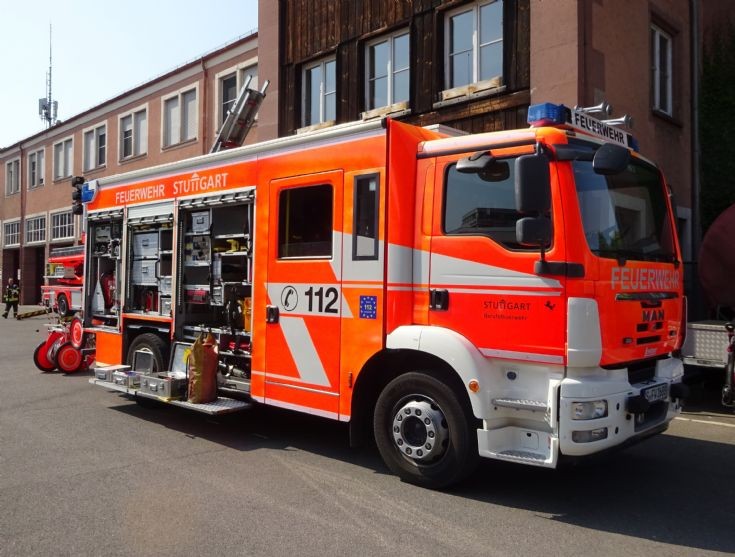
No: 44214 Contributor: Jacques Peter Year: 2023 Manufacturers: Lentner, Mercedes-Benz Country: Germany
These HFL will be replaced by smaller rigs easier to manoeuvre in the old town..
Added by Jacques PETER on 23 June 2023.
Added by Jacques PETER on 23 June 2023.
Stuttgart is one of very few German cities to staff their rescue pumpers with only four crew members, although these - and other earlier units - were specified with seven seat cabs. With this change from six to four, the first response to structure fires has been upgraded to three pumpers, along with the ladder and command van. This still brings the required minimum of sixteen personnel to the incident, but it was felt that this reallocation of staffing was more practical because a four person crew could handle most general service alarms, not to mention AFAs.
As a result, JP’s comment about new rescue pumpers being smaller than the unit illustrated here may have to do with the move to smaller crews too.
It will be interesting to see what they buy.
BTW most US cities crew pumpers with four people, for very much the same reason. Twenty crew staffing five pumpers provides more flexibility than having five on each of only four units.
Traditional and heavily unionized fire departments like New York and Chicago still have five person crews, but it’s not clear that this is a meaningful advantage. In some parts of the country, it is a standing joke that FDNY does not use water to put out fires, they just throw bodies at them!
Added by Rob Johnson on 07 July 2023.
As a result, JP’s comment about new rescue pumpers being smaller than the unit illustrated here may have to do with the move to smaller crews too.
It will be interesting to see what they buy.
BTW most US cities crew pumpers with four people, for very much the same reason. Twenty crew staffing five pumpers provides more flexibility than having five on each of only four units.
Traditional and heavily unionized fire departments like New York and Chicago still have five person crews, but it’s not clear that this is a meaningful advantage. In some parts of the country, it is a standing joke that FDNY does not use water to put out fires, they just throw bodies at them!
Added by Rob Johnson on 07 July 2023.
Lentner


Added by Rob Johnson on 22 June 2023.