
Upload a Picture
About this Site | Links | Random Pic | Advanced Search
Home | Latest Additions | Contributors
| Visitors
Fire Engine Photos
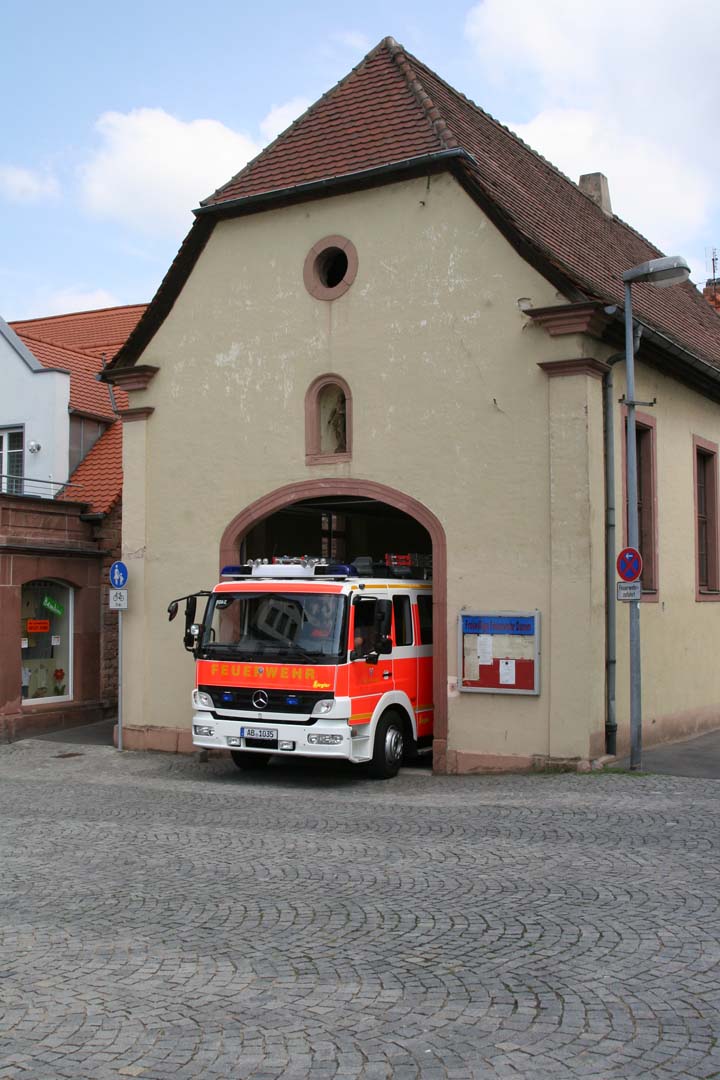
Fire station Damm Aschaffenburg
The fire station of Damm, Aschaffenburg. You can see the appliance is just fitting into the garage. The fire brigade is building a new home for this lovely Mercedes Benz Atego.
The fire station of Damm, Aschaffenburg. You can see the appliance is just fitting into the garage. The fire brigade is building a new home for this lovely Mercedes Benz Atego.
This picture is in the following groups
Feuerwehr Aschaffenburg, Germany
Feuerwehr Aschaffenburg, Germany
This example illustrates just how developed the level of fire protection can be in a medium sized German town, thanks mainly to the fact that the municipality does not have to incur any payroll, pension, or benefits costs for its members.
As the UK service stumbles through continuing cut backs, this rather obvious alternative becomes increasingly worthy of consideration.
This is particularly the case, bearing in mind that almost every other country in the World relies on unpaid volunteers for at least 50% to 75% of their firefighting strength - and the infamous Bain report on the future of the British fire service made no international comparisons at all. It did not even attempt to identify any best practices in any other country!
Added by Rob Johnson on 21 May 2018.
As the UK service stumbles through continuing cut backs, this rather obvious alternative becomes increasingly worthy of consideration.
This is particularly the case, bearing in mind that almost every other country in the World relies on unpaid volunteers for at least 50% to 75% of their firefighting strength - and the infamous Bain report on the future of the British fire service made no international comparisons at all. It did not even attempt to identify any best practices in any other country!
Added by Rob Johnson on 21 May 2018.
Germany has no less than 97% of its firefighters represented by volunteers, only equalled as far as I can find out by Austria and Chile, which are even closer to 100% volunteer as far as responding operational personnel are concerned. While countries with only very small numbers of volunteers such as the UK spend 75 to 80% of their budgets on payroll and benefits, countries with high levels of unpaid volunteers have much more of their money available for vehicles, equipment and a more dense network of fire stations.
This means that first response turnout times are often very comparable to full time station responses, and the resources available for multiple alarm incidents are much more readily available. In addition many small and medium size communities can afford to have highly specialized units on their rosters, which full time fire brigades in the UK simply cannot consider.
Added by Rob Johnson on 26 April 2026.
This means that first response turnout times are often very comparable to full time station responses, and the resources available for multiple alarm incidents are much more readily available. In addition many small and medium size communities can afford to have highly specialized units on their rosters, which full time fire brigades in the UK simply cannot consider.
Added by Rob Johnson on 26 April 2026.
Mercedes-Benz


The town has eight volunteer company stations, housing ten pumpers, three water tenders, six rescue and/or special equipment trucks, two aerials, two pod carriers and seven pods.
This is Pumper LF3, a 2000 LPM pump with a 1200 liter water tank and a nine person cab, one of six. The other four are HLF rescue pumpers.
There are currently 212 fully active operational volunteers, covering a total population of 69, 000 persons.
Added by Rob Johnson on 14 October 2017.