
Upload a Picture
About this Site | Links | Random Pic | Advanced Search
Home | Latest Additions | Contributors
| Visitors
Fire Engine Photos
Comment removed at request of Commentor
Andy:
They are the solution in almost every other country in the World, tailored to local conditions of course - and taking into account population density, fire risk profiles and the like.
Most other countries have between 55% and (in Germany) 96% volunteers among operational firefighters. Chile is 100% unpaid volunteer, including the capital with over five million population.
Many countries do in fact have a volunteer fire station for every 7000 people, including Germany, Austria and Spain. In France, it is closer to 12, 000.
When over 70% of British fire services' annual budget is spent on payroll, selective recruitment of unpaid volunteers would relieve the cost pressure they are under. In many countries, even major cities like New York, Tokyo and Berlin rely in part on unpaid volunteers, so their usefulness is not limited to small towns or rural areas.
Scotland has volunteers at remote rural locations, but my point is that the access to fire protection, the number of fire stations, amount of equipment and numbers of motivated and trained responders has been demonstrated in almost every country in the World to be cost effective only when a decent number of firefighters are unpaid volunteers.
This is not an opinion. it is a carefully researched fact.
Added by Rob Johnson on 28 March 2019.
They are the solution in almost every other country in the World, tailored to local conditions of course - and taking into account population density, fire risk profiles and the like.
Most other countries have between 55% and (in Germany) 96% volunteers among operational firefighters. Chile is 100% unpaid volunteer, including the capital with over five million population.
Many countries do in fact have a volunteer fire station for every 7000 people, including Germany, Austria and Spain. In France, it is closer to 12, 000.
When over 70% of British fire services' annual budget is spent on payroll, selective recruitment of unpaid volunteers would relieve the cost pressure they are under. In many countries, even major cities like New York, Tokyo and Berlin rely in part on unpaid volunteers, so their usefulness is not limited to small towns or rural areas.
Scotland has volunteers at remote rural locations, but my point is that the access to fire protection, the number of fire stations, amount of equipment and numbers of motivated and trained responders has been demonstrated in almost every country in the World to be cost effective only when a decent number of firefighters are unpaid volunteers.
This is not an opinion. it is a carefully researched fact.
Added by Rob Johnson on 28 March 2019.
Comment removed at request of Commentor
Andy:
Some of my sources seem to think that the main obstacle to having more volunteers in the UK may be the Fire Brigade Union, who have apparently been very instrumental in resisting efforts to encourage volunteers.
I personally think it is only a matter of time; the enormous cost pressures on CFOs seem to be just getting more and more draconian - and there really is no other solution.
A few German towns still have compulsory unpaid on-call firefighters, and of course here in the US we have a lot of convict fire crews for forest firefighting, but I don't think either of these ideas would go down well in the UK!
One very common approach here - which could work in the UK if the FBU would go along with it - is to require off duty full time firefighters to respond on call to reinforce the duty watch as and when needed. This does not improve initial response coverage, but it does help the situation on those relatively rare occasions when a major incident occurs, or when multiple incidents occur at the same time.
FDNY did this on 9/11 - but has since completely redesigned the recall response process, because on that occasion it was terribly disorganized and not very effective.
Many other US cities have a well developed recall protocol, and a large number of reserve appliances which are ready to roll if needed. They do require their members to live in the community, but this a fairly common precondition for employment in most city jobs anyway.
As for the time commitment made by on call volunteers, countries with strong Anglo-Saxon traditions such as Australia and New Zealand
are both protected by firefighting organizations which are mainly unpaid volunteers - and I don't think that in the days of the AFS their members in the UK were paid.
Among other things, the numbers of people who are needed is not large. A typical New Zealand volunteer fire station has around 23 volunteers - not a huge number in a community with 7, 000 citizens! And they only attend about one call a week on average.
When I lived in Manhasset on Long Island we had around 250 volunteer firefighters out of 44, 000 residents, only 0.5% of the population - but it was enough to have a total of at least sixty personnel able to respond with 11 pumps, three aerials, two rescues and three ambulances if necessary...
When a fire service like Greater Manchester protects 2.6 million citizens with 40 pumps and three aerials, and London sends four pumps and twenty firefighters to the Grenfell Tower high rise residential building in the middle of the night - with no aerial, rescue or senior officer - it becomes clear that the cutbacks have already gone way too far - and they are not over yet!
Added by Rob Johnson on 03 April 2019.
Some of my sources seem to think that the main obstacle to having more volunteers in the UK may be the Fire Brigade Union, who have apparently been very instrumental in resisting efforts to encourage volunteers.
I personally think it is only a matter of time; the enormous cost pressures on CFOs seem to be just getting more and more draconian - and there really is no other solution.
A few German towns still have compulsory unpaid on-call firefighters, and of course here in the US we have a lot of convict fire crews for forest firefighting, but I don't think either of these ideas would go down well in the UK!
One very common approach here - which could work in the UK if the FBU would go along with it - is to require off duty full time firefighters to respond on call to reinforce the duty watch as and when needed. This does not improve initial response coverage, but it does help the situation on those relatively rare occasions when a major incident occurs, or when multiple incidents occur at the same time.
FDNY did this on 9/11 - but has since completely redesigned the recall response process, because on that occasion it was terribly disorganized and not very effective.
Many other US cities have a well developed recall protocol, and a large number of reserve appliances which are ready to roll if needed. They do require their members to live in the community, but this a fairly common precondition for employment in most city jobs anyway.
As for the time commitment made by on call volunteers, countries with strong Anglo-Saxon traditions such as Australia and New Zealand
are both protected by firefighting organizations which are mainly unpaid volunteers - and I don't think that in the days of the AFS their members in the UK were paid.
Among other things, the numbers of people who are needed is not large. A typical New Zealand volunteer fire station has around 23 volunteers - not a huge number in a community with 7, 000 citizens! And they only attend about one call a week on average.
When I lived in Manhasset on Long Island we had around 250 volunteer firefighters out of 44, 000 residents, only 0.5% of the population - but it was enough to have a total of at least sixty personnel able to respond with 11 pumps, three aerials, two rescues and three ambulances if necessary...
When a fire service like Greater Manchester protects 2.6 million citizens with 40 pumps and three aerials, and London sends four pumps and twenty firefighters to the Grenfell Tower high rise residential building in the middle of the night - with no aerial, rescue or senior officer - it becomes clear that the cutbacks have already gone way too far - and they are not over yet!
Added by Rob Johnson on 03 April 2019.
Comment removed at request of Commentor
Andy:
Thanks for your interest.
My local department had a standard for attendance response rates for all of its its volunteers, which I could not sustain. My job at that time involved a great deal of travel both within the US and to numerous overseas countries for often quite extended periods of time. I had 56 operating business locations across the US alone, as well as operations in fourteen foreign countries.
When home, I commuted into New York City, so I knew from the outset that I could not sustain the required attendance record. I did however have numerous friends in the fire service, and went to eleven of my friends' memorial services after 9/11.
While answering your question, I would point out that I am not suggesting Britain should adopt any particular foreign practice - merely reporting on how others solve the same problems.
When the Bain report was published - giving the green light for dramatic cuts in the UK fire service, and setting the stage for what will certainly be more cuts to come - the authors did no research into how any other country anywhere might be providing better fire coverage at less cost.
In this day and age, when companies and organizations routinely look everywhere for creative solutions and best practices, it is very sad that all Bain could come up with was "less of the same".
Added by Rob Johnson on 10 April 2019.
Thanks for your interest.
My local department had a standard for attendance response rates for all of its its volunteers, which I could not sustain. My job at that time involved a great deal of travel both within the US and to numerous overseas countries for often quite extended periods of time. I had 56 operating business locations across the US alone, as well as operations in fourteen foreign countries.
When home, I commuted into New York City, so I knew from the outset that I could not sustain the required attendance record. I did however have numerous friends in the fire service, and went to eleven of my friends' memorial services after 9/11.
While answering your question, I would point out that I am not suggesting Britain should adopt any particular foreign practice - merely reporting on how others solve the same problems.
When the Bain report was published - giving the green light for dramatic cuts in the UK fire service, and setting the stage for what will certainly be more cuts to come - the authors did no research into how any other country anywhere might be providing better fire coverage at less cost.
In this day and age, when companies and organizations routinely look everywhere for creative solutions and best practices, it is very sad that all Bain could come up with was "less of the same".
Added by Rob Johnson on 10 April 2019.
Comment removed at request of Commentor
Just to clarify the comments made to me about the FBU, my sources indicated that their problem was with unpaid volunteer firefighters - which is, of course, the key to providing improved fire protection at less cost in other places.
Apparently - and perhaps not surprisingly - it was thought that having people working as firefighters without monetary compensation would undermine their negotiating position when it came to paid firefighters' remuneration....
Added by Rob Johnson on 14 April 2019.
Apparently - and perhaps not surprisingly - it was thought that having people working as firefighters without monetary compensation would undermine their negotiating position when it came to paid firefighters' remuneration....
Added by Rob Johnson on 14 April 2019.
Andy - It may be rather amazing for you in light of your comments, but one other reason I was unable to join our local VFD was that there already was a waiting list!
Even if I had been able to meet the response criteria, I would still have had to wait to be accepted, as the department had a full roster of 245 volunteers and over 30 additional qualified applicants - which meant a wait of around two years or longer.
Added by Rob Johnson on 24 April 2019.
Even if I had been able to meet the response criteria, I would still have had to wait to be accepted, as the department had a full roster of 245 volunteers and over 30 additional qualified applicants - which meant a wait of around two years or longer.
Added by Rob Johnson on 24 April 2019.
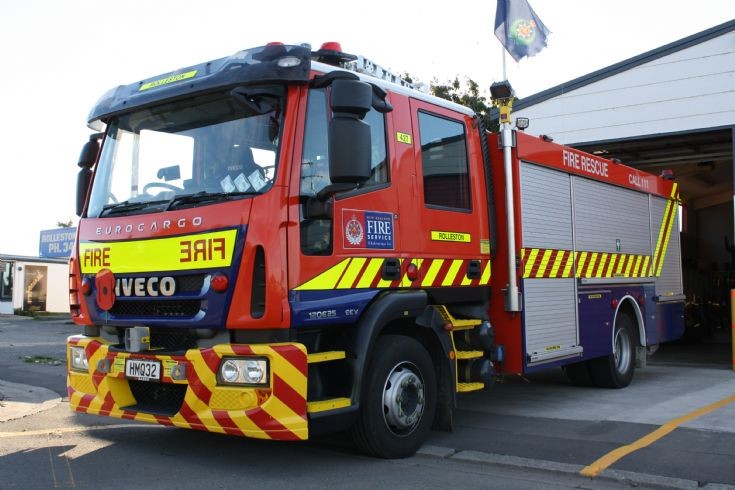
Iveco


There are 79 full time stations in larger towns and cities, and these house the vast majority of specialized units as well of course as their own pumps. The total fleet includes around 850 various fire and rescue appliances and 330 support vehicles.
Combined, they attend around 80, 000 calls a year, with the volunteers handling between 20% and 30% of all incidents.
Yet another example for the UK of how to provide excellent fire cover without breaking the bank!
Added by Rob Johnson on 18 March 2019.