
Upload a Picture
About this Site | Links | Random Pic | Advanced Search
Home | Latest Additions | Contributors
| Visitors
Fire Engine Photos
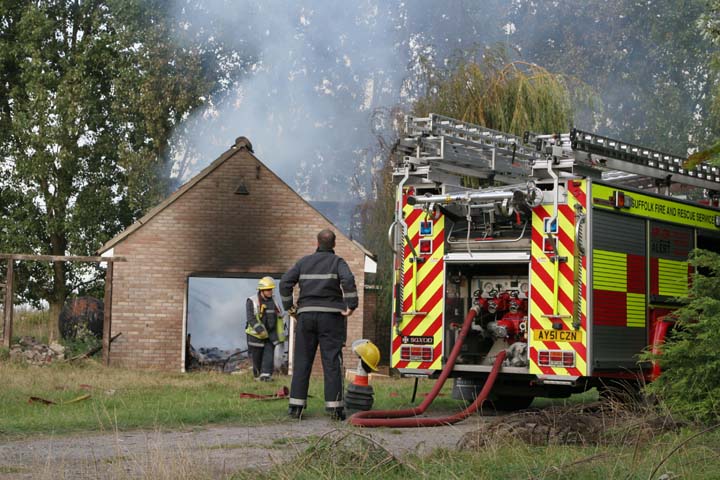
Jim, you are right the hose is connected at both ends. The hose in question is a known as a " short length " used to fill the appliance tank from a fire hydrant in the street. If water is not going through the fire pump, ( because not a lot of water is required on the fire ground ) it tends to overheat and boil causing damage to the pump, because its only being circulated round the pump casing.To over come this one end of the "short length " is connected to the delivery outlet and the other is connected to the water tank inlet, it then has a greater ammount of water to keep the pump cool, as its using the contents of the tank.
Added by Paul Warnock on 15 January 2008.
Added by Paul Warnock on 15 January 2008.
some modern fire pumps " dump " an amount of water from the pump casing when they get to a certain temperature through a one way valve to keep it cool.
Added by Paul Warnock on 15 January 2008.
Added by Paul Warnock on 15 January 2008.
the hose is connected like that too keep the eye of the pump cool so it doesn't overheat.
Added by Jamie Percival on 15 January 2008.
Added by Jamie Percival on 15 January 2008.
yea as a driver/pump operator this is done when using the hose reel and it stops the pump from over heating it circulates the water through the pump casing and back into the tank via the tank filler. hope this helps...
Added by Mick on 15 January 2008.
Added by Mick on 15 January 2008.
Many of the newer appliances come fitted with a short length (enough to reach from a delivery to the hydrant filler inlet) of hosereel tubing or similar with standard couplings on each end (in essence a mini-short length)to serve the purpose outlined above. It is usually left in situ and therefore opening the relevant delivery sets up an instant "cooling loop" as it is often termed. At larger incidents where all the deliveries are in use it can be easily taken off if need be (overheating would not be such a problem due to the large flow of water through the pump casing). The setting up of a cooling loop is sometimes overlooked but is one of the hallmarks of a good pump operator.
Added by Chris on 28 September 2008.
Added by Chris on 28 September 2008.
AY51CZN will be leaving Brandon this week it will be reallocated to Clare.
Added by Richard Whiting on 28 October 2012.
Added by Richard Whiting on 28 October 2012.
I have been a driver of pumpers, with front and rearmounted pumps.We used a hoseloop to provide the deconshower with hotwater at a HazMat-drill! That was the ONLY time!
Anders F.Sweden.
Added by Anders Fallström on 12 September 2015.
Anders F.Sweden.
Added by Anders Fallström on 12 September 2015.
Volvo


Added by JimWinsor on 15 January 2008.