800 LPM pump, crew seats for nine, no water tank. A very popular specification with numerous examples bought by many of Germany’s 20, 000+ volunteers fire companies. Its was mainly used for first response to urban structure fires, and there were versions with and without a portable pump in the rear compartment.
Its two main attractions were low cost and a GVW which allowed the driver to operate it with a standard passenger car driver’s license, so practically any volunteer could get in and drive it.
The big disadvantage was the absence of a water tank, and later versions added a 600 liter tank, very similarly to the typical French first aid pumper. Because these were operated by volunteers who often had very few runs, however, these “dry” pumpers often saw thirty or more years of service before being replaced.

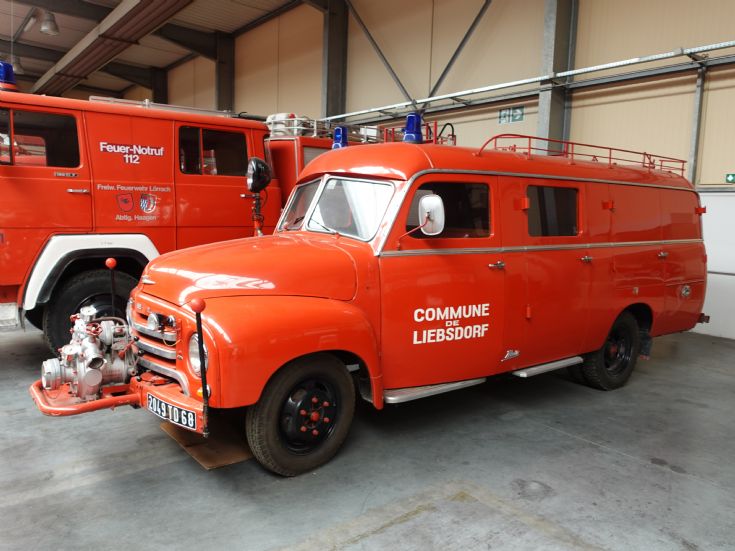


Its two main attractions were low cost and a GVW which allowed the driver to operate it with a standard passenger car driver’s license, so practically any volunteer could get in and drive it.
The big disadvantage was the absence of a water tank, and later versions added a 600 liter tank, very similarly to the typical French first aid pumper. Because these were operated by volunteers who often had very few runs, however, these “dry” pumpers often saw thirty or more years of service before being replaced.
Added by Rob Johnson on 04 December 2024.