
Upload a Picture
About this Site | Links | Random Pic | Advanced Search
Home | Latest Additions | Contributors
| Visitors
Fire Engine Photos
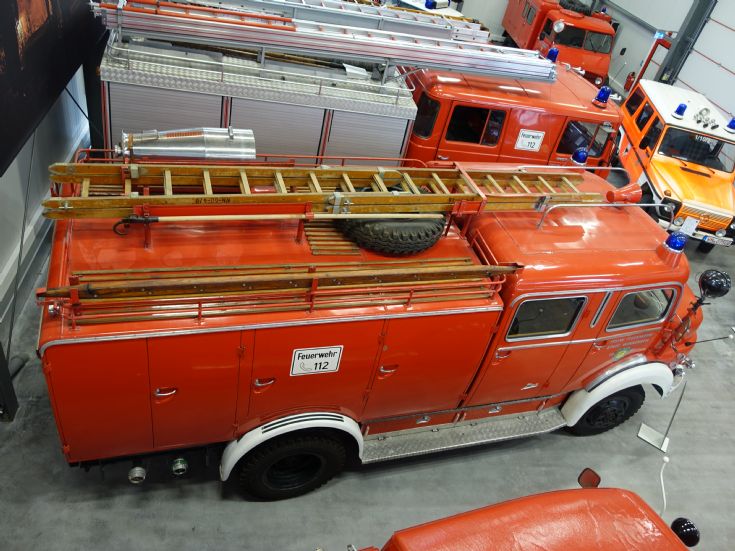
Perhaps I should add that this standard water tender was an integral part of structure fire first response in communities all over West Germany for many decades between 1950 and 2020. This standard response or “Loeschzug” included a command van, a TLF 16 water tender, LF 16 pumper and a DL 30 thirty metre TL. Staffing was 2 or 3 on the command van, 6 on the TLF, 9 on the LF and 2 on the DL, for a total of 17 or 18. German legislation at the time mandated a minimum 16 firefighters was legally required to attend any structure fire alarm as the initial alarm response.
Added by Rob Johnson on 18 March 2024.
Added by Rob Johnson on 18 March 2024.
Mercedes-Benz


This very well maintained thirty year old example was a 4X4, which was an option, but was actually very common, as a lot of fire services used them as first responders to wildfires as well as to urban structures.
The usual Mercedes chassis was the L1113, with an 11 ton GVW and a 130 BHP diesel engine. LF 16s also turned up in large numbers mainly on Magirus and MAN chassis.
Added by Rob Johnson on 17 March 2024.