
Upload a Picture
About this Site | Links | Random Pic | Advanced Search
Home | Latest Additions | Contributors
| Visitors
Fire Engine Photos
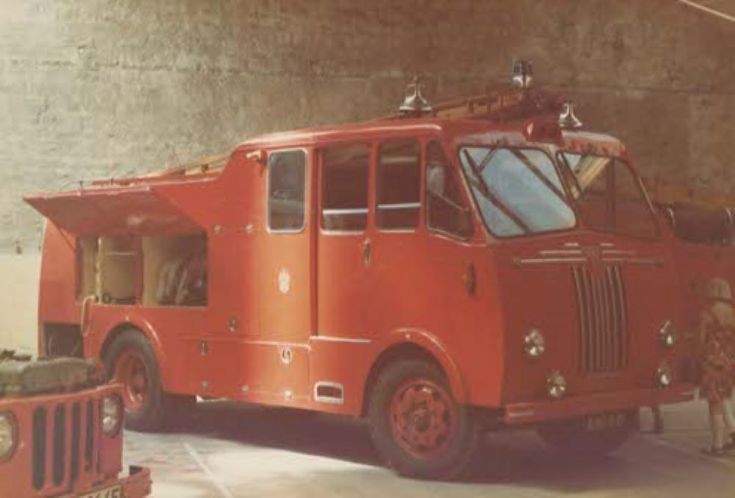
Hi Stephen, Did you happen to photograph the appliance in the background (just visible on the right of this picture)?
It is Dennis F7, EVH 680, ex Huddersfield.

Added by Chris Wood on 11 July 2022.
It is Dennis F7, EVH 680, ex Huddersfield.
Added by Chris Wood on 11 July 2022.
Thanks for linking picture 41292 to my comment Ed. I hope to be able to submit a more recent picture soon.
Ed: look forward to it. Keep the pictures coming especially of 50s/60s/70s British machines.
Added by Chris Wood on 13 July 2022.
Ed: look forward to it. Keep the pictures coming especially of 50s/60s/70s British machines.
Added by Chris Wood on 13 July 2022.
No Chris I didn’t photograph the f7 in the Museum. Limited number of prints available on my camera! I see the Ed has provided a link. Best wishes. Steve.
Added by on 13 July 2022.
Added by on 13 July 2022.
No worries Steve. I remember what it was like to have to ration what photographs I took although I wasn't very good at it! The F7 often pops up in pictures and it's always nice to get even a glimpse of the old girl.
Added by Chris Wood on 17 July 2022.
Added by Chris Wood on 17 July 2022.
If we compare the F7 to the last of the prewar Dennis and Leyland appliances from a decade earlier, it was a truly revolutionary design.
In many respects it was also years ahead of most contemporary fire engines in North America and most of Europe when it came to design, configuration, engine power, pump performance, water tank capacity, cab room, locker capacity and the ability to carry numerous ladders including the 15 metre escape.
Added by Rob Johnson on 17 July 2022.
In many respects it was also years ahead of most contemporary fire engines in North America and most of Europe when it came to design, configuration, engine power, pump performance, water tank capacity, cab room, locker capacity and the ability to carry numerous ladders including the 15 metre escape.
Added by Rob Johnson on 17 July 2022.
Shame we never kept the lead !
Added by CraigW on 19 July 2022.
Added by CraigW on 19 July 2022.
Same story as the rest of the motor industry, I'm afraid. Not enough focus on export markets, under-investment in new technologies and advanced production methods - all on top of a lot of problems with a highly unionized workforce.
Added by Rob Johnson on 21 July 2022.
Added by Rob Johnson on 21 July 2022.

Maudslay


Added by Rob Johnson on 01 July 2022.