
Upload a Picture
About this Site | Links | Random Pic | Advanced Search
Home | Latest Additions | Contributors
| Visitors
Fire Engine Photos
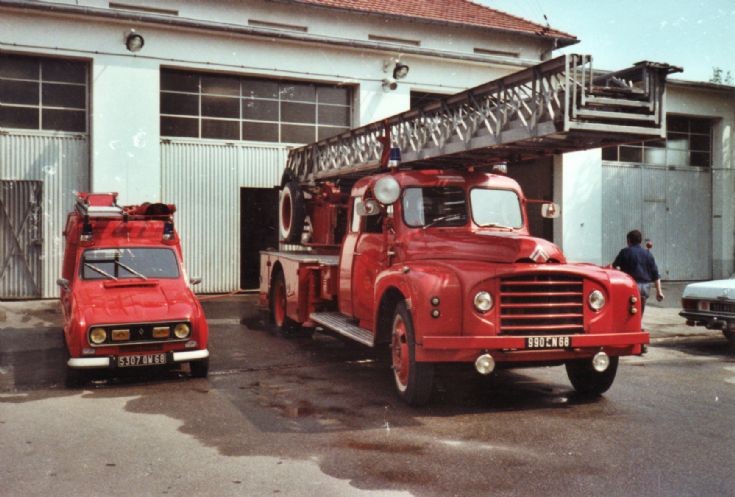
This Renault 4 VTU is probably as small as they came! Just like Germany, and other countries which have introduced minor alarm units, French VTUs have tended to grow bigger over the years, as fire services continue to add more and more "essential" items to their inventory of contents. Perhaps they will eventually become so big that they will resemble the old Belgian "material tender" - essentially a pump appliance without the pump or water tank?
Added by Rob Johnson on 29 May 2022.
Added by Rob Johnson on 29 May 2022.
The seats at the back were facing each other, and staff were sitting the back to the windows
Added by Jacques PETER on 30 May 2022.
Added by Jacques PETER on 30 May 2022.
The British Dennis F17 Metz TTL in the early 1950s achieved a short crew cab by having a rear facing crew seat under a half canopy - a similar arrangement as was originally invented by American La France in the 1940s, and later adopted by almost every American fire truck builder. But the French solution is ideal for crew members who could have a nice game of chess on the way to an incident, and they were more likely to stay dry if it rained! Not having done much of either, I wonder if riding backwards is better or worse than traveling sideways?
Ed: I am going to post a picture showing the seating on an F17
Added by Rob Johnson on 30 May 2022.
Ed: I am going to post a picture showing the seating on an F17
Added by Rob Johnson on 30 May 2022.
Citroën


Added by Rob Johnson on 29 May 2022.