
Upload a Picture
About this Site | Links | Random Pic | Advanced Search
Home | Latest Additions | Contributors
| Visitors
Fire Engine Photos
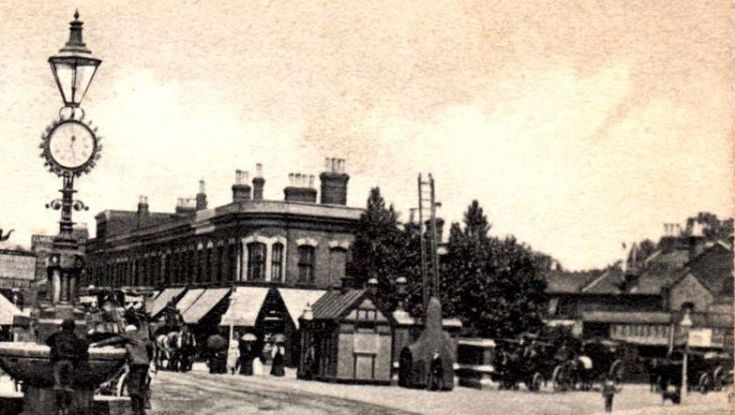
Forest Gate street escape station West Ham
this is also Sebert Road, Forest Gate, East London this time about 1904. In the centre is the street escape. This was staffed part time by a West Ham brigade member, who, if there was a call, would collar strong local persons to drag the escape to an incident. Later of course they were mounted on vehicles. For West Ham Fire Brigade this happened in 1908 - these Lloyd and Plaister vehicles are here

this is also Sebert Road, Forest Gate, East London this time about 1904. In the centre is the street escape. This was staffed part time by a West Ham brigade member, who, if there was a call, would collar strong local persons to drag the escape to an incident. Later of course they were mounted on vehicles. For West Ham Fire Brigade this happened in 1908 - these Lloyd and Plaister vehicles are here
Not quite right Rob. The West Ham establishment list 1918 shows three horsed escapes. More details in my book advertised on front page of this website.
Added by Petros on 06 October 2020.
Added by Petros on 06 October 2020.
It seemed unusual that West Ham skipped the horse drawn escape van phase at Balaam, but I guess it pays to have read the book!
It seems most brigades did indeed got through the horsed escape carriers phase before buying self propelled units.
I read somewhere that these early ones could manage an average response speed of around 12 mph compared to about 8 mph for the horsed carriers, which does not seem like a dramatic improvement!
But of course they cost a lot less to maintain than a pair of horses, did not need a coachman to look after them at the incident scene, and could travel a lot further than the horses without getting tired. And they were perhaps three or four times faster than just pushing the ladder along the street.
And - although it took a long time for most brigades to realize it - you could also combine a pump, water tank, hose reel and hose lockers along with the escape on the same motor chassis.
Merryweather built a pump escape with all of these features for Finchley CB in 1904, although most brigades seem to have run separate motor pumps and escape carriers well into the 1920s. Way before its time, it may I think be the only fire appliance to have been featured on a Royal Mail postage stamp.
Added by Rob Johnson on 06 October 2020.
It seems most brigades did indeed got through the horsed escape carriers phase before buying self propelled units.
I read somewhere that these early ones could manage an average response speed of around 12 mph compared to about 8 mph for the horsed carriers, which does not seem like a dramatic improvement!
But of course they cost a lot less to maintain than a pair of horses, did not need a coachman to look after them at the incident scene, and could travel a lot further than the horses without getting tired. And they were perhaps three or four times faster than just pushing the ladder along the street.
And - although it took a long time for most brigades to realize it - you could also combine a pump, water tank, hose reel and hose lockers along with the escape on the same motor chassis.
Merryweather built a pump escape with all of these features for Finchley CB in 1904, although most brigades seem to have run separate motor pumps and escape carriers well into the 1920s. Way before its time, it may I think be the only fire appliance to have been featured on a Royal Mail postage stamp.
Added by Rob Johnson on 06 October 2020.
Latest Pics


Many of London's earlier motor escape vans were battery electric, but later acquisitions were all petrol powered. Unlike the 1908 Lloyd and Plaister, all of their motor escape vans had a soda acid first aid water tank and hose reel system.
London still had some street stations through to the end of WWII, but they disappeared soon after as the entire city fleet became motorized and the horse drawn escape vans were also all replaced.
The thirty years from 1890 to 1920 were a very eventful period for the evolution of firefighting equipment, and also saw the introduction of turntable ladders, self-contained breathing apparatus and chemical airfoam, among others.
Added by Rob Johnson on 03 October 2020.