These Lancashire appliances had the Perkins V8 510 CID diesel engine rated at 170 BHP, and the actual Ford model designation was 1617.
This was a standard Ford offering, but fire brigades generally need not need a 16 ton chassis, except for aerials and a few special applications.
As a result, Ford SVO squeezed the Perkins V8 into a 13 ton chassis which - with other modifications - became the new 1317 fire appliance chassis. This was more suitable for water tender and WTE applications, as well as a few ETs and other specials. A 10 ton chassis with either a naturally aspirated 130 BHP six cylinder Ford 360 CID engine was also available, as well as a 1014 with a turbo charged 140 BHP 300 CID engine. These were less expensive, but could still accommodate everything required to meet a Home Office water tender specification.
As I recall, Lancashire was the only brigade to operate 1617 water tenders, and they switched after the 1317 became available.

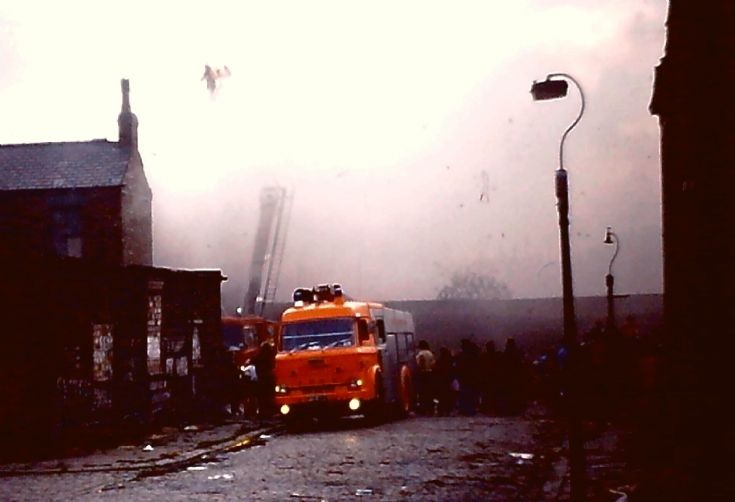


This was a standard Ford offering, but fire brigades generally need not need a 16 ton chassis, except for aerials and a few special applications.
As a result, Ford SVO squeezed the Perkins V8 into a 13 ton chassis which - with other modifications - became the new 1317 fire appliance chassis. This was more suitable for water tender and WTE applications, as well as a few ETs and other specials. A 10 ton chassis with either a naturally aspirated 130 BHP six cylinder Ford 360 CID engine was also available, as well as a 1014 with a turbo charged 140 BHP 300 CID engine. These were less expensive, but could still accommodate everything required to meet a Home Office water tender specification.
As I recall, Lancashire was the only brigade to operate 1617 water tenders, and they switched after the 1317 became available.
Added by Rob Johnson on 08 June 2020.