
Upload a Picture
About this Site | Links | Random Pic | Advanced Search
Home | Latest Additions | Contributors
| Visitors
Fire Engine Photos
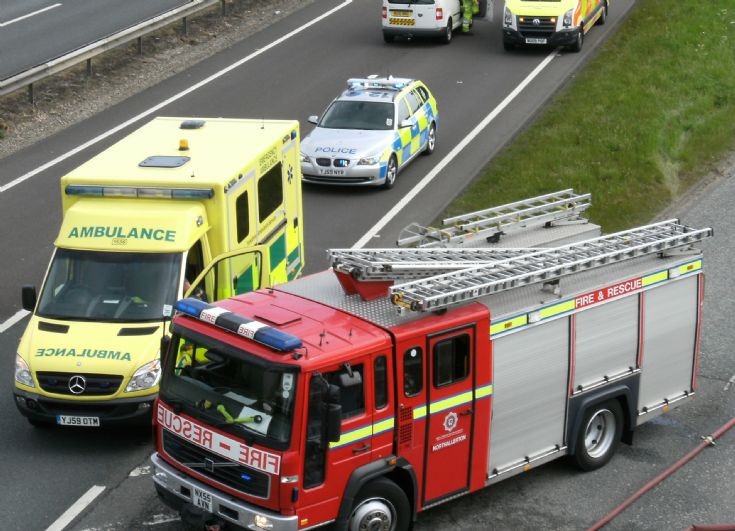
Typical British Emergency vehicle line up from ten years ago which demonstrates how British taxpayers keep the German and Swedish vehicle industries strong !
Added by CraigW on 16 April 2020.
Added by CraigW on 16 April 2020.
Craig - I wonder is it better or worse than having them subsidizing firms like British Leyland?
Added by Rob Johnson on 17 April 2020.
Added by Rob Johnson on 17 April 2020.
They failed because of poor products no doubt and the reasons for this can be argued. But is it wise for the 6th biggest economy to have almost no commercial vehicle industry. Would Germany or the USA allow this ?
Added by CraigW on 17 April 2020.
Added by CraigW on 17 April 2020.
Craig:
I worked in Ford Truck Division, Leyland International Truck and Bus and Volvo in the UK between 1966 and 1977, when I packed my bags and left to live in the US.
I was also incidentally offered the job of Managing Director of Dennis Brothers by Hestair, but after looking at their finances I turned it down.
Having witnessed the last death throes of the British truck industry first hand, I would like to share my personal view as to how this miserable tale actually unfolded.
British brands' trucks were not necessarily that bad, but they built nothing which was designed to compete in the large European markets like Germany, France and Italy, all of which had different GVW and engine power requirements from the UK. So exports into the EU were very small, and the distribution channel was very weak as a result. A few Britsh trucks were sold in places like Denmark, Belgium and Portugal, which had no truck manufacturers, but in the larger markets the numbers were tiny.
Their rationale was that the British market and many former British colonies were together big enough to support their business with standard UK specification vehicles alone, so why invest in different versions for the larger European markets.
But many much smaller countries did export extensively into the rest of the EU, instead of just relying on their domestic market. Examples were DAF in the Netherlands, Scania and Volvo in Sweden, Steyr in Austria and Saurer in Switzerland.
Once imports started to come into Britain - and Volvo was the first - the lesser quality and performance of Leyland, Bedford, Commer and Ford products, as well as the myriad smaller firms - became obvious.
In addition, and in my view eve more significant, the early importers were fanatical about parts and service, knowing that they had to import everything, and rapidly became famous for having far better parts service than the British firms.
Incidentally, all of the early import truck brands were led by refugees from Ford Truck Division, which had been very successful in the 1960s and 1970s by focusing on customer service and parts availability above all.
And so the die was set, in both senses of the word...
Added by Rob Johnson on 17 April 2020.
I worked in Ford Truck Division, Leyland International Truck and Bus and Volvo in the UK between 1966 and 1977, when I packed my bags and left to live in the US.
I was also incidentally offered the job of Managing Director of Dennis Brothers by Hestair, but after looking at their finances I turned it down.
Having witnessed the last death throes of the British truck industry first hand, I would like to share my personal view as to how this miserable tale actually unfolded.
British brands' trucks were not necessarily that bad, but they built nothing which was designed to compete in the large European markets like Germany, France and Italy, all of which had different GVW and engine power requirements from the UK. So exports into the EU were very small, and the distribution channel was very weak as a result. A few Britsh trucks were sold in places like Denmark, Belgium and Portugal, which had no truck manufacturers, but in the larger markets the numbers were tiny.
Their rationale was that the British market and many former British colonies were together big enough to support their business with standard UK specification vehicles alone, so why invest in different versions for the larger European markets.
But many much smaller countries did export extensively into the rest of the EU, instead of just relying on their domestic market. Examples were DAF in the Netherlands, Scania and Volvo in Sweden, Steyr in Austria and Saurer in Switzerland.
Once imports started to come into Britain - and Volvo was the first - the lesser quality and performance of Leyland, Bedford, Commer and Ford products, as well as the myriad smaller firms - became obvious.
In addition, and in my view eve more significant, the early importers were fanatical about parts and service, knowing that they had to import everything, and rapidly became famous for having far better parts service than the British firms.
Incidentally, all of the early import truck brands were led by refugees from Ford Truck Division, which had been very successful in the 1960s and 1970s by focusing on customer service and parts availability above all.
And so the die was set, in both senses of the word...
Added by Rob Johnson on 17 April 2020.
Yes in a recent article in 'Vintage Roadscene' magazine a writer describing his early 1970's transport life says he took a ride with a driver in a Volvo artic and he was able to converse with the driver for the entire lengthy journey . Later he took the same ride in a new Guy Big J and they could not converse even by shouting. Although not the article's intention it sort of showed where Brits went wrong. What is the driver going to want to drive and his boss to buy ?
Added by CraigW on 18 April 2020.
Added by CraigW on 18 April 2020.
The lowly status of truck drivers in the UK compared to the rest of Europe was the main reason British manufacturers paid so little attention to issues like noise and comfort - perhaps a nod to the continuing class warfare that still prevailed well into the 1970s...
Added by Rob Johnson on 20 April 2020.
Added by Rob Johnson on 20 April 2020.
Volvo


Were they bodied by the same company?
Added by Rob Johnson on 16 April 2020.