
Upload a Picture
About this Site | Links | Random Pic | Advanced Search
Home | Latest Additions | Contributors
| Visitors
Fire Engine Photos
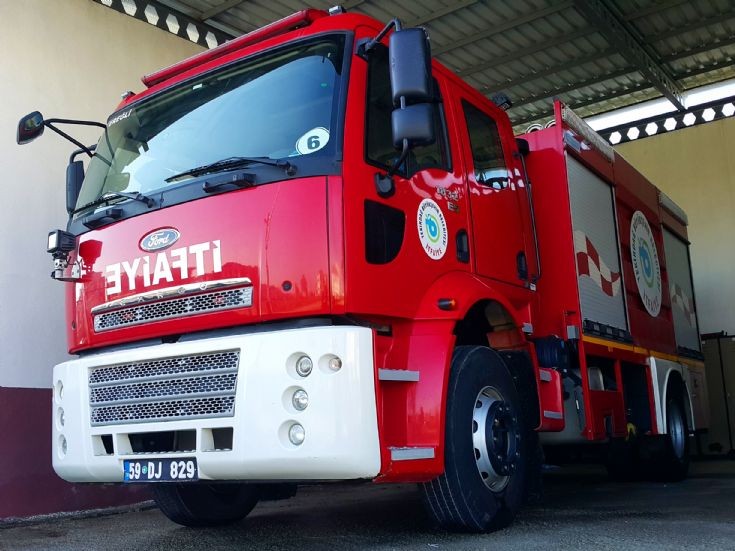
Not a fan of the "functional aspect" of these trucks. This is what happens when you try to make a fire truck using a regular truck chassis. Too many steps (4 steps t get in) that are far too narrow to safely climb in gear and with an airpack. Just my 2 cents.
Added by Todd on 21 March 2018.
Added by Todd on 21 March 2018.
Todd:
These days fire services are pretty much obliged to use commercial truck chassis, because all of the surviving custom fire truck manufacturers are now limited to the USA, and their rigs are generally just too big for road conditions in most other places.
When countries build trucks under license - like Turkey and Brazil - their fire services normally have to buy locally built units. In Turkey this means Ford or BMC, and in Brazil Ford, VW (MAN) or Scania...
So it is Hobson's choice!
Added by Rob Johnson on 22 March 2018.
Ford


As a result, you will find numerous Cargo fire trucks in both countries, while other places where the D series were popular in the fire service, such as the UK, Denmark, Belgium, Ireland, Australia and New Zealand, have few or none.
The Brazilian units are also exported to fire departments in several neighboring countries, and a few are pictured on this site.
I especially like this close-coupled tilting crew cab. Not very spacious, but practical...
Added by Rob Johnson on 10 March 2018.