
Upload a Picture
About this Site | Links | Random Pic | Advanced Search
Home | Latest Additions | Contributors
| Visitors
Fire Engine Photos
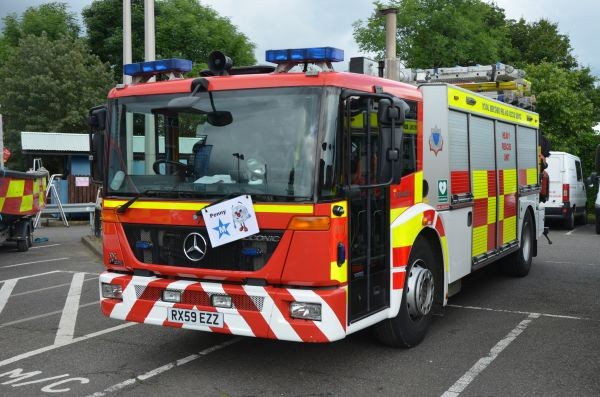
No: 40323 Contributor: Jean-Paul Heyens Year: 2016 Manufacturer: Mercedes-Benz Country: United Kingdom
It is indeed a heavy rescue unit. Don't know where material truck came from.
Added by David Jones on 21 December 2016.
Added by David Jones on 21 December 2016.
Thanks Davi. I thought maybe it would turn out to be an Emergency Fabric Tender or something similarly ridiculous!
Added by Yelp Bullhorn on 22 December 2016.
Added by Yelp Bullhorn on 22 December 2016.
Sorry about my previous post. I did mean David, and not Davi.
Added by Yelp Bullhorn on 24 December 2016.
Added by Yelp Bullhorn on 24 December 2016.
Yelp - my spies tell me it is a Reptilian Recovery and Rescue Road Runner Reserve Rig. Known in the brigade as the seven ars.
Added by Rob Johnson on 29 December 2016.
Added by Rob Johnson on 29 December 2016.
Hi Rob! I have not been on here in a long time.
The British have all these new names for rigs. They call a gasoline tanker a tanker, but in the fire service they call a water tanker a water carrier, a pump carries water too. And everything is a support unit. To me a pumps, ladders are support units. They support the mission.
Added by Leslie Davis on 05 April 2017.
The British have all these new names for rigs. They call a gasoline tanker a tanker, but in the fire service they call a water tanker a water carrier, a pump carries water too. And everything is a support unit. To me a pumps, ladders are support units. They support the mission.
Added by Leslie Davis on 05 April 2017.
it is actually a Mercedes dustbin lorry chassis converted to a heavy rescue unit , they are not a suitable chassis but used nonetheless , they were also used unsuccessfully for carps but that's another tragic story.
Added by Alan Ramsay on 08 April 2017.
Added by Alan Ramsay on 08 April 2017.
Comment removed at request of Commentor
I am aware that in the t/l and alp they have been used and have been moderately successful in it only in tiny numbers their use as carps as I said has been disastrous with one batch of four so bad they were taken off the run having been hardly used
Added by Ramsay on 10 April 2017.
Added by Ramsay on 10 April 2017.
Andy - also used extensively in many European countries for ladder towers and platforms, mainly because of the nice low cab profile. They can also be built with a short wheelbase tandem axle configuration and a steering third axle, which makes them exceptionally maneuverable. LFB has several of these.
Increasingly, Econics can be found in service as rescues, pumpers and even urban tankers, as well as pod carriers for special purpose containers.
Added by Rob Johnson on 10 April 2017.
Increasingly, Econics can be found in service as rescues, pumpers and even urban tankers, as well as pod carriers for special purpose containers.
Added by Rob Johnson on 10 April 2017.
Comment removed at request of Commentor
i am aware of the rear steer but in the big scheme of things and even on the continent they are not common , yes they have a low profile cab but because of the engine placement its pretty much impossible to tack on a crew cab without it losing a fair bit of chassis space , whilst this isnt an issue for some applications it does limit its uses , I am not saying its a bad fire appliance only it was designed originally as a refuse truck
Added by Alan Ramsay on 12 April 2017.
Added by Alan Ramsay on 12 April 2017.
Alan - the BSPP in Paris operate several pumpers which were originally built by Renault with factory crew cabs and PTOs as part of a municipal garbage truck order, which was cancelled. They work fine and the brigade was pleased to get early delivery because the chassis were already available.
Going back a little further in history, Dennis used to build garbage trucks on their production "line" right next to their fire engines! Many of the components for both applications were identical.
As for the Econic CARPs, many brigades had the same kinds of problems with CARPs on Scania and Volvo chassis. It seems the problem was an awful design concept, not the paricular chassis.
Added by Rob Johnson on 14 April 2017.
Going back a little further in history, Dennis used to build garbage trucks on their production "line" right next to their fire engines! Many of the components for both applications were identical.
As for the Econic CARPs, many brigades had the same kinds of problems with CARPs on Scania and Volvo chassis. It seems the problem was an awful design concept, not the paricular chassis.
Added by Rob Johnson on 14 April 2017.
less than 20 in the uk as alps , hardly succesfull , but a curiosity nonetheless, the appliances that have turned over have been top heavy carps , no record of t/l or alps rolling over any more than any other chassis regardless of cab height , I think the four carps on econic chassis were limited as well regarding roundabouts etc so the low cab didnt help , nice roomy cab though a bit noisy with engine noise especially but it is difficult to break the scania/volvo/man stranglehold on the uk market
Added by Tom Richardson on 14 April 2017.
Added by Tom Richardson on 14 April 2017.
Hello Rob, you seem to be an expert, are you a firefighter? yet you didn't say that when Dennis built garbage trucks or dustbin lorries that the parts used were engines and rear axles and sometimes transmission although the ratios were different for fire Apia cos, the chassis the suspension of the and 90%of the car s were designed and built in the specifically for fire use, the E Onich is a dust art chassis and will not last the twenty years that a Dennis did, Dennis priced themselves out if the market by selling designed that were pretty much built to order and ask West Midland their newest one is eleven years old and will last at least another five years, I have driven and ride in the back of Scania, man, Dennis and Mercedes whilst o the the run and the Dennis was fastest, handled way of enter, was easier to get in and out of by a fair bit and in xl guise easily as roomy, the downside was it was noisy I had to the cab and I believe that was rectified I would like the following new cab design that was to replace the sabre, the mass produced o es had a better more driver friendly dash design and were quieter and some said better looking but at least it didn't look like a tipper, anyway I retire down but by far the best I have used was the rapier and sabre, the brigade I work for now use Shania a d some volvo chassis, they are OK but wallow in corners and slow due to factory restrictor but fast enough considering the handling limitations and therefore safe and at the end of the day you cannot argue with that
Added by Tom Richardso on 18 April 2017.
Added by Tom Richardso on 18 April 2017.
Hi Tom:
I spent fifty plus years in the truck industry, living in five different countries and doing business in around thirty additional ones over the years.
I was always very interested in special applications and especially fire trucks, and I sold the first D series SVO Fords to Gloucestershire in 1967.
I also once went to be interviewed for the job of Managing Director of Dennis Brothers, just after they were bought by Hestair. I did not take the job, because I soon realized it was obvious that the new owners were not interested in growing the business - which had hardly any sales outside the UK - but only milking its profits by overcharging for its products, which - as you point out - was a certain recipe for their rapid demise!
Now retired, I reckon I have visited around 300 fire services in more than fifty countries, made numerous friendships, and am always interested in how new innovations come to light in hopefully making your job and the job of your brothers and sisters in the service safer and easier.
Custom fire trucks are great, but you need a volume operation to be able to build them profitably, so here in the US we have what is really the only large scale custom market left.
One reason is that the vast majority of fire departments here are all-volunteer. Without any payroll expense, the extra cost of a custom unit is not such a big issue!
As far as fire appliance longevity is concerned, take a look on this site at some of the trucks in front line service in Argentina. Thirty and forty year old rigs are pretty commonplace...
Added by Rob Johnson on 18 April 2017.
I spent fifty plus years in the truck industry, living in five different countries and doing business in around thirty additional ones over the years.
I was always very interested in special applications and especially fire trucks, and I sold the first D series SVO Fords to Gloucestershire in 1967.
I also once went to be interviewed for the job of Managing Director of Dennis Brothers, just after they were bought by Hestair. I did not take the job, because I soon realized it was obvious that the new owners were not interested in growing the business - which had hardly any sales outside the UK - but only milking its profits by overcharging for its products, which - as you point out - was a certain recipe for their rapid demise!
Now retired, I reckon I have visited around 300 fire services in more than fifty countries, made numerous friendships, and am always interested in how new innovations come to light in hopefully making your job and the job of your brothers and sisters in the service safer and easier.
Custom fire trucks are great, but you need a volume operation to be able to build them profitably, so here in the US we have what is really the only large scale custom market left.
One reason is that the vast majority of fire departments here are all-volunteer. Without any payroll expense, the extra cost of a custom unit is not such a big issue!
As far as fire appliance longevity is concerned, take a look on this site at some of the trucks in front line service in Argentina. Thirty and forty year old rigs are pretty commonplace...
Added by Rob Johnson on 18 April 2017.
Fair enough, I have spent thirty two years in the fire service, the last two in procurement but nearly thirty on the front line, I would like to think I know a bit about the practical things like usage for instance, I am not saying fire appliances based on truck chassis are not good all I am saying is a pukka designed from the chassis up is better but it costs money, and when truck makers are dishing out three chassis for the cost of two smaller manufacturers have no chance, as for volunteers I would like the USA my understanding is that they are very well funded so cost isn't an issue and yes fire trucks go on to new lives in different countries, different types of usage and have generally been subject of a rebuild but then I have always said we cast them before we have had our money out of them, new Zealand and Ireland for instance cannot get enough of ex british sabres, enough said anyway I wouldn't have mentioned the Ford D series
Added by Tom Richardso on 18 April 2017.
Added by Tom Richardso on 18 April 2017.
Tom - interestingly enough, the DO in charge of fleet management in Gloucestershire told me their Rolls engined Dennises were no more reliable than their Commer Miles units, but cost a lot more to maintain...Their decision to buy Fords was not only lower initial costs but less down time, easier maintenance and quicker and cheaper availability of parts.
The biggest problem with the D series was integrating the tilt cab, but firms like HCB, Merryweather and Carmichael eventually figured it out.
I lost count of how many British fire brigades bought D series, but I think it was around ten to fifteen. They had a choice of engines, including the same Perkins 510 V8 diesel engine as Dennis and ERF at the same time
The marketing challenge in Britain was that both Commer and Bedford had been in the UK market for fifteen years before the D was introduced, so every sale had to be a conquest. The old Trader was never available in the UK for fire service use, although they were modified locally in Australia, New Zealand, Belgium and the Netherlands.
The D did well in fire service fleets in some export markets - Denmark, Netherlands, Turkey, Australia and New Zealand, and its successor, the Fargo, was built in Brazil and is in fire service use in many south American countries.
The UK is just about the only country I have been to which does not have volunteers (except for two in England and a handful in Scotland).
If you look at any British fire brigade's annual report, you will usually find that payroll and benefits amount to 55% to 70% of total costs. Buying and operating appliances is normally less than 10%!
To give you a perspective, Nassau County on Long Island - right next to New York City - has a population of 1.4 million and is served by one full time fire station and more than 190 volunteer stations - one for every 7, 400 people and one every three square miles.
My own town, with a population of 43, 000, had five stations and over 250 volunteers covering ten square miles, with eleven pumps, two ladder towers, two heavy rescues, one quint, three ambulances and five chiefs' cars, responding to around 1, 900 emergency calls a year.
Germany has a long tradition of volunteers. There are less than 140 full time fire departments, but more than 20, 000 (not a misprint!) volunteer fire houses.
And this pattern is repeated all over the World...
Added by Rob Johnson on 19 April 2017.
The biggest problem with the D series was integrating the tilt cab, but firms like HCB, Merryweather and Carmichael eventually figured it out.
I lost count of how many British fire brigades bought D series, but I think it was around ten to fifteen. They had a choice of engines, including the same Perkins 510 V8 diesel engine as Dennis and ERF at the same time
The marketing challenge in Britain was that both Commer and Bedford had been in the UK market for fifteen years before the D was introduced, so every sale had to be a conquest. The old Trader was never available in the UK for fire service use, although they were modified locally in Australia, New Zealand, Belgium and the Netherlands.
The D did well in fire service fleets in some export markets - Denmark, Netherlands, Turkey, Australia and New Zealand, and its successor, the Fargo, was built in Brazil and is in fire service use in many south American countries.
The UK is just about the only country I have been to which does not have volunteers (except for two in England and a handful in Scotland).
If you look at any British fire brigade's annual report, you will usually find that payroll and benefits amount to 55% to 70% of total costs. Buying and operating appliances is normally less than 10%!
To give you a perspective, Nassau County on Long Island - right next to New York City - has a population of 1.4 million and is served by one full time fire station and more than 190 volunteer stations - one for every 7, 400 people and one every three square miles.
My own town, with a population of 43, 000, had five stations and over 250 volunteers covering ten square miles, with eleven pumps, two ladder towers, two heavy rescues, one quint, three ambulances and five chiefs' cars, responding to around 1, 900 emergency calls a year.
Germany has a long tradition of volunteers. There are less than 140 full time fire departments, but more than 20, 000 (not a misprint!) volunteer fire houses.
And this pattern is repeated all over the World...
Added by Rob Johnson on 19 April 2017.
Mercedes-Benz


Added by Yelp Bullhorn on 20 December 2016.