
Upload a Picture
About this Site | Links | Random Pic | Advanced Search
Home | Latest Additions | Contributors
| Visitors
Fire Engine Photos
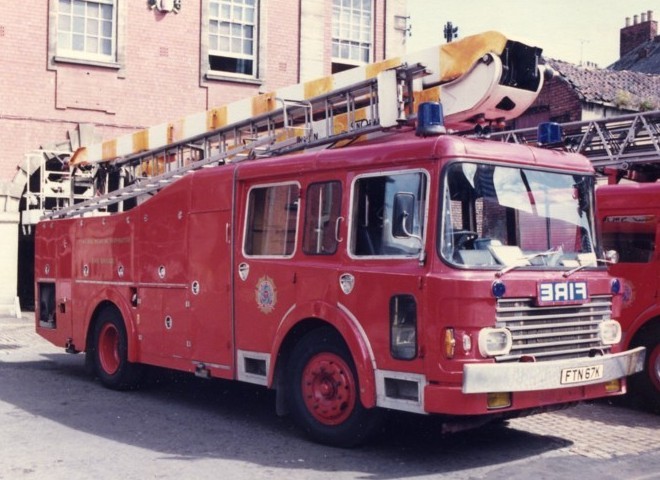
No: 29972 Contributor: Martin A. Routledge Year: 1984 Manufacturers: ERF, Simon Country: United Kingdom
Tyne & Wear ERF/Simon Snorkel Pump/HP
I believe this Pump Hydraulic Platform was new to Newcastle and Gateshead Fire Brigade in 1971. It is photographed here as a stand in for the usual Water ladder at Sunderland Central Station in July 1984.
FTN67K
See also

I believe this Pump Hydraulic Platform was new to Newcastle and Gateshead Fire Brigade in 1971. It is photographed here as a stand in for the usual Water ladder at Sunderland Central Station in July 1984.
FTN67K
See also
ERF


They were bigger, heavier, slower , less maneuverable and a lot more expensive than a standard PE or WTL, but actually less useful. This was because they often had compromised water tank capacity and/or locker accommodations, and usually had room for only a very limited selection of ladders.
The 50 (or sometimes 55) foot booms were rarely deployed, because they were too short to be very useful unless the appliance could be positioned with great precision - which was hardly ever possible.
A 50 foot wheeled escape or a 45 foot extension was more flexible and much more versatile, and appliances to carry these had been around for decades....
Not surprisingly, I have never been able to find a single case where any brigade replaced one of these beasts with another PHP, and many were sold off or relegated to reserve status within only a few years of being placed in service. (This may be an example.) Many other quite new units were sold off to brigades in Ireland and a few other unsuspecting countries, probably at bargain prices.
The once quite popular 55 foot American "quint" combination (pump, tank, hose bed, aerial + ground ladders) also was a short-lived concept. Quints are still in use, but are either 100+ foot ladders or towers or, in smaller communities, a 75 footer.
Added by Rob Johnson on 05 September 2018.