
Upload a Picture
About this Site | Links | Random Pic | Advanced Search
Home | Latest Additions | Contributors
| Visitors
Fire Engine Photos
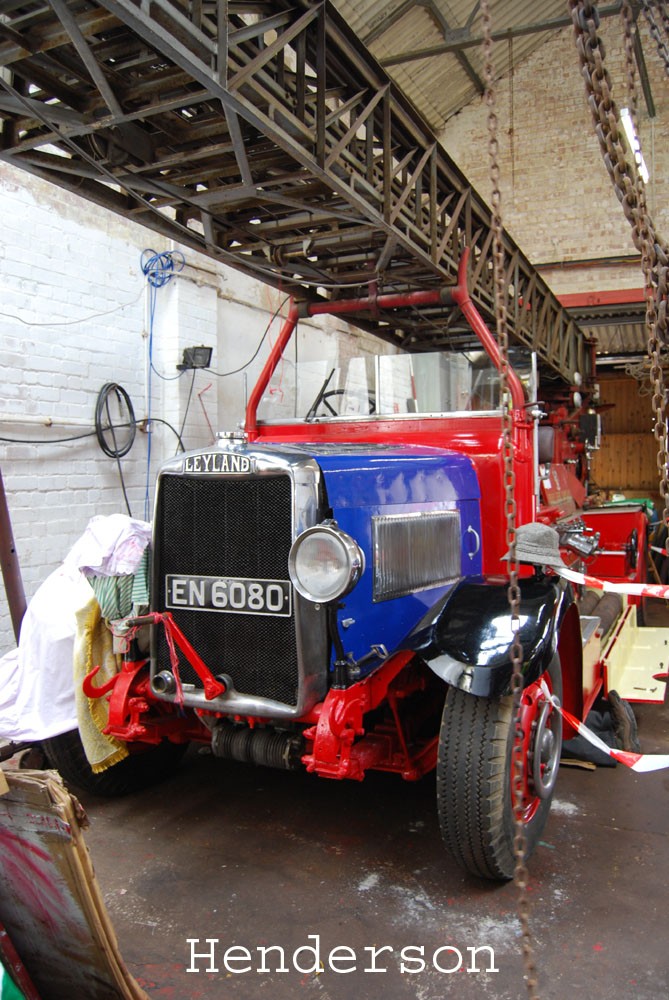
No: 28749 Contributor: Ronald Henderson Year: 2011 Manufacturers: Leyland, Metz Country: United Kingdom
This is shown on drill back in 1959 in a short film about Bury Fire Brigade currently on youTube. www.youtube.com/watch?v=oRsnrkV7_Mg
Well worth a viewing.
Added by Steve Sparkes on 13 February 2015.
Well worth a viewing.
Added by Steve Sparkes on 13 February 2015.
Why does it have a blue engine cover? Is this how Bury Fire Brigade had it?
Added by Danny Jones on 14 February 2015.
Added by Danny Jones on 14 February 2015.
It was all red when my father had it the blue has been added after he sold it
Added by Peter Tyler on 18 February 2015.
Added by Peter Tyler on 18 February 2015.
The big engine Leylands often had blue stove enameled bonnet cover to deal with the heat off the engine. When the enameling got damaged it was difficult/too expensive to replace.
Added by Neal Glover on 19 February 2015.
Added by Neal Glover on 19 February 2015.
Althoug I can only speak for Dennis's I tend to disagree with what Neal has suggested. Early fire engine bonnets were chemically 'blued' in a boiling caustic cyanide bath. This deposited a thin blue film onto the bare steel finish. The reason behind this was that early paints were spirit based and discoloured unevenly with the engine heat. A second reason which was cited is that without the paint better heat transference was obtained.
The 'blued' finish however is not corrosion resistant over a long period of time, so most bonnets of this type have ended up being painted - either blue in a token match to the original finish or red.
I think that this is a more likely expalanation of the blue bonnet on this TL, but we should really ask a Leyland TL expert to give the definitive answer. We will wait to hear from Mike H.!
Added by Dr. B.A. Hutchinson on 23 February 2015.
The 'blued' finish however is not corrosion resistant over a long period of time, so most bonnets of this type have ended up being painted - either blue in a token match to the original finish or red.
I think that this is a more likely expalanation of the blue bonnet on this TL, but we should really ask a Leyland TL expert to give the definitive answer. We will wait to hear from Mike H.!
Added by Dr. B.A. Hutchinson on 23 February 2015.
For anyone prepping a blued steel bonnet, as I am at this moment for BU8888, a neighbour from Oldham FB, ICI 083 Rootes Sapphire Blue Metallic is a perfect match for the old school finish... Modern technology boys.
Added by Mike Cotton on 27 February 2015.
Added by Mike Cotton on 27 February 2015.
Bury fire engines had names, this particular one was named sanderson after a local councillor, had a metal name plaque.
Added by Mel.smith on 15 December 2017.
Added by Mel.smith on 15 December 2017.
Many of the county borough brigades named their appliances usually after the councilors who provided the money or their wives. Gwynedd and Merseyside must have been 2 of the last. Gwynedd had a pump named after a former CFO and Merseyside after Red Rum this based at Southport.
Added by Neal Glover on 15 December 2017.
Added by Neal Glover on 15 December 2017.
I am 70 years old and have lived in bury all my life, when my brother and I were 4&5 he put some straw on the fire which set fire to the chimney, this was the fire engine that was sent to deal with it, afterwards the firemen let us play on the tender, happy happy days!!
Added by Mel.smith on 21 December 2017.
Added by Mel.smith on 21 December 2017.
Leyland


Added by Peter Tyler on 12 February 2015.