
Upload a Picture
About this Site | Links | Random Pic | Advanced Search
Home | Latest Additions | Contributors
| Visitors
Fire Engine Photos
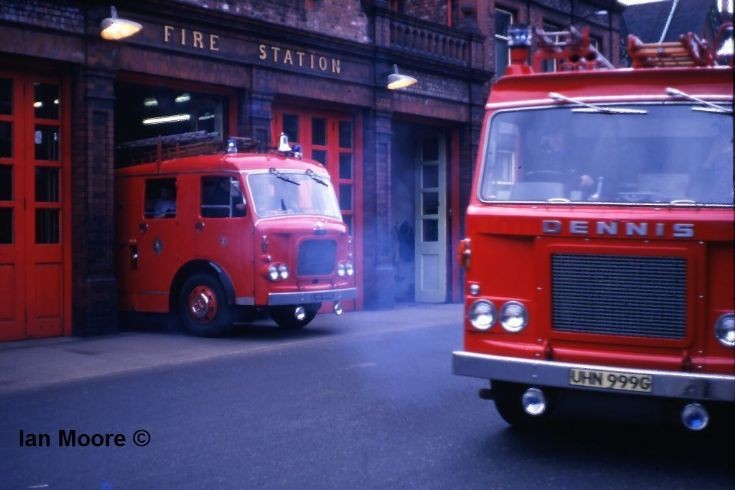
What a great turnout shot. Complete with the smoke of a cold Perkins engine
Added by Paul Staniland on 25 January 2011.
Added by Paul Staniland on 25 January 2011.
EHN 999C Dennis F106 WrT and UHN 999G Dennis F109 WrL
Brilliant Photo Ian.
Added by Davey G on 25 January 2011.
Brilliant Photo Ian.
Added by Davey G on 25 January 2011.
Spot on Davy - F106 & F109 indeed ! As regards the lighthouse beacons, I think these were by Notek, were never brilliant pieces of engineering, and were replaced by more conventional rotating beacons prior to the machine going into Durham County in 1974.
Added by Ian Moore on 25 January 2011.
Added by Ian Moore on 25 January 2011.
Superb...I thought 'That's definitely LFB' until I had a closer look!
Added by Kyle on 25 January 2011.
Added by Kyle on 25 January 2011.
What a coincidence, I was at the airport and was on the first crew on scene at the accident, the pilot was a guy called Ernie Brooks from Spennymoor and its the only fatal accident in the history of Teesside Airport.
Added by Barrie Green on 25 January 2011.
Added by Barrie Green on 25 January 2011.
Sorry to be picky, right with F106 & 109 but both were WrT, notice Wooden Trussed Ladders Darlo never had 464's until Durham and the blues were changed well before DCFB days. Good old DFB along with Yellow Helmets pre 74!
Added by Brett Clayton on 25 January 2011.
Added by Brett Clayton on 25 January 2011.
Ian those Lighthouse beacons are called Francis beacons
Added by Wayne Davies on 26 January 2011.
Added by Wayne Davies on 26 January 2011.
DFB were one of the first brigades to go yellow helmets......hydrant paint used for the purpose.....the first thing Durham did on takeover (apart from nicking the ERF PE) was to order everyone to repaint the helmets black, not long after this the Home Office ordered all brigades to go yellow !!!!!!!
Added by Barrie Green on 26 January 2011.
Added by Barrie Green on 26 January 2011.
Barrie, reference fire helmets, am I correct in thinking you actually collect them????.
On the February 9th I emailed you with a question but you never replied, did you get my email?.Pete.
Added by Pete Matten on 26 January 2011.
On the February 9th I emailed you with a question but you never replied, did you get my email?.Pete.
Added by Pete Matten on 26 January 2011.
Wayne: With respect, are you sure ? Wasn't the Francis beacon a rotating one (similar to eisemann) unlike these things were a strobe type of thing.
Added by Ian Moore on 26 January 2011.
Added by Ian Moore on 26 January 2011.
I spoke to a ex Liverpool fireman and he told me they where called Francis beacons. that's all I know Ian, so there could be a mistake here.
Added by Wayne Davies on 27 January 2011.
Added by Wayne Davies on 27 January 2011.
Francis beacons were made by Francis Searchlights from Bolton Lancashire
Added by Barrie Green on 27 January 2011.
Added by Barrie Green on 27 January 2011.
The beacons are Francis.
I have several in my loft, and also a Francis brochure.
Francis made beacons in several different styles.
The beacons shown are rotating ones, i do not think
strobe lights were in use back then.
Added by Bristol Bob on 27 January 2011.
I have several in my loft, and also a Francis brochure.
Francis made beacons in several different styles.
The beacons shown are rotating ones, i do not think
strobe lights were in use back then.
Added by Bristol Bob on 27 January 2011.
I think some of the earlier versions had the capability of flashing the light without rotating the mirror (although I cannot understand why you would want to do that....except for possibly battery saving whilst stationary eg incident scene) the light intensity could be varied also. I remember this being demonstrated at the old Preston fire station shortly after the beacons had been fitted.
Added by Barrie Green on 27 January 2011.
Added by Barrie Green on 27 January 2011.
Bristol Bob. Do you happen to have anything related to the red/blue beacons with a clear dome that I believe were made by Francis and fitted to several West Sussex appliances? Be trying to track these down for ages.
Added by John D on 27 January 2011.
Added by John D on 27 January 2011.
Anybody notice the old fashioned appliance room doors? The station was built in 1904 for horse drawn appliances, and the bays were so narrow that you could not open the doors at the same time on two machines parked next to each other! These two replaced a Commer Whitson type A WT (NHN 999) retrofitted with a prewar Gywnne 700 GPM pump and a Commer Carmichael type A WT with a No 2 Dennis pump from an NFS trailer(RHN 999). Both ended up at different times at Teeside Airport.
Added by Rob Johnson on 27 January 2011.
Added by Rob Johnson on 27 January 2011.
To John D, sorry, no I have nothing on these at all.
I know that Gloucester city had them on at least 2 appliances and Bristol had one on their control unit.
Added by Bristol Bob on 28 January 2011.
I know that Gloucester city had them on at least 2 appliances and Bristol had one on their control unit.
Added by Bristol Bob on 28 January 2011.
Bob: Comments noted, but as Barrie says, some of these did have the capability of the light flasging without the mirror retotating, and going from memory (I was a lot younger then of course) I'm stil certain that the Darlington ones did operate on a strobe principal. John D: Cumberland had red and blue beacons with a clear dome on the Land Rover L4Rs for a while, I'l post a photo of one.
Added by Ian Moore on 28 January 2011.
Added by Ian Moore on 28 January 2011.
Just to add soething from memory, I believe the beacons did rotate, as the base plate was similar to light fitted to the early Lancs Bedfords, the suposed benefit was the thick magnified glass lense, hence the nickname lighthouse beacons, but in reality they did not give off a good warning beacon especially in daylight hence them been replaced early one.
Ironically my ex Derbyshire F8 URB 87 had one fitted on the offside half as good again!
Added by Brett Clayton on 28 January 2011.
Ironically my ex Derbyshire F8 URB 87 had one fitted on the offside half as good again!
Added by Brett Clayton on 28 January 2011.
Rob, I have to disagree with you about the opening of the appliance room doors......I have lost count of the times I have washed those bays out squeagying the excess water out of the opened doors. These were opened by the pulling on a hanging cord with a brass handle on the end.
both the TL and the ALP had to come out of the bays with the head of the ladder/knuckle almost touching the property on the other side of Borough Road....then reversing on full left lock then being able to drive away to the fire. Often the call would be to the Memorial Hospital (mainly false AFA's of course) and the pumps would be nearly on scene before the 'big boys' could get away from the station.
e
Added by Barrie Green on 28 January 2011.
both the TL and the ALP had to come out of the bays with the head of the ladder/knuckle almost touching the property on the other side of Borough Road....then reversing on full left lock then being able to drive away to the fire. Often the call would be to the Memorial Hospital (mainly false AFA's of course) and the pumps would be nearly on scene before the 'big boys' could get away from the station.
e
Added by Barrie Green on 28 January 2011.
Wonderful photo Ian. One the subject of Darlington CBFB, does anyone have any information on the following. HN 2152, HN2201 and HN 4365?
Added by Andrew Middleton on 28 January 2011.
Added by Andrew Middleton on 28 January 2011.
Barrie: Those doors were lethal, weren't they ? The things were so powerfully sprung that it's a wonder there were no fingerles firemen !!
Added by Ian Moore on 29 January 2011.
Added by Ian Moore on 29 January 2011.
Andrew,
HN 2201 was a 1921 Leyland FE, HN 4365 was a 1927 Leyland FE, and I believe HN 2152 was a Daimler.
Brett: I stand corrected, I didn't realise those rather por (and son to be replaced) beacons were rotating jobs.
Added by Ian Moore on 29 January 2011.
HN 2201 was a 1921 Leyland FE, HN 4365 was a 1927 Leyland FE, and I believe HN 2152 was a Daimler.
Brett: I stand corrected, I didn't realise those rather por (and son to be replaced) beacons were rotating jobs.
Added by Ian Moore on 29 January 2011.
Just to add a little to Ian's information, HN 2201 ran as a PE and the Daimler was an Escape Carrier it may or not had a pump. HN 4365 carried a 75' Simmonis self supporting escape (early type TL) they also ran a 1919 International New World equipment tender towing a Dennis TrP HN 2789
Added by Brett Clayton on 30 January 2011.
Added by Brett Clayton on 30 January 2011.
Thank you all very much for your help, it is most appricated. Between Darlington and Nottingham, who else used 999 registration plates?
Added by Andrew Middleton on 31 January 2011.
Added by Andrew Middleton on 31 January 2011.
Bristol had at least 10 999 registered vehicles, ranging from Land rovers to Hydraulic platforms.
Added by Bristol Bob on 31 January 2011.
Added by Bristol Bob on 31 January 2011.
Preston CB had at least some if not all. It seems to have been a small County Borough brigade thing.
Added by Neal Glover on 31 January 2011.
Added by Neal Glover on 31 January 2011.
The photograph was taken on the 9th March 1969....I have managed to find the air accident report
Added by Barrie Green on 24 February 2011.
Added by Barrie Green on 24 February 2011.
Good grief Barrie - just think how young we both were then !!!
Added by Ian Moore on 25 February 2011.
Added by Ian Moore on 25 February 2011.
Brett:
Darlington bought one of the first enclosed UK appliances in I believe 1931, which was a Dennis. Do you have any record of this one? Did it replace the 1919 vintage tender?
There was also a later 1930s Leyland limousine around when I was in primary school there, which I think must have been the unit which donated its pump to the Commer Whitson water tender NHN 999, when it was converted from an A to a B.
Do you know of any photos of any of the town's historic lit? All I have found is a steamer from the date the Borough Road station was first opened!
By the way, I was told that the Simmonis ladder was actually built by Magirus, who originally designed these ladders to service and repair Zepplin airships, before realizing they would be a useful firefighting tool too...
Added by Rob Johnson on 28 October 2017.
Darlington bought one of the first enclosed UK appliances in I believe 1931, which was a Dennis. Do you have any record of this one? Did it replace the 1919 vintage tender?
There was also a later 1930s Leyland limousine around when I was in primary school there, which I think must have been the unit which donated its pump to the Commer Whitson water tender NHN 999, when it was converted from an A to a B.
Do you know of any photos of any of the town's historic lit? All I have found is a steamer from the date the Borough Road station was first opened!
By the way, I was told that the Simmonis ladder was actually built by Magirus, who originally designed these ladders to service and repair Zepplin airships, before realizing they would be a useful firefighting tool too...
Added by Rob Johnson on 28 October 2017.
Dennis


Added by Brett Clayton on 25 January 2011.