
Upload a Picture
About this Site | Links | Random Pic | Advanced Search
Home | Latest Additions | Contributors
| Visitors
Fire Engine Photos
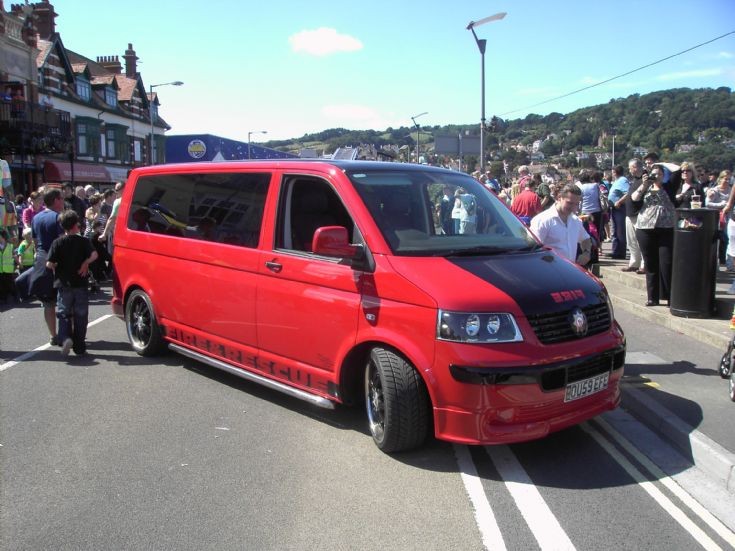
I can confirm that Devon & Somerset do own this vehicle - in fact they have two of them. Their purpose is for road safety education and were developed to engage with young drivers about road saftey issues etc. These vans feature a 42" plasma TV, 10, 000 watt sound system, Nintendo Wii and a DVD player. Along with these two T5 vans, there is a Mitsubishi Evo car and two Motorbikes; a Ducati 1198 and a MV Augusta used to promote road saftey across the counties.
Added by Alex on 19 August 2010.
Added by Alex on 19 August 2010.
Thanks Matt, it does have FIRE and RESCUE on the sides and rear and also a brigade badge where the VW badge should be.
Anyone from Devon and Somerset with any knowledge?
Added by Bristol Bob on 19 August 2010.
Anyone from Devon and Somerset with any knowledge?
Added by Bristol Bob on 19 August 2010.
I can think of better ways of spending tax payers money especially in the present economic climate.
Added by Paul Pickford on 20 August 2010.
Added by Paul Pickford on 20 August 2010.
None of the above are on Devon and Somersets fleet list, Bob, but I have emailed the a friend who is a area commander for further information.
Added by Mike & Helen on 20 August 2010.
Added by Mike & Helen on 20 August 2010.
Alex, if the info you have is correct, this brigade should be ashamed of themselves for wasting money on this equipment! It makes me angry to see a brigade spending money in this way when I suspect there are loads of, stations, appliances, PPE and other items that are in need of extra budget. Perhaps this brigade is flush and can afford to spend in this way but I know of one brigade that is struggling with costs on a day by day basis and I mean struggling!
Added by Matt Ireland on 20 August 2010.
Added by Matt Ireland on 20 August 2010.
Alex and Matt I have arranged a meeting with the Somerset Commander of Devon & Somerset, to discuss this and other concerns I have with this service, however this takes the biscuit if the above is true I will get back as some as I have had the meeting - Mike
Added by Mike & Helen on 20 August 2010.
Added by Mike & Helen on 20 August 2010.
Mike and Helen, I'm glad that someone else feels as I do. I was concerned that I may have come across a little strong! and my comments may offend. However I speak with experience and can't believe that a brigade which, surely inline with everyone else, is having its budget cut. I understand that awareness regarding RTC's is the new initiative, just like home fire safety checks were, but there are better and more cost effective ways of informing the public.
Added by Matt Ireland on 20 August 2010.
Added by Matt Ireland on 20 August 2010.
With regards to the cost of these vehicles, I should point out these vehicles were partly funded by various road safety partnerships, Department of Transport and the Highways agency. I cant remember the exact cost of the T5s but it was done by a local firm South West Camper Conversions.
Since hitting the road earlier this year, the new vans have been quite a sucess and have attended over 200 events.
I read somewhere that every road death costs the tax payer up to £1.6 million and each serious injury £185, 000. Half of the RTCs attended by DSFRS last year involved either young drivers or motorcyclists. Therefore, by targeting these groups and reducing RTCs, money would be saved, lives would be saved and the cost of these vehicles recouped. (Thats the idea anyway) whether any accidents/deaths are saved as a result of this would be almost impossible to measure anyway.
Added by Alex on 21 August 2010.
I wonder where these vehicles came from, especially as the newer 59 registration carries an Oxfordshire plate, whilst the other - an older 54 registered vehicle - is registered in Yorkshire.
Added by Ian Moore on 21 August 2010.
Added by Ian Moore on 21 August 2010.
Thanks for pointing that out Alex, however the services portion of these vehicles (this would also explain why, they are not on the fleetlist), could have been made better use of, in the hard economic times, especially when there are a few appliances on the run in the Somerset command that are well past their sale by date. All the new appliances (16 in total) for 2009/2010 and 2010/2011 are to be stationed in Devon, according to DSFRS press release.
Added by Mike & Helen on 21 August 2010.
Added by Mike & Helen on 21 August 2010.
North Wales Police "blinged up" a Transit van in a more hideous way than this for much the same reasons. I question whether this sort of "chavving up" of any vehicle owned or partially paid for by an emergency service makes economic sense. There are to many accountants and diversity pushers running the emergency services now. Our gear 15-20 years ago may not have been perfect but everyone knew what we were there for.
Added by Gary Simpson on 21 August 2010.
Added by Gary Simpson on 21 August 2010.
To be perfectly honest, I think the money spent on this and it's sister machines could have been spent more wisely. Doesn't matter what you say or how you say it to these young people, until the light switch is flicked on and they come to their senses nothing will make them change their views. The money wasted on these vehicles is a disgrace particularly when we have brigades talking of making people redundant and having to save money.
Added by Stevie Murray on 21 August 2010.
Added by Stevie Murray on 21 August 2010.
If this is a strange idea, what about Avon replacing rescue tenders with a helicopter !
Added by Bristol Bob on 22 August 2010.
Added by Bristol Bob on 22 August 2010.
I am quite shocked by the ignorance of the comments on here. All FRSs have a duty to make the commuity safer. We now go to more fatalities on the road than in fires. Over 25% of all these deaths, serious injuries are young people. As the forward thinking amongst us would agree, Prevention is better than reaction!!. The vehicles are used to attract the attention of this difficult and hard to reach target group. A group we have struggled to engage with before. The vehicle is designed so when we turn up in congregation points the target audience come to us. Once we have the attention as they have asked what the vehicle is, how big is the stereo, we can then use our trained officers to impart safety knowledge on this this audience who previously didn't engage. We then use the driver simulator inside to get teaching points across such as drink driving, distraction and speeding.
This vehicle in 6 months has allowed engagement with 3000 young people in there environment at their level. combined with other prevention initiative there has been a large reduction in deaths etc involving young people. It is recognised as national best practice, caused young drivers to invite us to chat with their mates who drive badly and been described by the police as the best engagement vehicle they have ever seen. I hope that has shed light onto the fact that although this vehicle was bought prior to the constraints it is important to try to prevent accidents etc rather than just keep going, not to mention the cost to the taxpayers and the community everytime we attend!. Speak to the people we have engaged with and gain an enlightened opinion.
Added by Save Lives Through Prevention! on 13 October 2011.
Thats a good point ...if 'the message' is getting through to these youngsters then indeed the programme that you have going here makes sense.
Perhaps at a later date it would be helpful to see the RTC figures relating to young drivers to establish how the campaign is proceeding
Added by Gary Bolton on 13 October 2011.
Perhaps at a later date it would be helpful to see the RTC figures relating to young drivers to establish how the campaign is proceeding
Added by Gary Bolton on 13 October 2011.
Who exactly says that its at their level? In all honesty, whilst well intentioned, it smacks of trying to "look cool". Engagement is good providing it filters through to all levels of a FRS. Leering pump crews driving through town and city centres "kerb crawling" negate these initiatives. If it saves lives then great, when we see the Injury/fatality reduction figures then ok, until then people will rightly be sceptical, especially at a time when numerous FRS are reducing frontline staff and appliances.
Added by Gary Simpson on 13 October 2011.
Added by Gary Simpson on 13 October 2011.
Dear Saves Lives Through Prevention, I'm not sure I like your term 'ignorant' regarding some of the above comments. I shared my views based on experience and knowledge on how some brigades are struggling financially. You do not need to tell me that more fatalities occur on our roads. As an RTC trainer I was only too aware of the numbers of people dying on our roads. 99% of fatalities I attended were RTC related, however the number involving young drivers was quite low. The above comments relate to a vehicle which is a waste of money in an era of economic strife. You cannot justify it's existence unless, you're an officer whose brain wave this was. If you want to get the message across, attend events by all means but not with a chaved up van with big stereo and sub in the back. Use shocking images and real life stories to get the message across. Young people will always approach and talk to Firefighters, we are not their enemy. Unfortunately collisions will always occur and it's not always the youngsters at fault, they just get highlighted whenever they are involved. With regard to the police thinking the van is the best thing since sliced bread, then perhaps they could waste some of their money on one instead. Oh, I forgot they're broke aswell!
Added by Matt Ireland on 13 October 2011.
Added by Matt Ireland on 13 October 2011.
I have been told that Mid&West Wales also have something simular, but in Bright PINK!!
Added by D.K on 13 October 2011.
Added by D.K on 13 October 2011.
I would have thought this to be the domain of the Traffic Police, not a Fire Service.
Added by Pav on 14 October 2011.
Added by Pav on 14 October 2011.
By the way, has anyone clicked on the email address above of "Save Lives Through Prevention!" Very interesting what comes up, , , ,
Added by Pav on 14 October 2011.
Added by Pav on 14 October 2011.
As mentioned I think comes down to the impact these vehicles and the programme has , if it can be demonstrated that indeed the accident figures have been reduced for this target group then yes you could argue its money well spent.
All I know is that a friend of mine was seriously injured in a RTC ( hit by a young drunk driver )and has spent many years in and out of hospital has not fully recovered most likely never will .
The costs of operations, health care, loss of income and tax revenue for the Govt etc spread over a ten year period most be huge not leaving out the mental anguish involved, so I think we all understand prevention is better than cure ....it will be the facts and figures down the line that will decide if this unconventional route has been a success....the devil as always is in the detail
Added by Gary Bolton on 14 October 2011.
Dear Saves Lives Through Prevention.
Your words: I am quite shocked by the ignorance of the comments on here...........(see above for more)........... Speak to the people we have engaged with and gain an enlightened opinion.
My Words, These scheme's aren't there to protect the public, they are there to drive down incidents, a back door tactic to remove, 1, Specialist Appliances, 2, Operational Posts, 3, Eventually Fire Stations. Many CFO's know damn well that operational crews are cutting their own throats by hard work and tireless CFS campains. Since these schemes where drawn up they have kept records, then use these records to put towards their relevant Fire Authorities as excuses to reduce crewing levels, and to downgrade WT posts to civillian.
Added by D.K on 14 October 2011.
Well said D.K, lets see the statistics on this, because a Sub woofer and tinted windows isnt the same as Hurst, Clan Lukas or Holmatro at extrication.
Added by Gary Simpson on 15 October 2011.
Added by Gary Simpson on 15 October 2011.
I think that we all agree that any programme that reduces RTC's is a good thing , what is being disputed here is the relative merits of spending on rescue equipment vrs spending on a unconventional prevention programme. It will be the reduction in RTC figures that will determine if the prevention programme has been a success.Brigade finances are under pressure from spending cuts as are most other areas of public spending it is this aspect that puts areas of spending under the spotlight.
What is known is that you cannot nor never will be able to 'save them all' plus major disasters and incidents are a fact of life, so there will always be a need for special service equipment regardless.
What is happening with the D&SFRS programme is an attempt to reach a proven target group who are high risk as far as crashes and DD are concerned...anyone who has teenage drivers living at home knows only to well that it is hugely expensive to insure this group due to the fact that youngsters have more accidents than a 50 yr adult for example...like it or not this is fact.
If indeed the success of this campaign leads to a reduced accident rate then we should all be applauding this out come, having witnessed first hand the misery that expands outwards after a serious RTC I can appreciate that anything that reduces this impact of those that have been killed or injured has to be explored.Recent figures put injury accidents at anything from £100, 00 up to 1 M or more per incident.
I found my time in the fire service most rewarding and interesting but I am left with with many thoughts of what could have happened at RTC's had we tried different methods etc ...back then our air powered cutters and basic hydraulic equipment... extrication was primitive to say the least. However a brutal learning curve was seared into my mind.... being on the M1 and watching vehicles ram into one another whilst attending a two car RTC resulted in me always keeping a safe distance from the vehicle in front and watching my speed .
Two simple preventative lessons that I know saved me from being involved in two very serious RTC's whilst driving to later incidents.I know that as a younger man I was most likly not that different from some of the youngsters being targeted by the D&S programme.We all do daft things in our youth, preventing just a few of those from occuring could result in lives being saved and bodies not broken, the figures will determine if this is the case.
Added by Gary Bolton on 16 October 2011.
I believe they were not red and the colouring achieved through a vinyl wrap!
Added by Ian Tyne on 23 March 2016.
Added by Ian Tyne on 23 March 2016.
Fire Services spend a lot of money trying to prevent fires, prevent accidents and promote safety. Evidence suggests that for every well targeted £1 spent it will save many more in money spent sorting out the aftermath. with each road death costing the country over £1.6 million if only one fire service prevents one death the money is well spent. If you are reading this, particularly if that death would have been a partner, parent or child. A car with young people in involved in an accident will often lead to more than one death and life changing injuries.
Added by Chris Hope on 09 June 2016.
Added by Chris Hope on 09 June 2016.
Volkswagen


Added by Matt Ireland on 19 August 2010.