
Upload a Picture
About this Site | Links | Random Pic | Advanced Search
Home | Latest Additions | Contributors
| Visitors
Fire Engine Photos
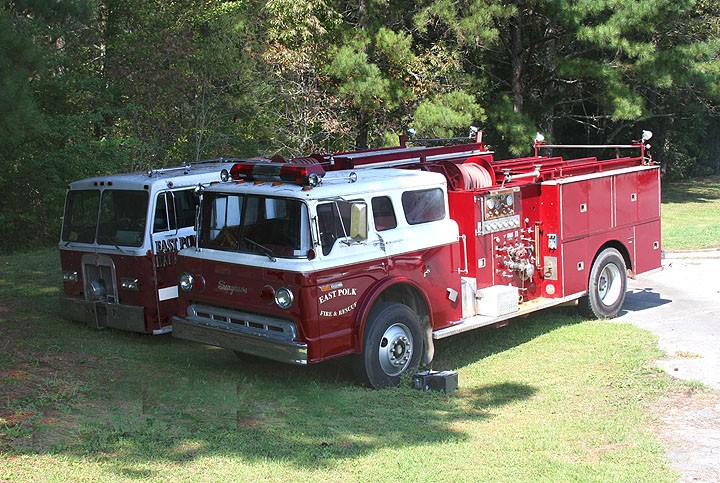
No: 19798 Contributor: TheFireman Year: 2009 Manufacturers: Ford, Seagrave Country: United States of America
I've heard it refered to as the "belly button" chassis, cause everyone had one!
Added by Jeff Beall on 22 August 2012.
Added by Jeff Beall on 22 August 2012.
Ford


The standard tilting crew cab could accommodate six, with another three or four on the rear step if enough riders were available. It normally had a 4500 LPM pump at 10 bar, an 1800 liter tank and could carry up to a 15 meter ground ladder, although a 7.5 meter ladder was much more common.
The chassis was also used extensively for aerial ladders, rescue trucks, tankers, foam pumpers, hose tenders and almost anything else you could think of.
The Cargo, which suceeded the C series, never enjoyed the popularity of its predecessor, and Ford has now faded away as a supplier of fire trucks, except for small brush pumpers, rapid response trucks and light rescue vehicles on the F150 - F550 chassis.
However, locally-built Cargo-based pumpers are still to be found operating in Brazil and a few other South American countries.
Added by Rob Johnson on 21 August 2012.