
Upload a Picture
About this Site | Links | Random Pic | Advanced Search
Home | Latest Additions | Contributors
| Visitors
Fire Engine Photos
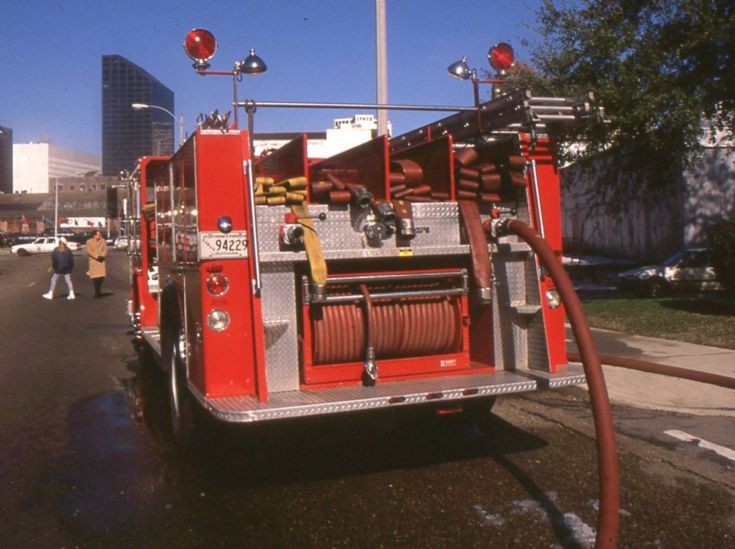
No: 19204 Contributor: Jacques Peter Year: 1989 Manufacturer: Seagrave Country: United States of America
Seagrave


Now, booster reels have been discontinued by most fire departments. Instead, many use a one-inch (25mm) diameter flat hose, often referred to as a "trash line". This is frequently installed either as an extra crosslay above the pump or in a front bumper tray. The main reason for eliminating the reels was that fire crews were often too eager to rely on them in situations where the incident really called for higher water flows than the reels could supply. First attack is now usually to deploy a 1.5 or 2 inch crosslay, which can easily support a flow of 120 to 150 USGPM or higher.
Added by Rob Johnson on 18 August 2014.