Although the literal translation is "chemical" pumper, these are what we would call foam pumpers. They are quite a bit bigger than the standard basic pumper, which does not have either a water or foam compound tank.
Generally, about half of the 80 principal fire stations usually has one, along with two regular pumpers. They are dispatched to all kinds of incidents, not only those where there is expected to be a need for foam. They are backed up by around ten much larger dedicated foam tankers for deployment at major hydrocarbon fires.
Philadelphia FD operate a similar, strategy, with three combination foam and regular triple combination engines dispersed around the city, responding in the dual role of a standard engine and a first out foam truck.
Tokyo has 48 of these foam pumpers, out of a total fleet of well over 500 pumpers, including the huge fleet of very small light pumpers operated by the 206 additional community volunteer brigades.

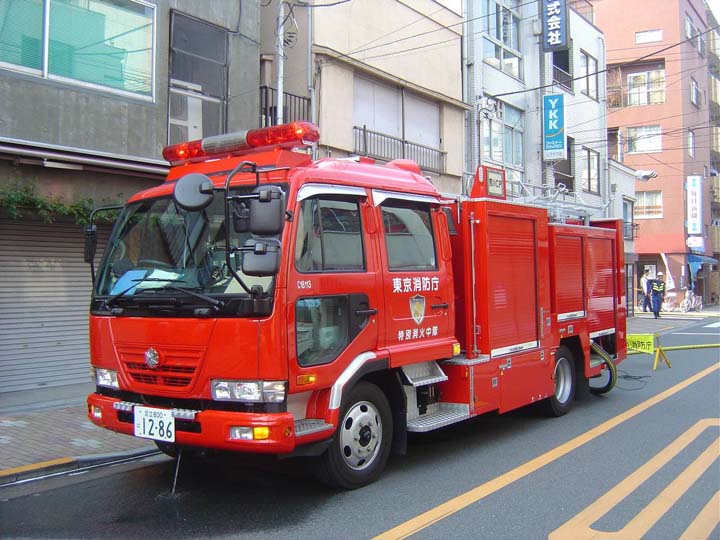


Generally, about half of the 80 principal fire stations usually has one, along with two regular pumpers. They are dispatched to all kinds of incidents, not only those where there is expected to be a need for foam. They are backed up by around ten much larger dedicated foam tankers for deployment at major hydrocarbon fires.
Philadelphia FD operate a similar, strategy, with three combination foam and regular triple combination engines dispersed around the city, responding in the dual role of a standard engine and a first out foam truck.
Tokyo has 48 of these foam pumpers, out of a total fleet of well over 500 pumpers, including the huge fleet of very small light pumpers operated by the 206 additional community volunteer brigades.
Added by Rob Johnson on 16 July 2017.